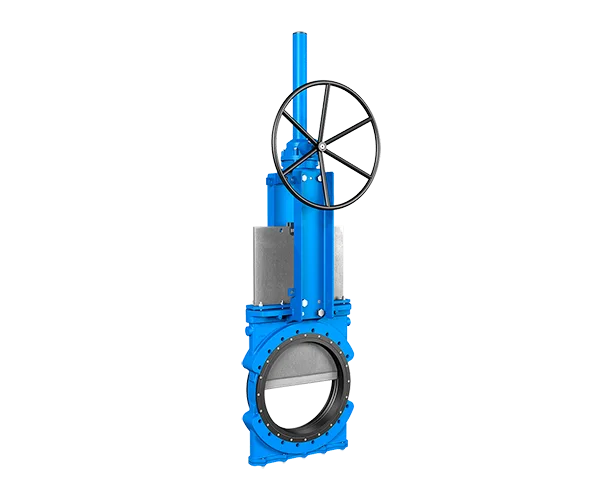
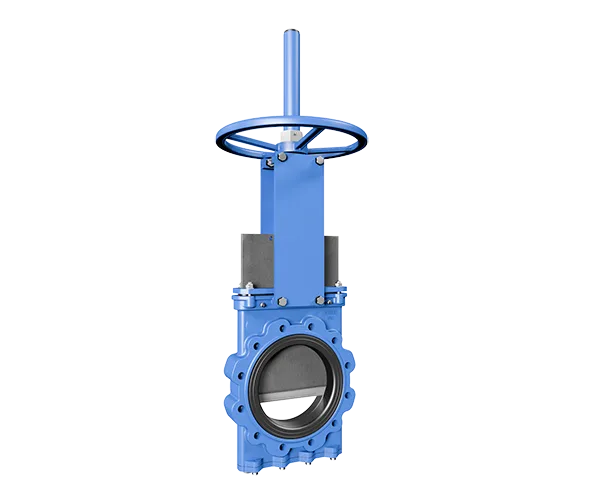
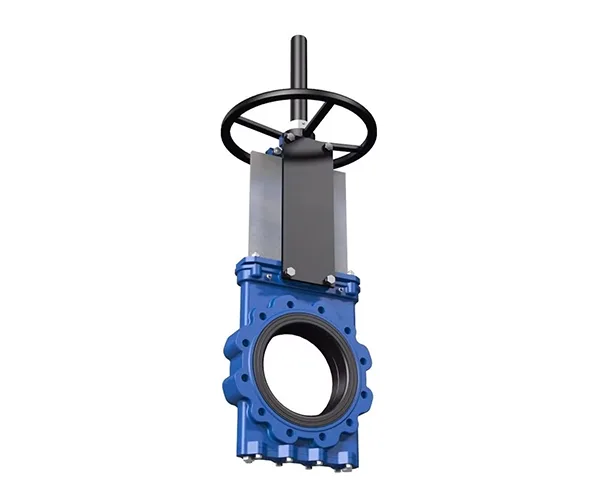
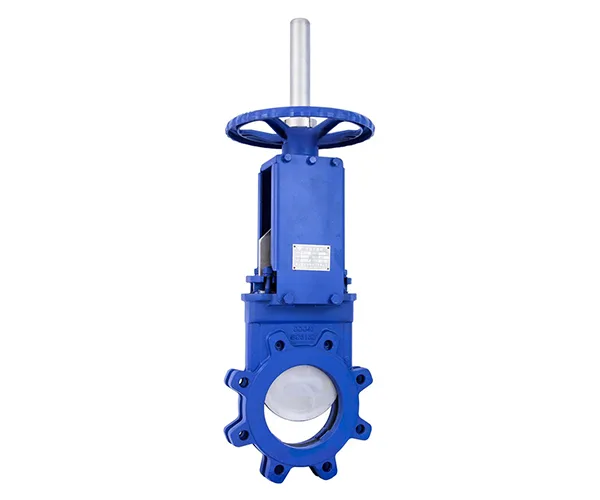
Manual knife gate valve
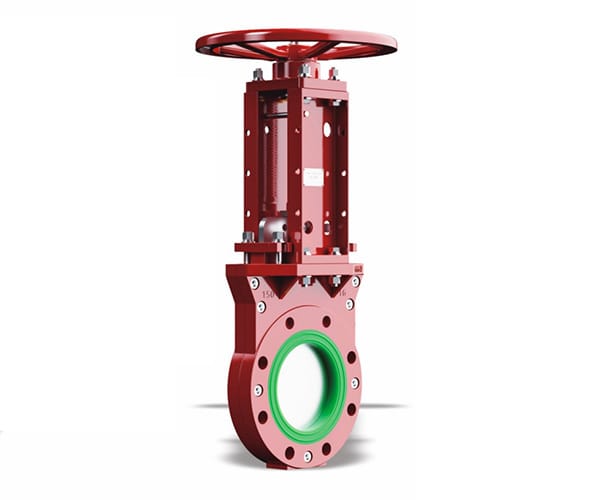
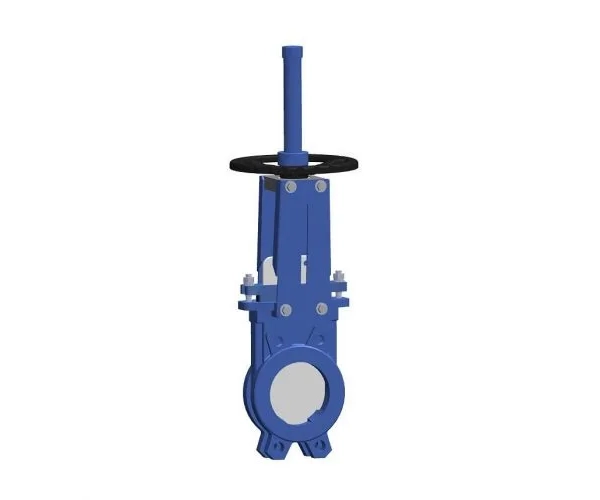
The Manual Knife Gate Valve is a shut‑off valve with a handwheel‑direct‑driven mechanism and a knife‑edge gate. It is designed only for ON‑OFF (open/close) service – not for flow regulation. Compared with electric or pneumatic knife gate valves, the manual version requires no external power source, offers simple construction, reliable operation, and low cost. It is particularly suitable for locations without electricity or compressed air, as well as for infrequent operation.
Category:Absperrschieber
Call Us Anytime
15669818867
Product Overview
The Manual Knife Gate Valve is a shut‑off valve with a handwheel‑direct‑driven mechanism and a knife‑edge gate. It is designed only for ON‑OFF (open/close) service – not for flow regulation. Compared with electric or pneumatic knife gate valves, the manual version requires no external power source, offers simple construction, reliable operation, and low cost. It is particularly suitable for locations without electricity or compressed air, as well as for infrequent operation.
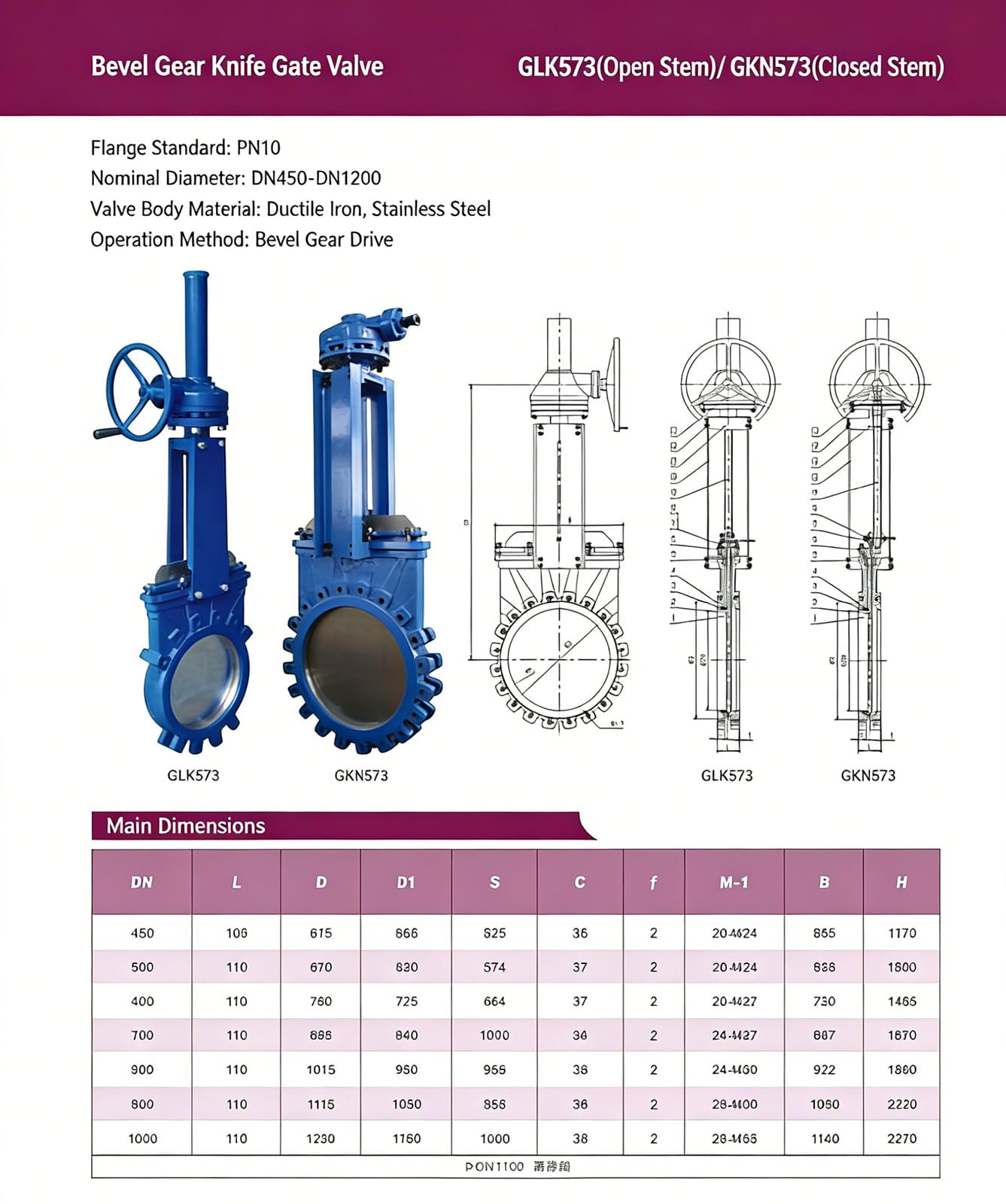
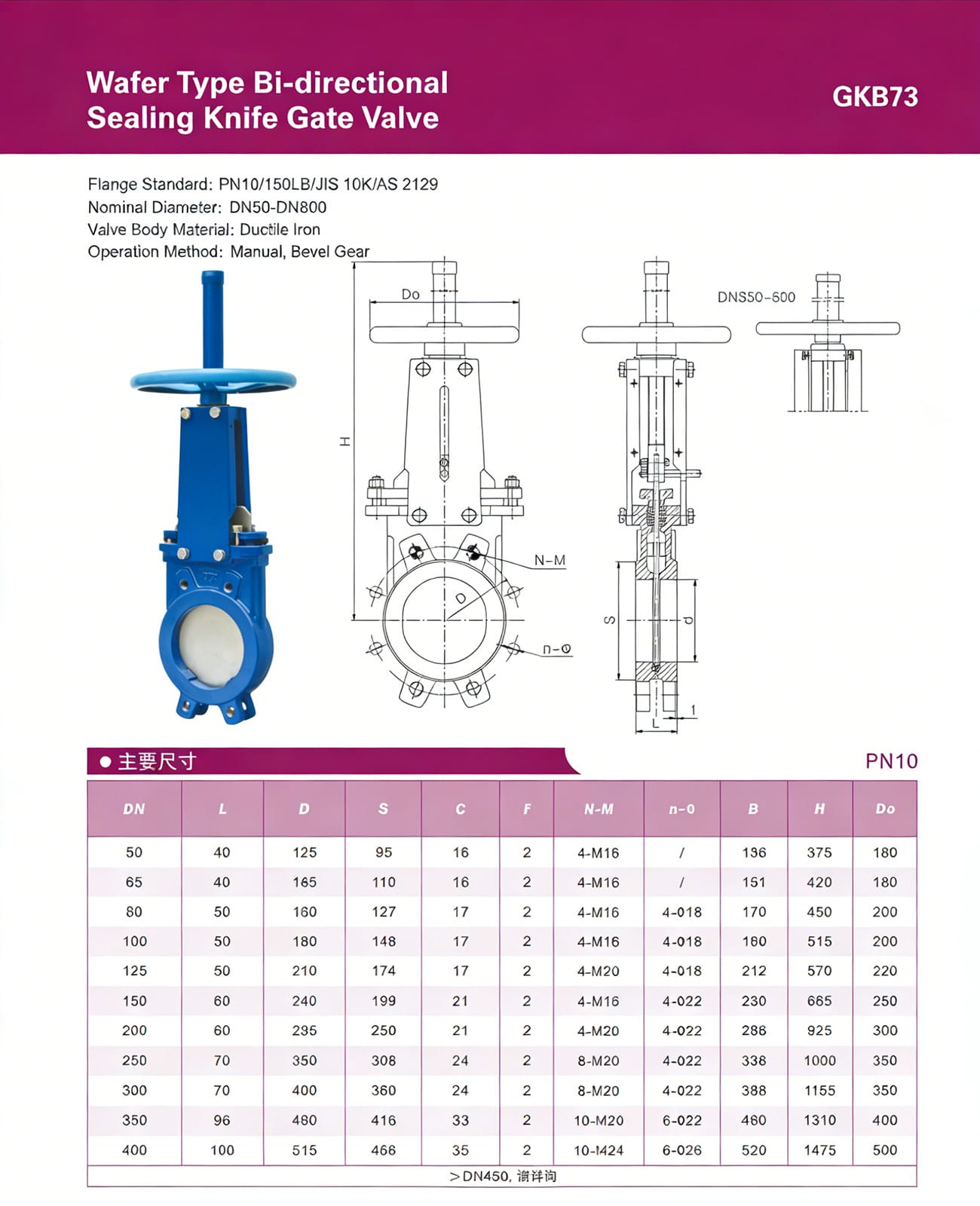
The sharp knife‑edge gate cuts through hanging fibers, paper, plastic strips, and other materials during closure, preventing clogging. The body flow path has no recesses, providing self‑cleaning action. The valve has flanged connections, with nominal diameters from DN50 to DN600, pressure ratings PN10/PN16 (Class 150), and body materials including cast iron, carbon steel, and stainless steel. It is widely used for pipeline shut‑off in wastewater treatment, papermaking, mining, chemical, and similar industries.
Produktstruktur
The Manual Knife Gate Valve mainly consists of the handwheel drive mechanism und valve body assembly.
Handwheel Drive Mechanism:
-
Handwheel: Cast iron or ductile iron handwheel with a non‑slip handle.
-
Stem Nut: Copper alloy or stainless steel nut engaging with the stem trapezoidal threads.
-
Bearings: Thrust ball bearings or plain bearings to reduce operating torque.
-
Joch: Connects the body to the drive mechanism and absorbs axial forces.
-
Spindel: Edelstahl-Spindel mit Trapezgewinde, die den Schieber auf- und abbewegt.

Valve Body Assembly:
-
Gehäuse: Cast or fabricated body in gray cast iron, ductile iron, carbon steel (WCB), stainless steel (CF8/CF8M), etc. Flanged ends conforming to GB/T 9113, ANSI B16.5, EN 1092‑1, etc. Full‑bore flow path with no recesses.
-
Schieber: Edelstahl-Schieber (304, 316, 310S) mit scharfer Kante zum Durchtrennen von Fasern und Partikeln. Die Schieberoberfläche kann mit Stellite hartbeschichtet oder verchromt werden.
-
Dichtungen: Verfügbar in Gummi (EPDM, NBR, FKM), PTFE oder Metalldichtung; bidirektionale Abdichtung optional.
-
Stopfbuchse: Enthält PTFE- oder flexible Graphitpackung, die durch eine Stopfbuchsenbrille komprimiert wird, um äußere Leckagen zu verhindern.
-
Optional Bonnet: Available with an enclosed bonnet (for hazardous media) or open‑frame (bonnetless) construction.
Compact construction; manual operation requires no electricity or compressed air.
Funktion
-
Manual Operation: Rotating the handwheel turns the stem nut, driving the stem and gate up or down to open or close the valve. No external energy required.
-
Schneidfunktion mit scharfer Kante: Die scharfe Kante des Schiebers durchtrennt beim Schließen hängende Fasern, Papier, Kunststoffstreifen und andere Materialien und verhindert so Verstopfungen.
-
Selbstreinigender Strömungsweg: Der Strömungsweg im Gehäuse weist keine Hinterschneidungen auf. Bei voller Öffnung kann das Medium das Innere spülen und so die Ansammlung von Feststoffen verhindern.
-
Bidirektionale Abdichtung (optional): Ein bidirektionaler schwimmender Sitz oder eine doppelseitige Abdichtung ermöglicht es dem Ventil, Mediendruck aus beiden Richtungen standzuhalten.
-
Vollerdurchgang mit geringem Strömungswiderstand: Bei voller Öffnung befindet sich der Schieber vollständig außerhalb des Strömungswegs, was einen minimalen Druckverlust gewährleistet.
-
Low Operating Torque: The trapezoidal threads combined with bearings make handwheel operation easy.
-
Visual Position Indication: A position indicator on top of the stem allows visual confirmation of valve open/close status.
-
Easy Maintenance: Packing can be adjusted or replaced in‑line without removing the valve body.
Arbeitsbedingungen
-
Anwendbare Medien: Abwasser, Schlamm, Zellstoff, Suspensionen, Schlamm, Fasersuspensionen, partikelbeladene Flüssigkeiten usw.
-
Temperaturbereich: –20 °C bis +200 °C (PTFE-Dichtungen); –20 °C bis +80 °C (Gummidichtungen); –29 °C bis +550 °C (Metalldichtungen).
-
Druckstufe: PN10, PN16 (Class 150); höhere Druckstufen auf Anfrage.
-
Nenndurchmesser: DN50 – DN600 (2″ – 24″); größere Abmessungen auf Anfrage.
-
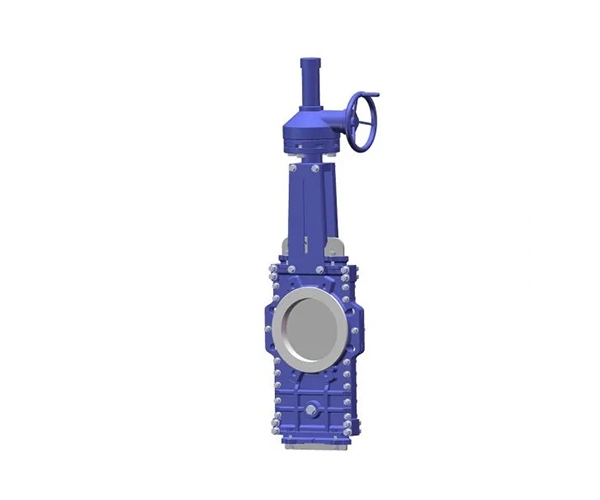
Operation: Manual (handwheel); bevel gear option available for large sizes to reduce operating effort.
-
Typische Anwendungen:
-
Sludge and sewage lines in wastewater treatment plants (no power supply areas)
-
Manual isolation in paper mill pulp lines
-
Manual shut‑off in mine tailings pipelines
-
Standby valves in chemical slurry lines
-
Manual control in fruit pulp and sauce lines in the food industry
-
Manual valves in industrial wastewater treatment systems
-
Agricultural irrigation mud pipelines
-
Zusammenfassung
The Manual Knife Gate Valve, with its advantages of manual operation, no external energy required, knife‑edge cutting function, self‑cleaning flow path, and simple construction, is an ideal shut‑off valve for handling particle‑ or fiber‑laden media in locations without electricity or compressed air, and for infrequent operation. Compared with electric or pneumatic knife gate valves, the manual version offers lower initial cost, simpler maintenance, and higher reliability.
With flanged connections, a full‑bore flow path, and handwheel or bevel gear operation, the Manual Knife Gate Valve is an economical and practical first choice for pipeline systems that require reliable shut‑off, handle solids or fibers, and have no on‑site power source or require only occasional operation.
 English
  German
  Chinese
  Dutch
Dutch  Vietnamese
  Uzbek
Uzbek  Turkish
  Thai
Thai  Norwegian
  Russian
  French
  Korean
  Persian
  Spanish
  Ukrainian
  Serbian