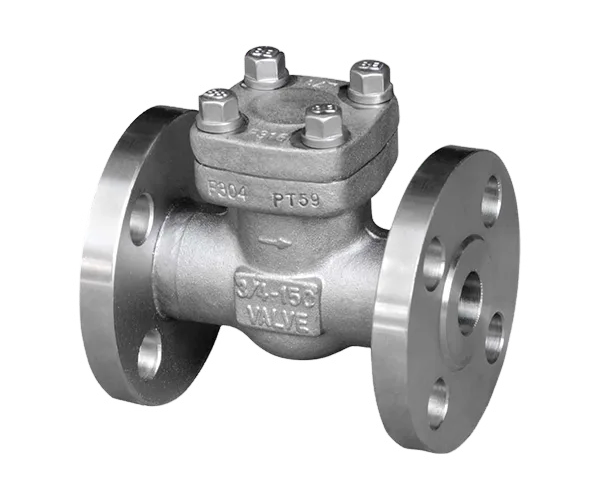
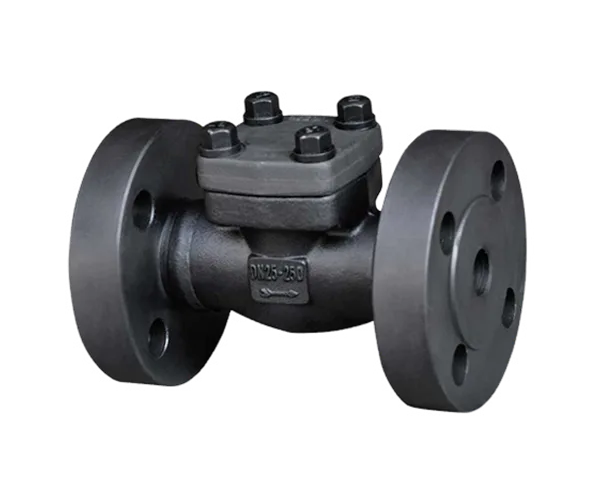
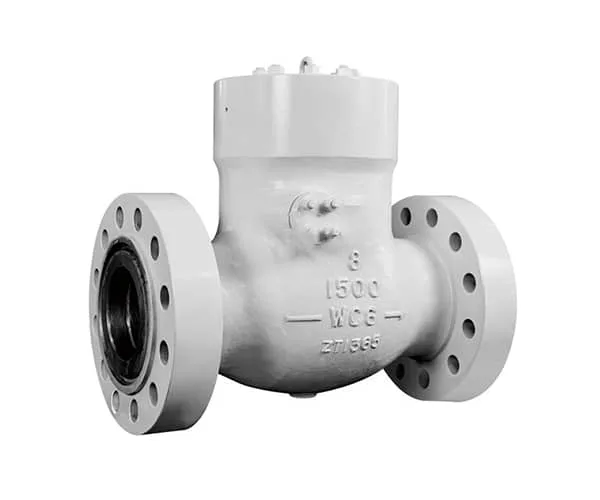
Forged steel swing check valve
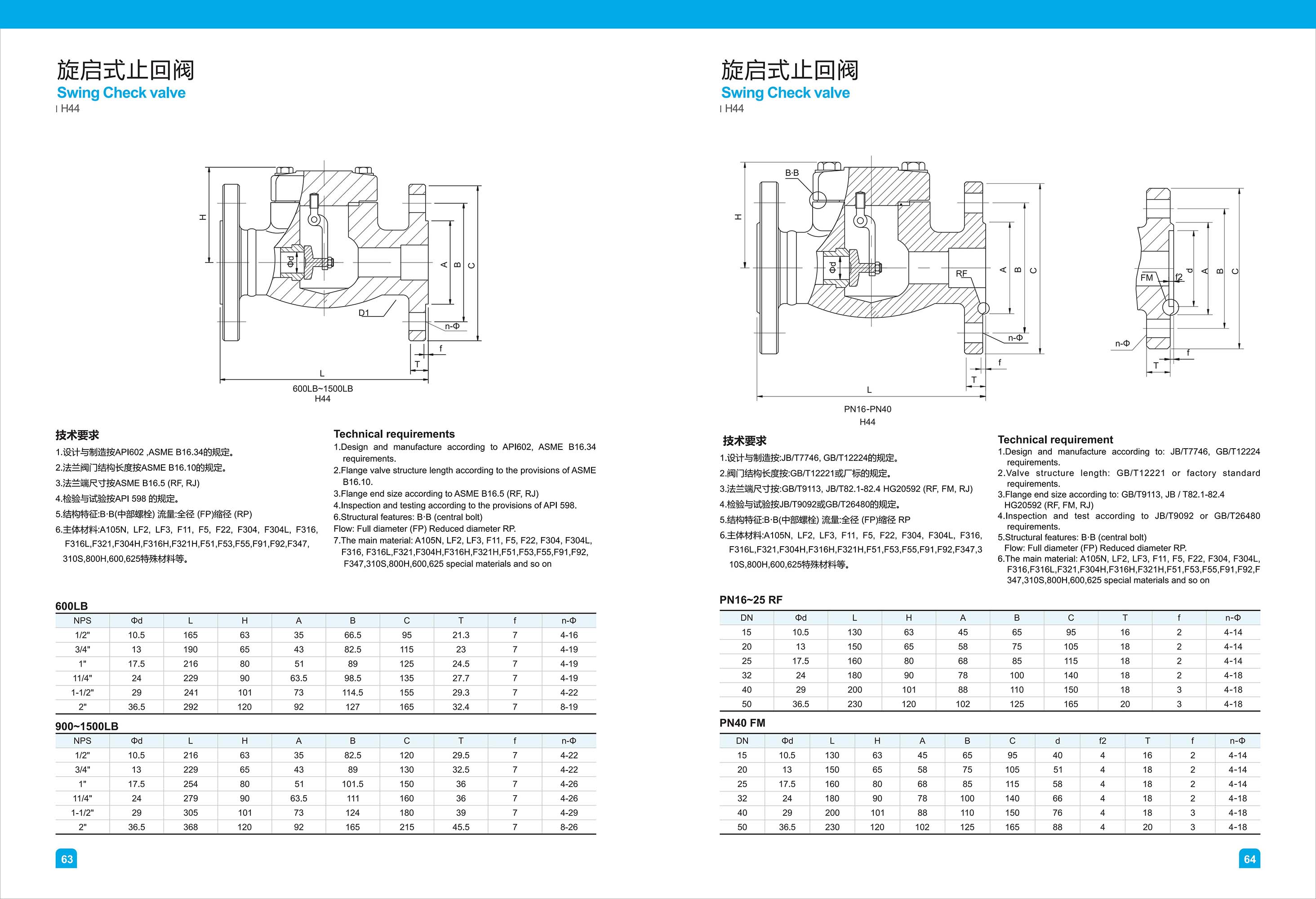
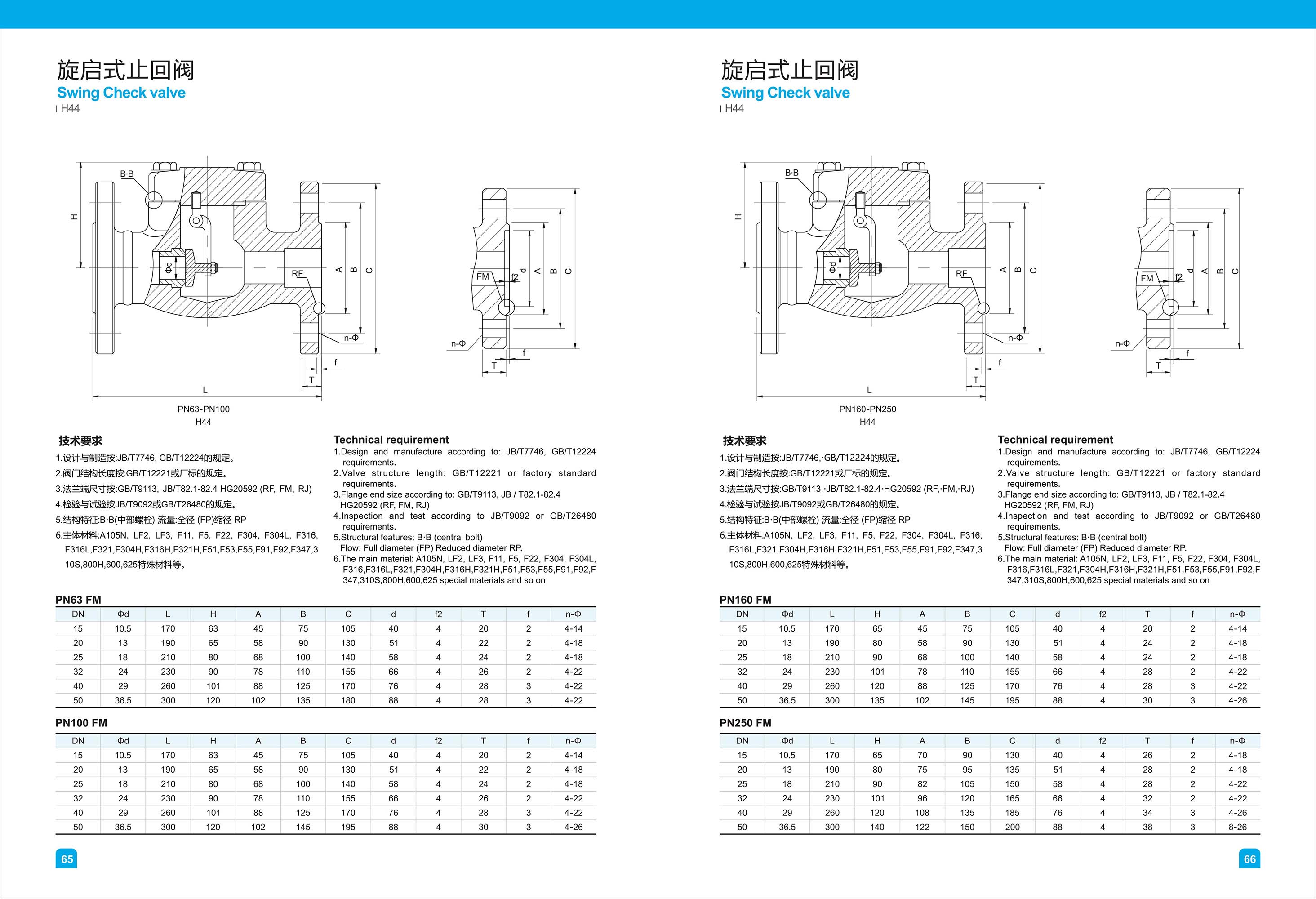
The Forged Steel Swing Check Valve is a compact, high-performance solution designed for small pipeline backflow prevention (DN15-DN50). Featuring precision-forged construction and a lightweight swing disc, it ensures reliable one-way flow control in instrumentation, sampling, and utility systems. This valve operates automatically and is not suitable for flow regulation.
随时致电我们
15669818867
Product Overview
The Forged Steel 旋启式止回阀 is an automatic non‑return valve with a forged steel body and a disc that swings around a pin shaft. Compared with cast steel valves, forged steel valves offer a denser metal structure, higher mechanical strength, and better impact resistance, making them particularly suitable for severe service conditions involving high temperature, high pressure, corrosive media, and frequent cycling.
The valve opens and closes by the flow of the medium itself – forward flow pushes the disc open, while reverse flow or flow stoppage makes the disc quickly return to its seat under gravity and backpressure, preventing backflow. Widely used in oil & gas, petrochemical, chemical, power generation, marine, and high‑pressure steam systems, the forged steel swing check valve is typically available in sizes from DN15 to DN100 (1/2″ to 4″) with flanged, socket weld, threaded, or butt weld connections.
Product Structure
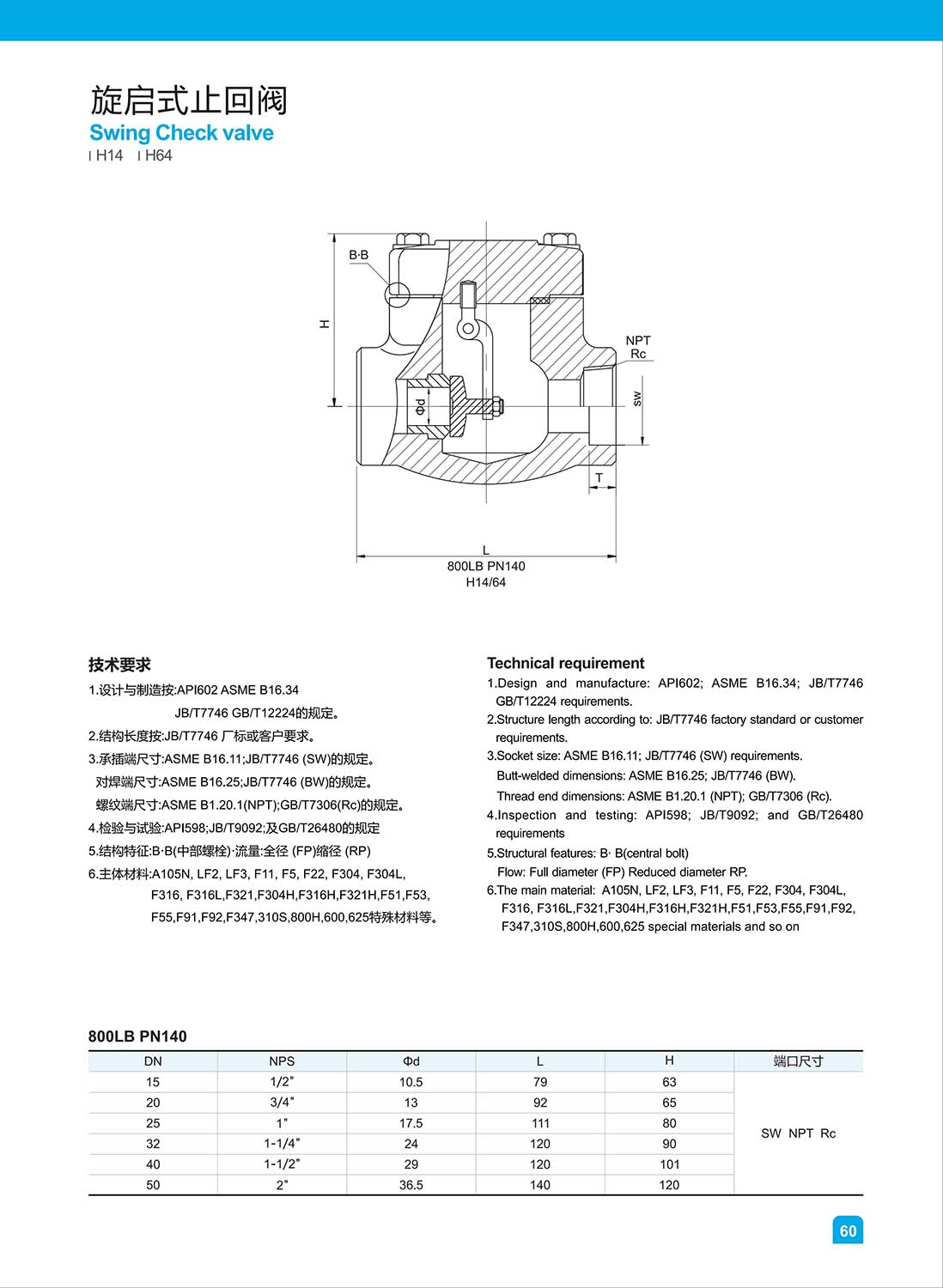
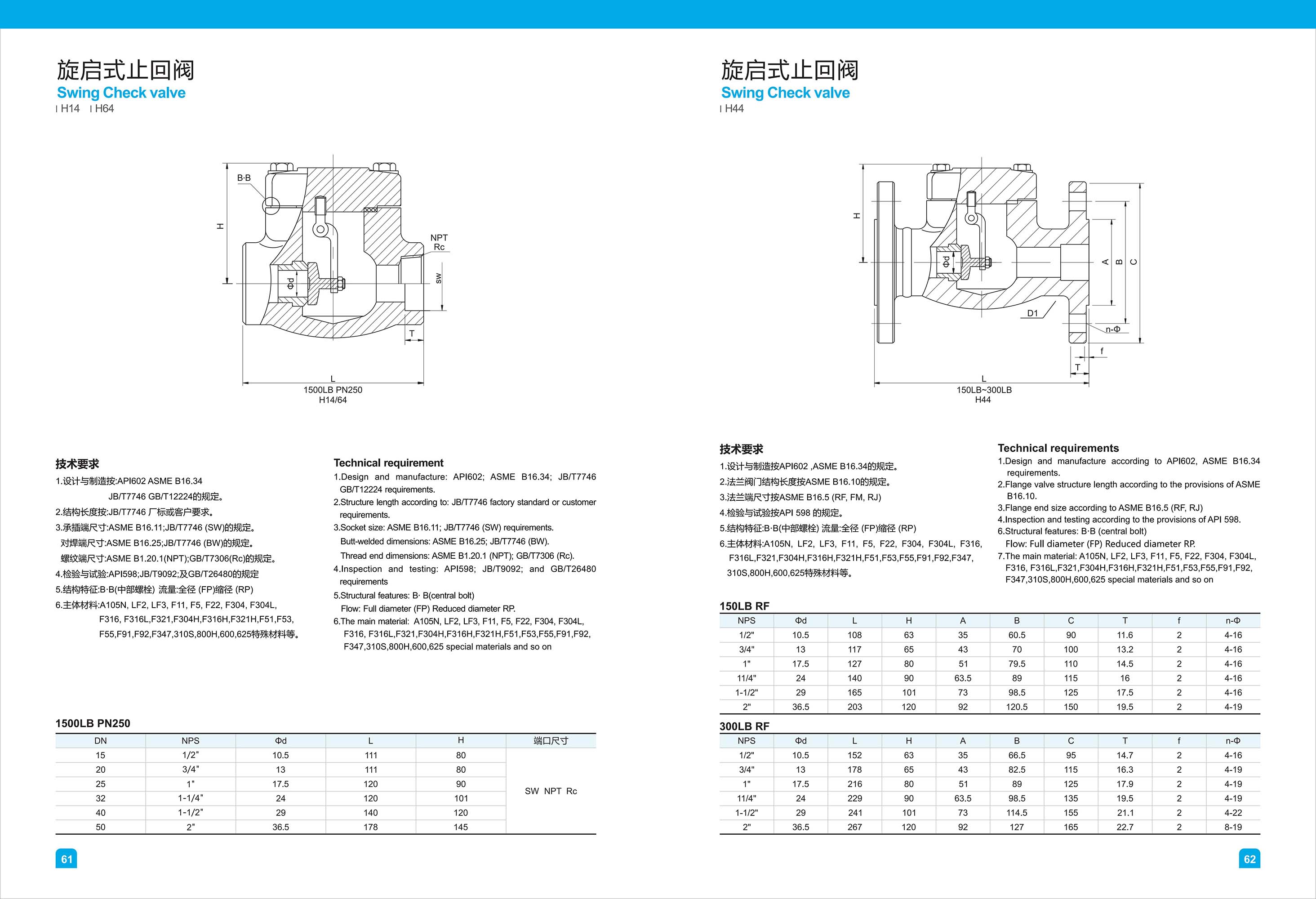
The Forged Steel 旋启式止回阀 mainly consists of the following parts:
-
Body: One‑piece forged construction in materials such as A105 (carbon steel), F22 (alloy steel), or F304/F316 (stainless steel). Compact structure with no casting defects.
-
Disc: Streamlined metal disc rotating around a top pin shaft. The sealing face can be hardfaced with Stellite or other hard alloys for wear and high‑temperature resistance.
-
Pin Shaft: Stainless steel or corrosion‑resistant alloy shaft ensuring smooth disc movement.
-
Seat: Integral seat machined directly in the body or hardfaced with Stellite, forming a metal‑to‑metal seal with the disc.
-
Bonnet: Bolted bonnet or pressure‑seal bonnet (for high pressure) to allow easy maintenance access.
-
Gasket / Seal: Spiral wound stainless steel + graphite gasket or flexible graphite packing for reliable external sealing under high temperature and pressure.
-
Lifting Lug (optional): Facilitates handling and installation.
Robust construction with full‑bore or reduced bore design (depending on standard). Compared with lift check valves, the swing type offers lower flow resistance and is suitable for high‑velocity applications.
Function
-
Prevents Backflow: Forward pressure opens the disc; reverse pressure or flow stoppage makes the disc quickly close under gravity and backpressure, stopping backflow.
-
Low Flow Resistance: When fully open, the disc lies flat along the flow path, providing a smooth passage with minimal pressure loss.
-
High Temperature & High Pressure Capability: The forged body combined with hardfaced metal seats ensures reliable long‑term operation at temperatures up to 550°C and pressures up to Class 2500.
-
Metal‑to‑Metal Sealing: Wear‑resistant and erosion‑resistant, suitable for steam, superheated steam, and media containing small amounts of particles.
-
Multiple Connection Options: Available in flanged (ASME B16.5), socket weld (ASME B16.11), butt weld (ASME B16.25), or threaded (NPT) ends to meet different piping standards.
-
In‑Line Maintenance: The bonnet can be removed to inspect or replace the disc and seat without cutting the valve out of the pipeline.
Working Conditions
-
Applicable Media: Water, oil, natural gas, steam, superheated steam, chemical media, mildly corrosive liquids, etc.
-
Temperature Range: –29°C to +550°C (depending on material and seat hardfacing).
-
Pressure Rating: Class 150, 300, 600, 900, 1500, 2500 (PN16 to PN420).
-
Nominal Diameter: DN15 – DN100 (1/2″ – 4″); larger sizes are typically cast steel.
-
Installation Position: Horizontal pipeline (recommended), with the hinge pin at the top.
-
Typical Applications:
-
High‑pressure steam boiler outlets
-
Pump discharges in oil refineries and petrochemical plants
-
Natural gas transmission line branch take‑offs
-
High‑temperature feedwater systems in power plants
-
Corrosive media lines in chemical plants
-
Marine high‑pressure hydraulic systems
-
Compressor discharge anti‑backflow
-
Summary
The Forged Steel Swing Check Valve, with its advantages of high strength and dense structure from forged construction, low flow resistance from the swing type design, and high temperature & wear resistance from metal‑to‑metal sealing, is the preferred anti‑backflow device for small‑bore pipelines in high‑pressure, high‑temperature, and critical service conditions. Compared with cast steel valves, forged steel valves are more reliable under high stress and thermal shock; compared with lift check valves, the swing type offers lower pressure loss. Designed to meet international standards such as API 602, this valve is widely used in oil & gas, chemical, power generation, and marine industries. For pipeline systems that demand long‑term stable operation, extended maintenance intervals, and severe service conditions, the Forged Steel Swing Check Valve is an indispensable safety component.

 English
  German
  Chinese
  Dutch
Dutch  Vietnamese
  Uzbek
Uzbek  Turkish
  Thai
Thai  Norwegian
  Russian
  French
  Korean
  Persian
  Spanish
  Ukrainian
  Serbian