什么是球阀?
文章 2026-04-12
按球体支撑结构分类
在复杂的流体控制系统中,球阀是至关重要的组成部分。无论是在石化工厂、市政供水系统还是住宅管道中,它在介质隔离和流量控制方面都发挥着关键作用。本文深入分析了球阀的定义、工作原理、主要类型、选型标准、维护程序,并且——关键的是——将其与其他常见阀门类型(闸阀、截止阀和蝶阀)进行了性能对比,以帮助工程师和采购专业人员做出明智的决策。.
按功能与流道形状分类
按阀体结构分类.
按驱动方式分类
-
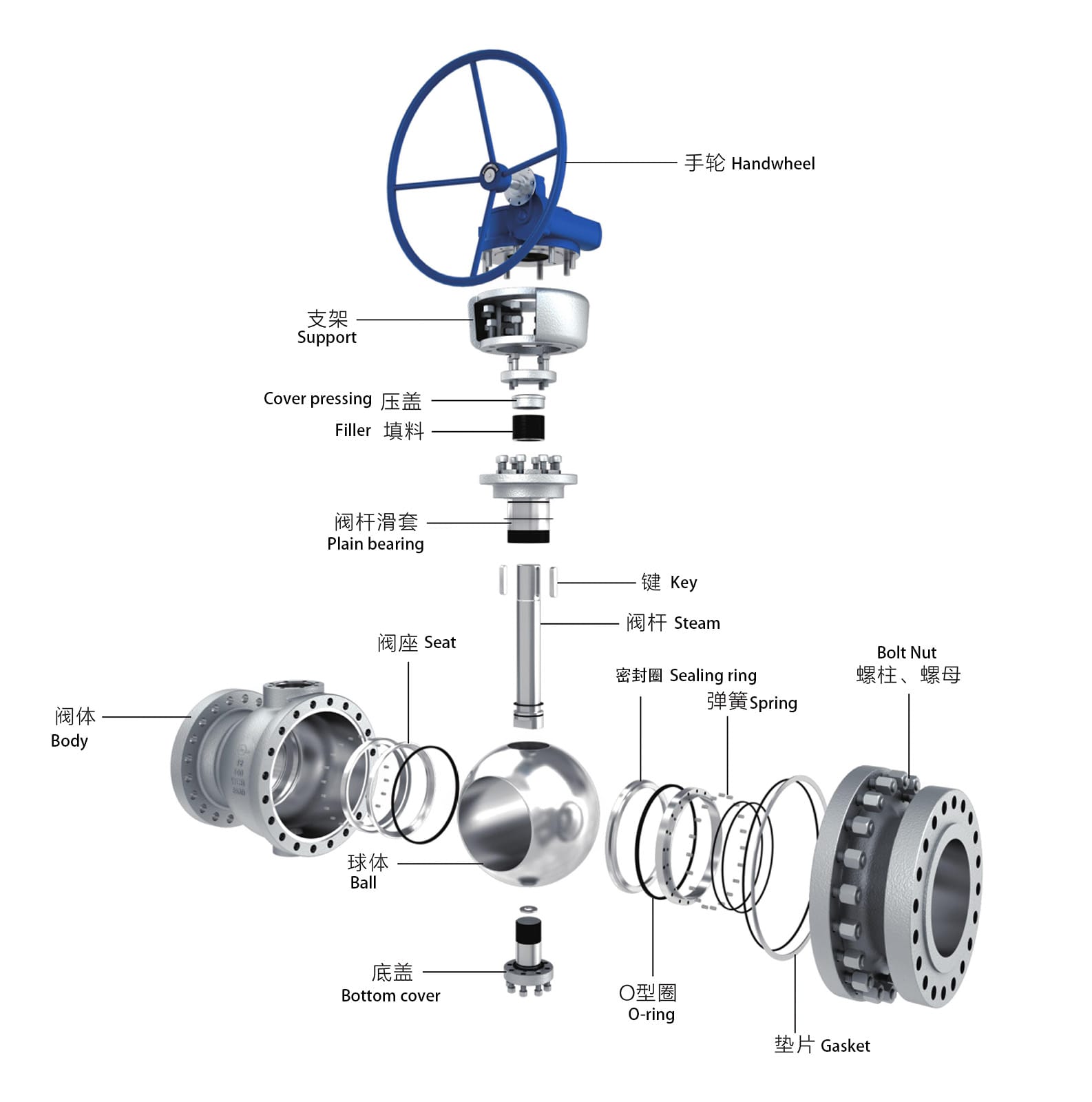
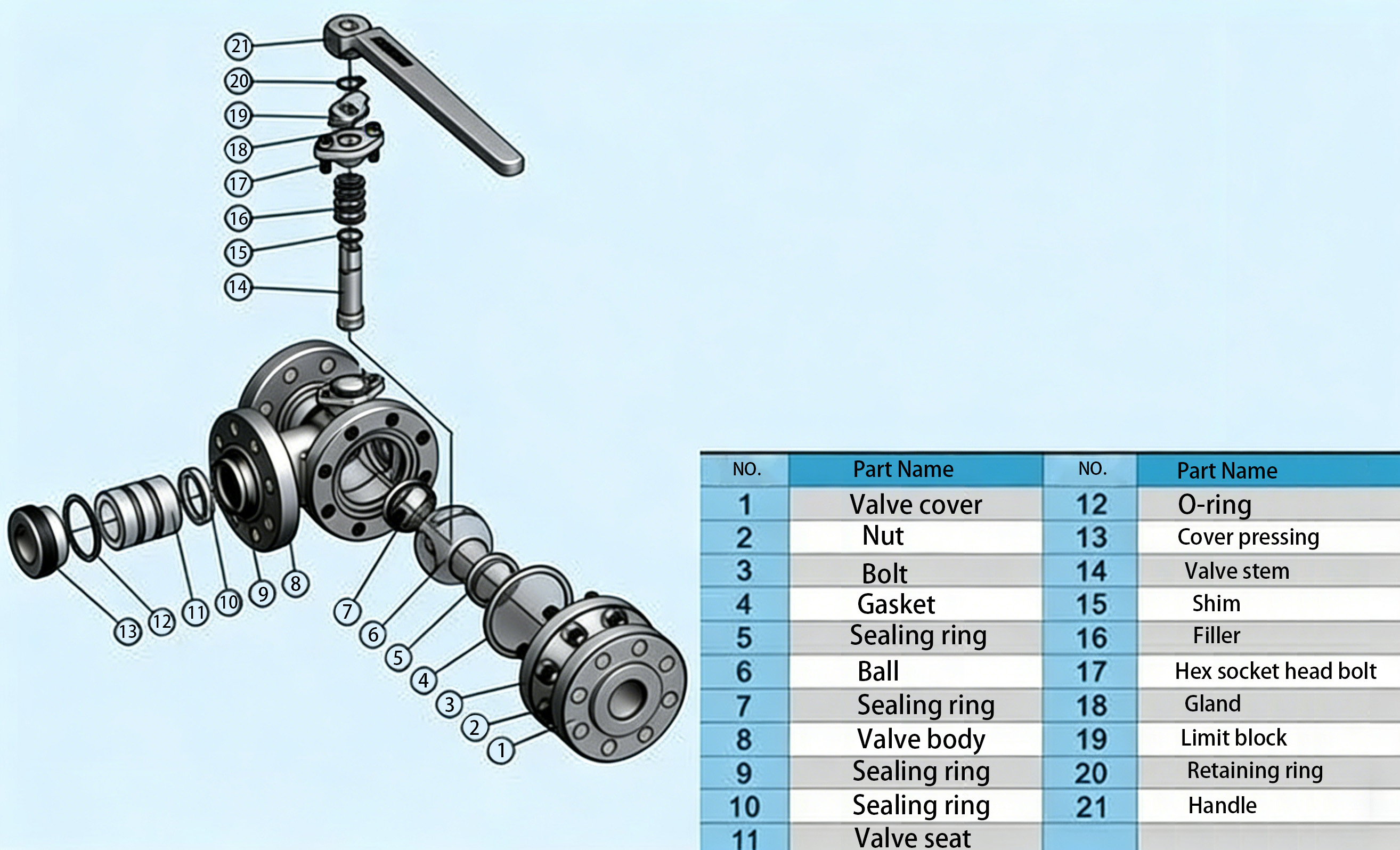
本体: 容纳内部零件并与管道系统连接的主要承压外壳。
-
球体: 核心密封部件,通常由不锈钢、黄铜或合金制成,其孔径决定了流量。
-
阀座: 紧贴球体的密封环,通常由聚四氟乙烯或金属制成,确保阀门关闭时严密密封。
-
阀杆: 将球体连接到外部操作机构(手柄或执行器)以传递扭矩。
-
填料: 阀杆周围的密封材料,以防止逸散排放和介质泄漏。
Working Principle: Precise 90-Degree Control
The operating principle of a ball valve is intuitive and efficient. When the handle or actuator is parallel to the pipeline, the bore of the ball is aligned with the flow path, allowing unrestricted media passage. When rotated 90 degrees, the handle sits perpendicular to the pipe, and the solid side of the ball presses against the seats, creating a positive seal. This simple “open/close” mechanism offers rapid operation and high sealing reliability.
Major Types of Ball Valves
Ball valves are categorized based on construction, function, and application.
1. By Ball Support Structure
-
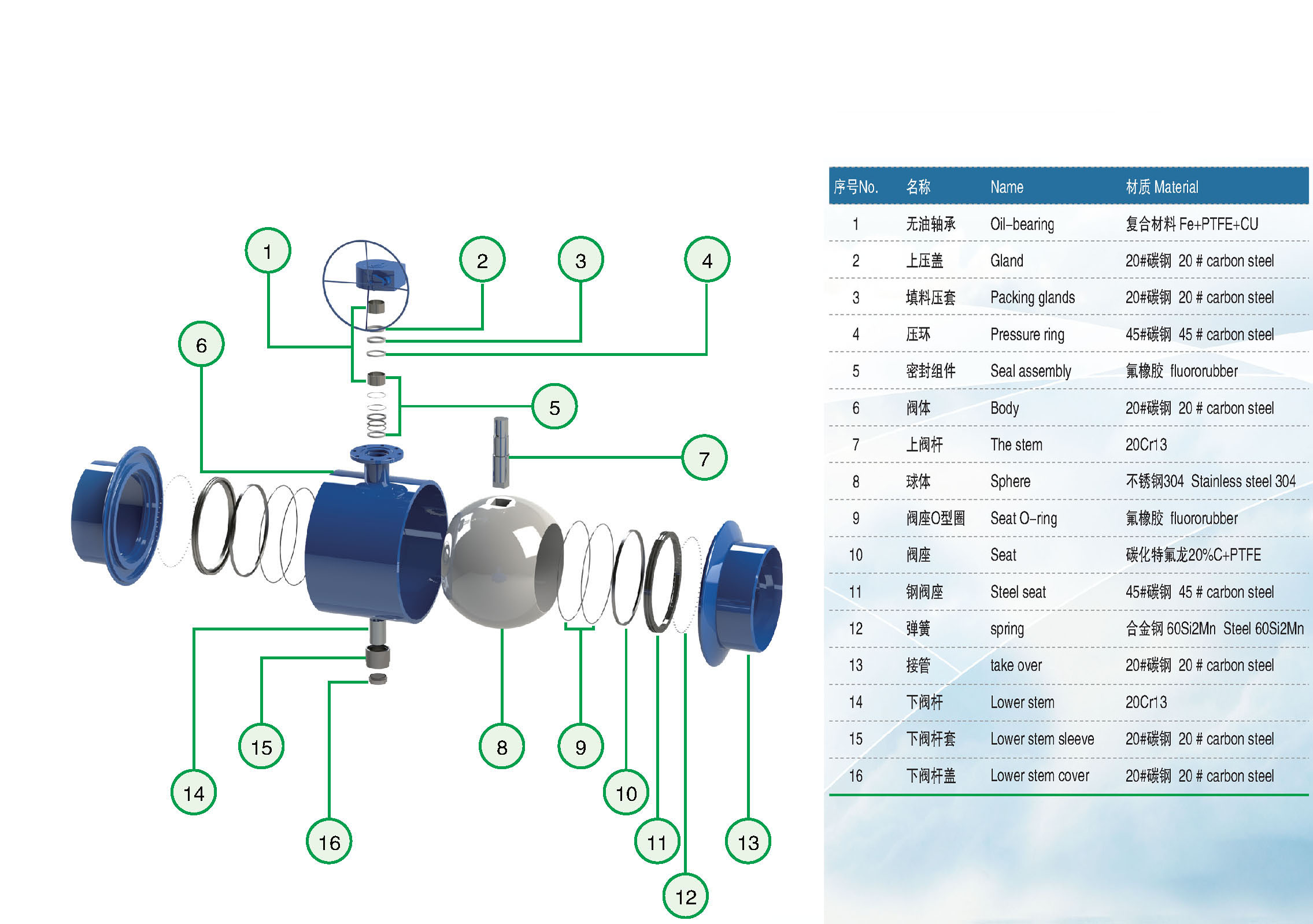
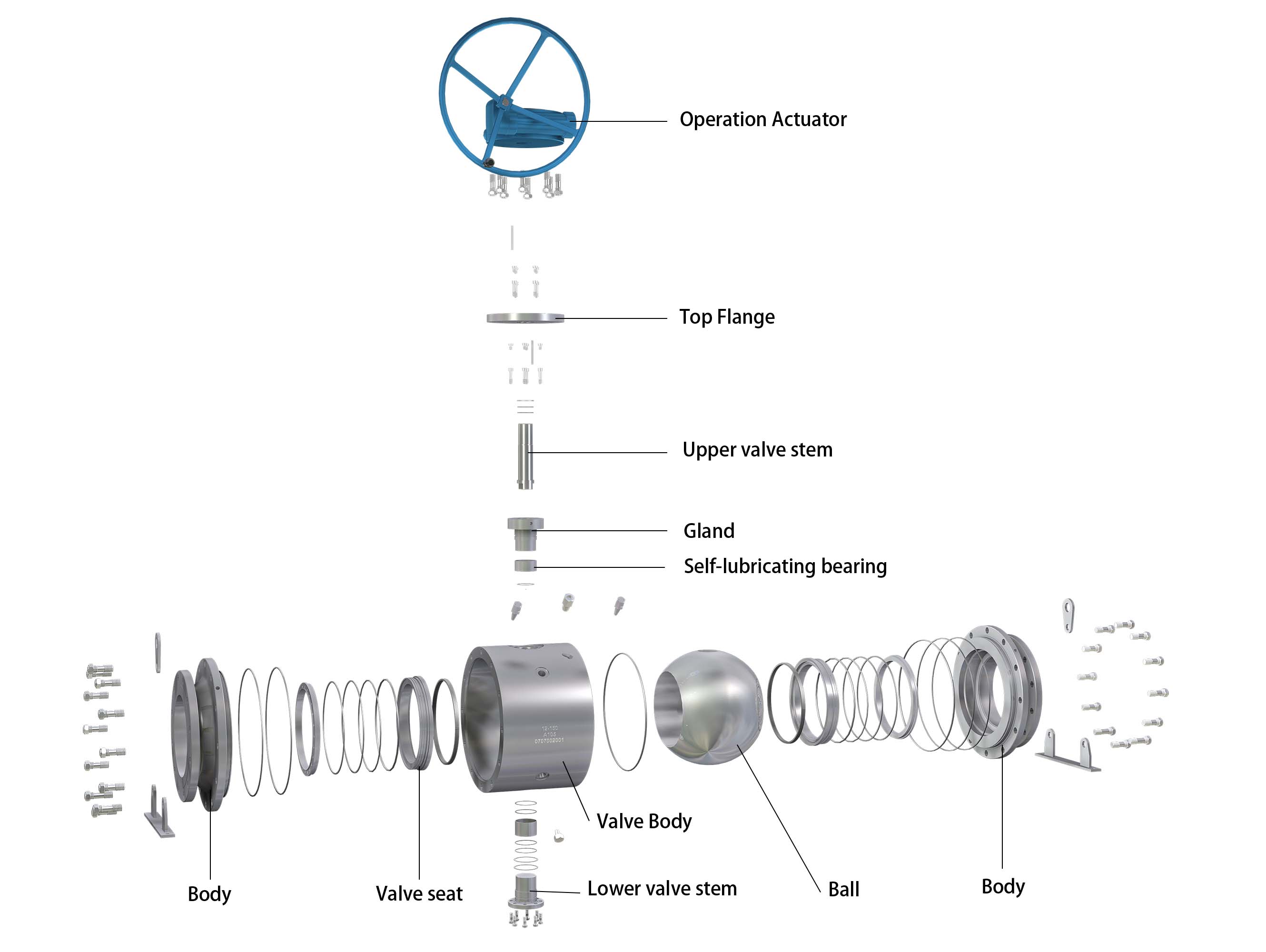
Floating Ball Valve: The ball is suspended between two seats. Under line pressure, the ball floats slightly downstream, pressing tighter against the downstream seat. This design is suitable for small to medium bore sizes and moderate pressure applications. Trunnion Ball Valve:.
-
The ball is fixed by upper and lower trunnions (shafts). Line pressure thrust is absorbed by the trunnion bearings rather than the seats, significantly reducing operating torque. This design is ideal for large bore sizes and high-pressure, severe service conditions. 2. By Function and Port Shape O-type Ball Valve:.
The most common type, featuring a full or reduced round bore. Primarily used for On-Off isolation, capable of achieving “bubble-tight” shutoff.
-
V-type Ball Valve: The ball features a V-notch profile. Rotating the ball allows for precise control of the flow area, providing an equal percentage flow characteristic. Used in applications requiring accurate flow modulation and throttling. 3-Way / Multi-port Ball Valve:, Features L-pattern or T-pattern bores to enable flow diversion, mixing, or switching between different pipeline branches.
-
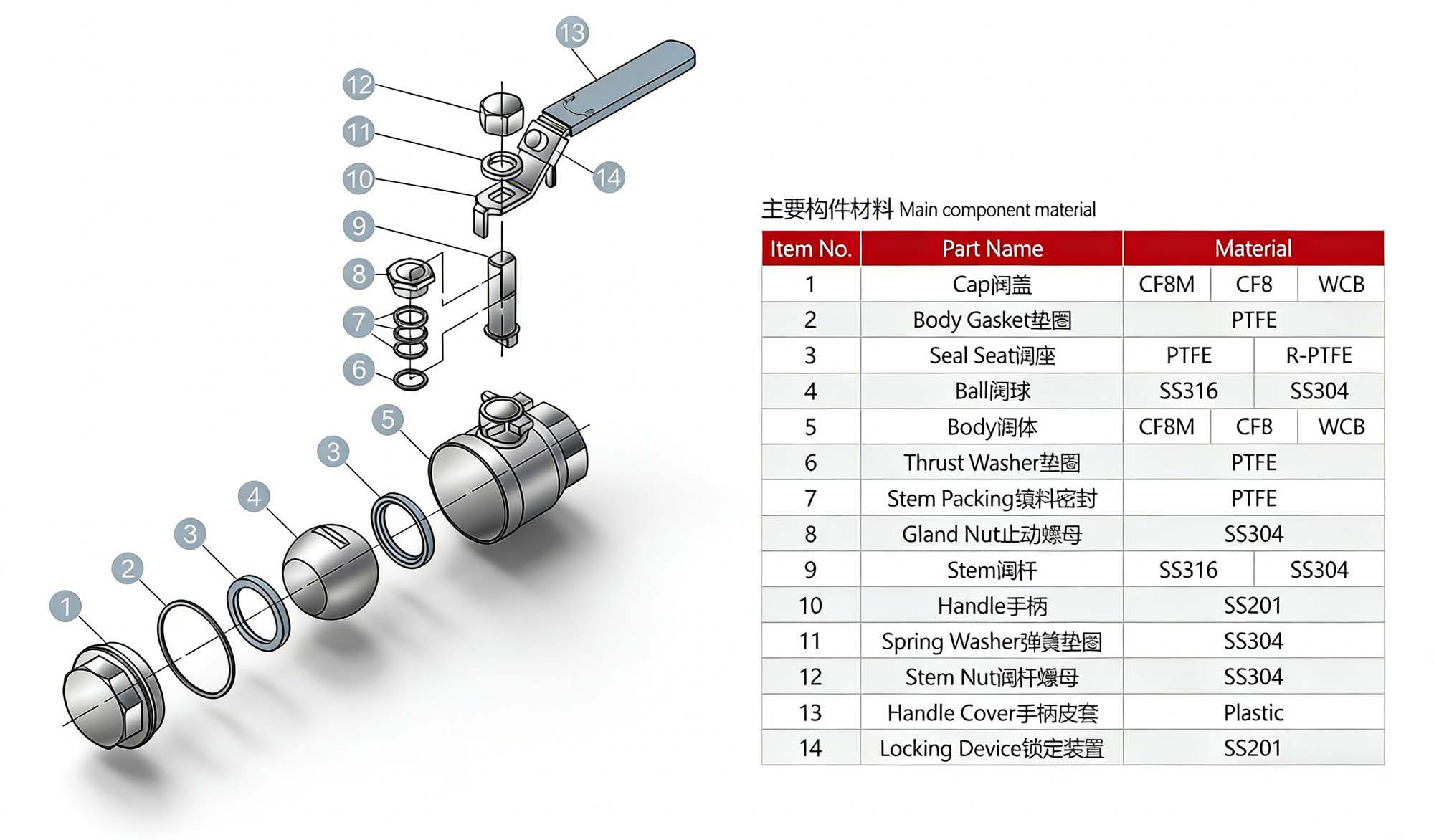
3. By Body Construction 1-Piece / 2-Piece / 3-Piece Ball Valves: Refers to the number of body sections assembled..
-
*1-Piece:* Simple, low-cost, but difficult to repair internally. *3-Piece:* Fully disassemblable, allowing for inline maintenance and cleaning—ideal for high-cycle or slurry applications. All-Welded Ball Valve The body is constructed with seamless welding, eliminating external leak paths. It is the preferred choice for buried service, subsea pipelines, and hazardous environments.
4. By Actuation Method
-
Operated by a lever handle or gearbox. Automated Ball Valve.
-
Operated by pneumatic or electric actuators for remote control and integration into process automation systems.
-
In-Depth Comparison: Ball Valve vs. Gate, Globe, and Butterfly Valves.
-
-
When specifying a valve, engineers often evaluate multiple types. The following table provides a direct comparison of key performance attributes to clarify the optimal application window for each design.Feature: Ball Valve Gate Valve.
Globe Valve
Multi-turn (Rising Stem)
Primary Function.
| Isolation / Shutoff | Isolation (Not for throttling) | Throttling / Regulating | Globe Valve | Butterfly Valve |
|---|---|---|---|---|
| Operation | 90-Degree Quick Turn | Multi-turn (Rising Stem) | Multi-turn (Rising Stem) | 90-Degree Quick Turn |
| Primary Function | Isolation / Shutoff | Isolation (Not for throttling) | Throttling / Regulating | 隔离 / 调节 |
| 密封性能 | 优异(零泄漏) | 良好(金属对金属允许微量泄漏) | 良好 | 一般(取决于弹性衬里) |
| 流阻 | 最小(全通径可忽略不计的损失) | 最小 | 高 (曲折的S形流道) | 中等(阀瓣阻碍流动) |
| 操作扭矩 | 中等 | 高(通常需要齿轮箱) | 高 | 低 |
| 安装占地面积 | 中等 | 大 (需阀瓣间隙) | 中等 | 紧凑 / 轻量 |
| 维护便利性 | 三片式高;一片式低 | 困难(需研磨阀座) | 频繁(阀座侵蚀常见) | 容易(更换衬里) |
| 理想尺寸范围 | DN15 – DN600(耳轴式更大) | DN50 – DN2000+ | DN15 – DN200 | DN50 – DN3000+ |
基于比较的应用指南:
-
选择球阀时: 您需要 快速紧急切断(ESD), 气泡级密封关闭 用于有毒或易燃介质,或处理含悬浮颗粒的浆液(使用金属密封或V型口设计)。.
-
选择闸阀时: 应用涉及 不频繁操作的隔离 在大口径输送管线(最小压降)或处理粘性介质时,刀型闸板可刮除阀座上的残留物。.
-
选择 Globe Valve 何时: 您需要 精确的流量调节 在小口径蒸汽或冷却水管线中,或需要频繁手动节流。.
-
选择蝶阀时: 项目涉及 非常大直径 (DN1000+)的水处理、有限安装空间或对重量敏感的海洋平台。.
如何选择合适的球阀
正确的选型和材料选择对长期可靠性至关重要。请遵循以下系统方法:
-
确定工况条件: 识别介质(水、油、酸、气体、浆液)、工作温度、设计压力(ANSI等级/磅级)及所需Cv值(流量系数)。.
-
确定阀门配置: 选择 O型口 (开关型)或 V型口 (调节型)。直通管道选用两通阀,混合/分流选用三通阀。.
-
材料与密封兼容性:
-
阀体材料: 铸造碳钢(WCB)、不锈钢(CF8M/316)或双相不锈钢用于腐蚀性环境。.
-
阀座材料: 使用 PTFE 适用于温度高达180°C(356°F)及清洁工况。使用 金属阀座 适用于高温(>200°C)或磨蚀性浆液工况。.
-
-
端部连接选择: 匹配现有管道规格——法兰连接 (高压/大口径),, 螺纹连接 (小口径用NPT/BSP),或 对焊连接 (永久性、高完整性)。.
-
执行机构要求: 手动杠杆用于偶尔操作;气动(齿轮齿条式)或电动执行机构用于自动化及安全完整性等级(SIL)。.
-
合规性验证: 确保阀门符合行业标准,例如 API 6D (管道阀门),, ASME B16.34 (压力-温度额定值),以及 ISO 17292.
常见应用
球阀在各行业中应用广泛:
-
石油与天然气: 管道、炼油厂及天然气处理设施中的关键隔离。.
-
化工与石化: 处理腐蚀性、有毒及高压介质。.
-
水处理与废水: 处理厂及配水管网中的流量控制。.
-
发电: 锅炉给水、蒸汽隔离及冷却水控制。.
-
食品饮料/制药: 用于无菌工艺及在线清洗(CIP)系统的卫生设计。.
优势与局限性
优势:
-
快速操作: 90度旋转实现快速开/关能力。.
-
可靠密封: 关闭时实现零泄漏性能。.
-
低压降: 全通径设计提供最小流动阻力。.
-
易于维护: 三片式设计允许在线维修,无需拆卸管道法兰。.
局限性:
-
节流能力: 标准O型球阀不适用于精确流量控制(V型球阀可缓解此问题)。.
-
温度限制: 软阀座(PTFE)耐高温能力有限;高温工况需选用金属阀座选项。.
-
水锤效应: 快速关闭可能引发压力波动;可能需要执行机构速度控制。.
常见故障与维护建议
-
阀座泄漏(内漏): 由阀座磨损、碎屑划伤或结垢引起。. 解决方案: 安装上游过滤器;操作前冲洗管路;更换或重新研磨阀座。.
-
阀杆泄漏(外漏): 由填料压缩损失或磨损引起。. 解决方案: 拧紧填料压盖或更换阀杆填料。.
-
操作卡涩: 由阀杆腐蚀或介质结晶引起。. 解决方案: 定期润滑周期(例如高温工况每3个月一次)。.
适用标准
-
API 6D: 管道阀门规范。.
-
API 608: 金属球阀——法兰、螺纹及焊接端。.
-
ASME B16.34: 阀门——法兰端、螺纹端及焊接端。.
-
ISO 17292: 石油、石化及关联行业用金属球阀。.
-
NACE MR0175/ISO 15156: 油气生产中用于含硫化氢环境(酸性工况)的材料。.
总结: 球阀是一种高效且可靠的流量控制装置。其多样化的设计配置使其能够应对从简单家用管道到严苛工业应用的各种挑战。理解其结构细节、类型选择以及与闸阀和截止阀相比的性能差异,可确保管道系统安全、稳定且长期运行。.
 English
  German
  Chinese
  Dutch
Dutch  Vietnamese
  Uzbek
Uzbek  Turkish
  Thai
Thai  Norwegian
  Russian
  French
  Korean
  Persian
  Spanish
  Ukrainian
  Serbian