What is a Ball Valve?
新闻 2026-04-12
What is a Ball Valve? A Comprehensive Guide to Design, Working Principle, Selection, and Comparison
In complex fluid control systems, the ball valve is an essential component. Whether in petrochemical plants, municipal water supply, or residential plumbing, it plays a critical role in media isolation and flow control. This article provides an in-depth analysis of ball valve definitions, working principles, main types, selection criteria, maintenance procedures, and—crucially—a performance comparison against other common valve types (Gate, Globe, and Butterfly) to help engineers and procurement professionals make informed decisions.
What is a Ball Valve? Definition and Core Structure
A ball valve is a quarter-turn rotational motion valve that uses a hollow, perforated, and pivoting ball to control flow through it. By rotating the ball 90 degrees, the bore aligns with the pipeline to allow flow or sits perpendicular to block flow completely.
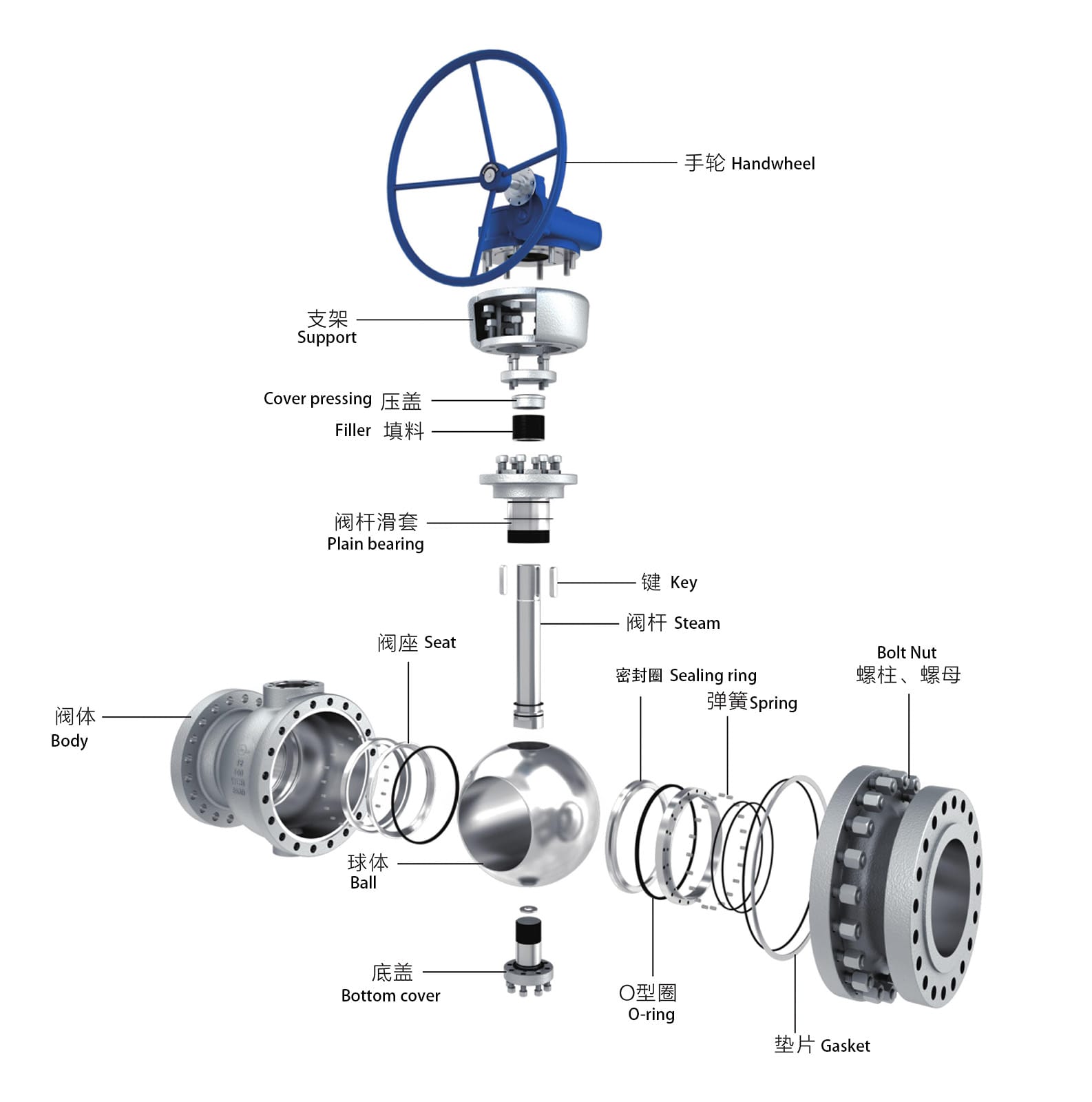
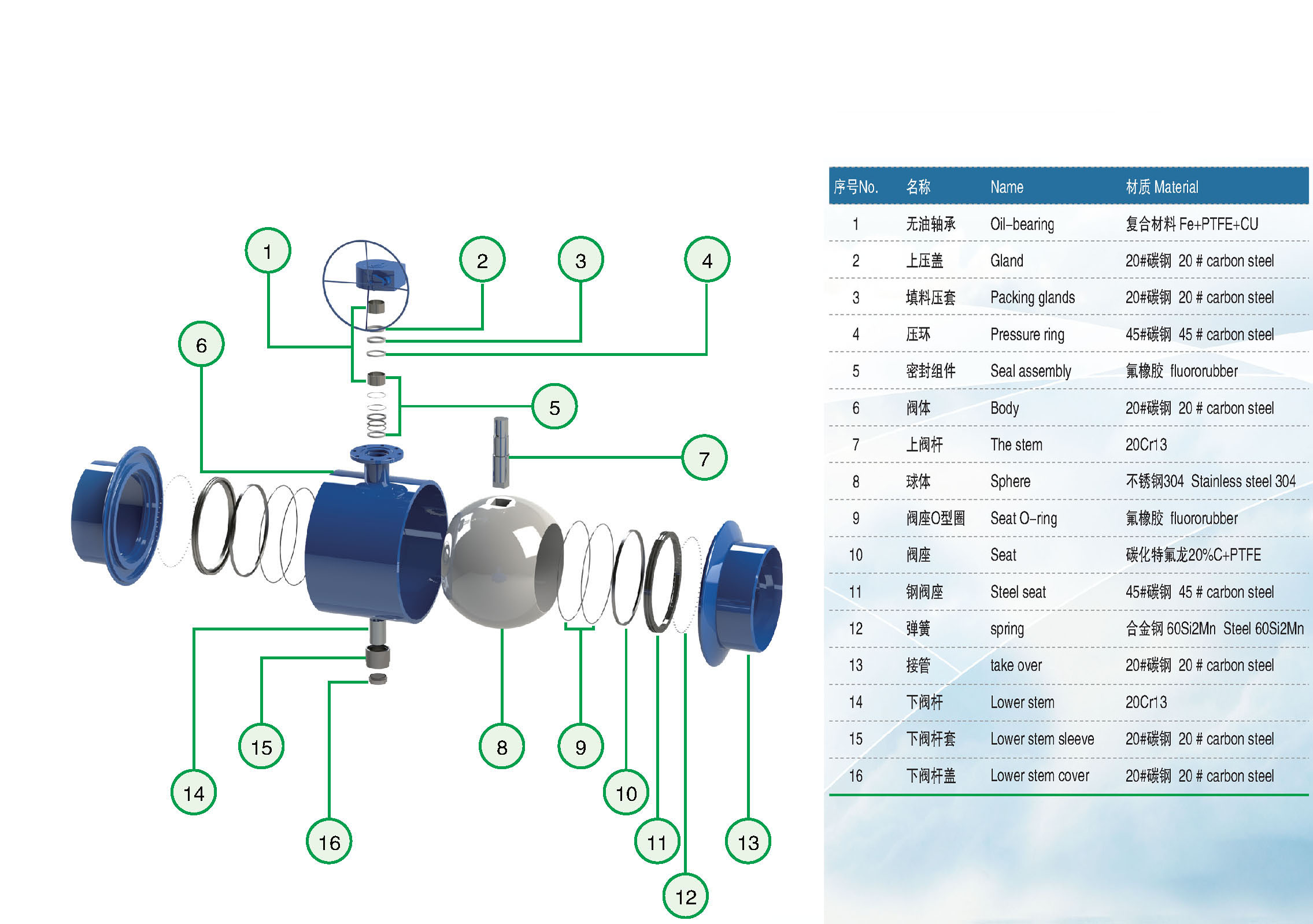
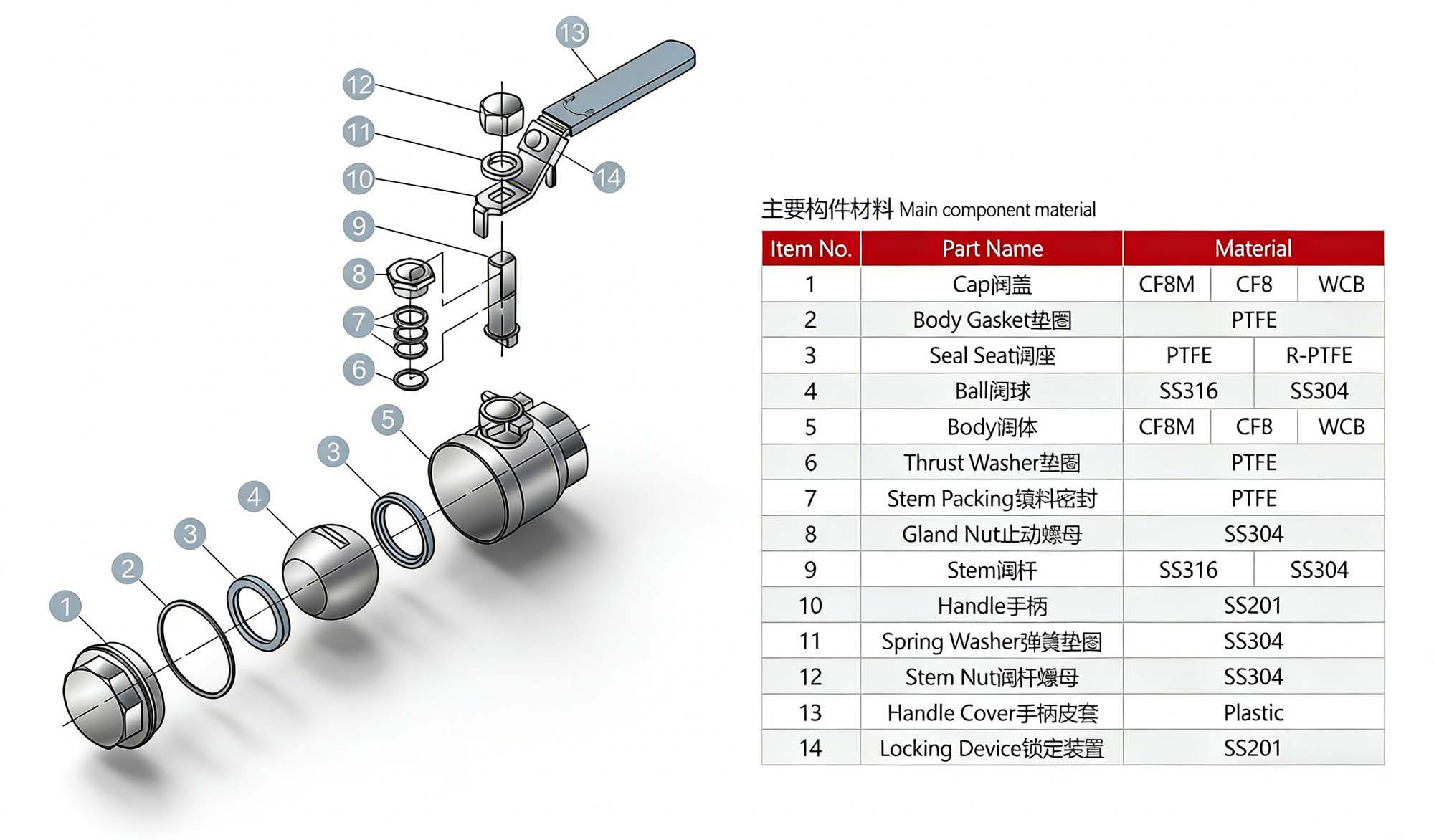
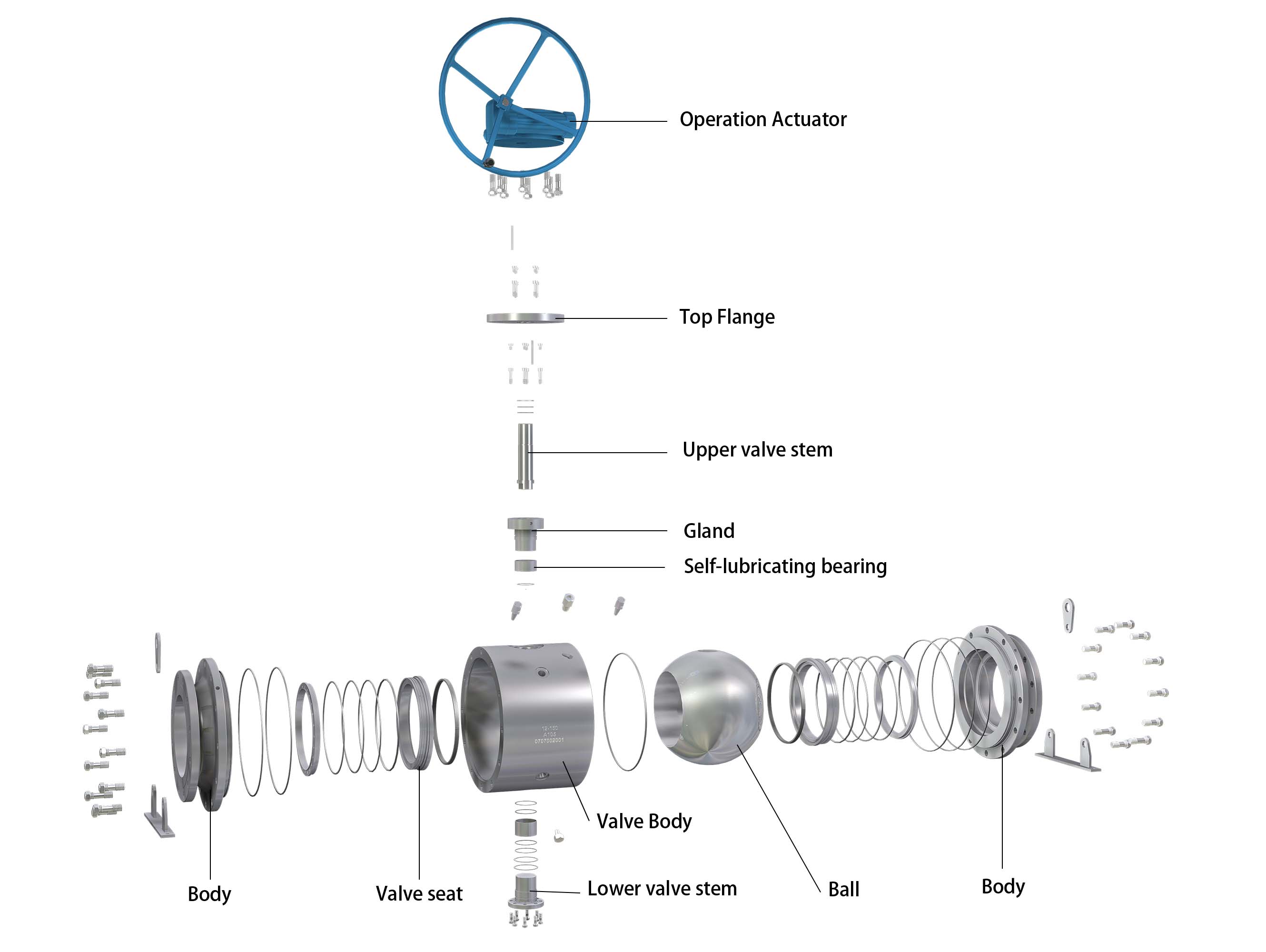
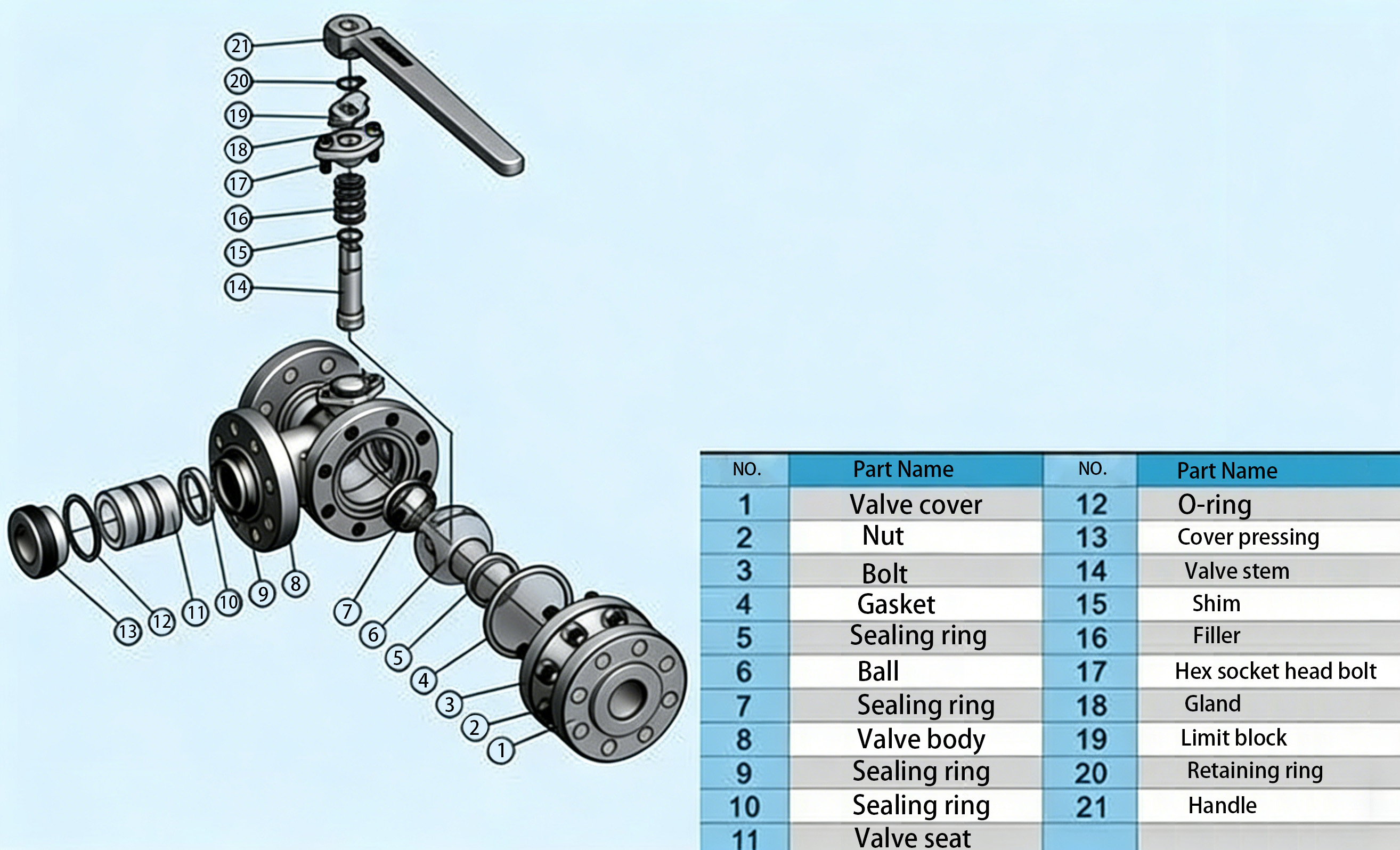
A standard ball valve consists of the following key components:
-
Body: The main pressure-containing shell that houses internal parts and connects to the piping system.
-
Ball: The core closure member, typically made of stainless steel, brass, or alloy, featuring a bore that dictates flow capacity.
-
Seat: Sealing rings positioned against the ball, usually made of PTFE or metal, ensuring a tight shutoff when the valve is closed.
-
Stem: Connects the ball to the external operating mechanism (handle or actuator) to transmit torque.
-
Packing: Sealant material surrounding the stem to prevent fugitive emissions and media leakage.
Working Principle: Precise 90-Degree Control
The operating principle of a ball valve is intuitive and efficient. When the handle or actuator is parallel to the pipeline, the bore of the ball is aligned with the flow path, allowing unrestricted media passage. When rotated 90 degrees, the handle sits perpendicular to the pipe, and the solid side of the ball presses against the seats, creating a positive seal. This simple “open/close” mechanism offers rapid operation and high sealing reliability.
Major Types of Ball Valves
Ball valves are categorized based on construction, function, and application.
1. By Ball Support Structure
-
Floating Ball Valve: The ball is suspended between two seats. Under line pressure, the ball floats slightly downstream, pressing tighter against the downstream seat. This design is suitable for small to medium bore sizes and moderate pressure applications.
-
Trunnion Ball Valve: The ball is fixed by upper and lower trunnions (shafts). Line pressure thrust is absorbed by the trunnion bearings rather than the seats, significantly reducing operating torque. This design is ideal for large bore sizes and high-pressure, severe service conditions.
2. By Function and Port Shape
-
O-type Ball Valve: The most common type, featuring a full or reduced round bore. Primarily used for On-Off isolation, capable of achieving “bubble-tight” shutoff.
-
V-type Ball Valve: The ball features a V-notch profile. Rotating the ball allows for precise control of the flow area, providing an equal percentage flow characteristic. Used in applications requiring accurate flow modulation and throttling.
-
3-Way / Multi-port Ball Valve: Features L-pattern or T-pattern bores to enable flow diversion, mixing, or switching between different pipeline branches.
3. By Body Construction
-
1-Piece / 2-Piece / 3-Piece Ball Valves: Refers to the number of body sections assembled.
-
*1-Piece:* Simple, low-cost, but difficult to repair internally.
-
*3-Piece:* Fully disassemblable, allowing for inline maintenance and cleaning—ideal for high-cycle or slurry applications.
-
-
All-Welded Ball Valve: The body is constructed with seamless welding, eliminating external leak paths. It is the preferred choice for buried service, subsea pipelines, and hazardous environments.
4. By Actuation Method
-
Manual Ball Valve: Operated by a lever handle or gearbox.
-
Automated Ball Valve: Operated by pneumatic or electric actuators for remote control and integration into process automation systems.
In-Depth Comparison: Ball Valve vs. Gate, Globe, and Butterfly Valves
When specifying a valve, engineers often evaluate multiple types. The following table provides a direct comparison of key performance attributes to clarify the optimal application window for each design.
| Feature | Ball Valve | Gate Valve | Globe Valve | Butterfly Valve |
|---|---|---|---|---|
| Operation | 90-Degree Quick Turn | Multi-turn (Rising Stem) | Multi-turn (Rising Stem) | 90-Degree Quick Turn |
| Primary Function | Isolation / Shutoff | Isolation (Not for throttling) | Throttling / Regulating | Isolation / Regulating |
| Sealing Performance | Excellent (Zero Leakage) | Good (Metal-to-metal allows minor leakage) | Good | Fair (Dependent on resilient liner) |
| Flow Resistance | Minimal (Full bore offers negligible loss) | Minimal | High (Tortuous S-shaped flow path) | Moderate (Disc obstructs flow) |
| Operating Torque | Moderate | High (Gearbox often required) | High | Low |
| Installation Footprint | Moderate | Large (Requires disc clearance) | Moderate | Compact / Lightweight |
| Maintenance Ease | High for 3-piece; Low for 1-piece | Difficult (Seat lapping required) | Frequent (Seat erosion common) | Easy (Liner replacement) |
| Ideal Size Range | DN15 – DN600 (Larger for Trunnion) | DN50 – DN2000+ | DN15 – DN200 | DN50 – DN3000+ |
Application Guidelines Based on Comparison:
-
Choose a Ball Valve When: You require rapid emergency shutdown (ESD), bubble-tight shutoff for toxic or flammable media, or handling slurries with suspended particles (using metal-seated or V-port designs).
-
Choose a Gate Valve When: The application involves infrequently operated isolation in large-diameter transmission lines (minimal pressure drop) or handling viscous media where a knife-gate action scrapes the seat clean.
-
Choose a Globe Valve When: You need precise flow regulation in small-diameter steam or cooling water lines, or frequent manual throttling is required.
-
Choose a Butterfly Valve When: The project involves very large diameters (DN1000+) in water treatment, limited installation space, or weight-critical offshore platforms.
How to Select the Right Ball Valve
Proper sizing and material selection are critical for long-term reliability. Follow this systematic approach:
-
Define Service Conditions: Identify the media (water, oil, acid, gas, slurry), operating temperature, design pressure (ANSI Class/Pound Rating), and required Cv (flow coefficient).
-
Determine Valve Configuration: Choose between O-port (On-Off) or V-port (Control). Select 2-way for straight runs or 3-way for mixing/diverting.
-
Material and Seal Compatibility:
-
Body Material: Cast Carbon Steel (WCB), Stainless Steel (CF8M/316), or Duplex for corrosive environments.
-
Seat Material: Use PTFE for temperatures up to 180°C (356°F) and clean service. Use Metal Seats for high temperature (>200°C) or abrasive slurry service.
-
-
End Connection Selection: Match existing pipe specs—Flanged (High pressure/large bore), Threaded (NPT/BSP for small bore), or Butt Weld (Permanent, high integrity).
-
Actuation Requirements: Manual lever for occasional use; Pneumatic (rack & pinion) or Electric actuators for automation and safety integrity levels (SIL).
-
Compliance Verification: Ensure the valve meets industry standards such as API 6D (Pipeline Valves), ASME B16.34 (Pressure-Temperature Ratings), and ISO 17292.
Common Applications
Ball valves are ubiquitous across industries:
-
Oil & Gas: Critical isolation in pipelines, refineries, and gas processing facilities.
-
Chemical & Petrochemical: Handling corrosive, toxic, and high-pressure media.
-
Water & Wastewater: Flow control in treatment plants and distribution networks.
-
Power Generation: Boiler feedwater, steam isolation, and cooling water control.
-
Food & Beverage / Pharmaceutical: Sanitary design for sterile processing and Clean-In-Place (CIP) systems.
Advantages and Limitations
Advantages:
-
Quick Operation: 90-degree rotation provides rapid open/close capability.
-
Reliable Sealing: Achieves zero-leakage performance when closed.
-
Low Pressure Drop: Full-port designs offer minimal resistance to flow.
-
Ease of Maintenance: 3-piece designs allow for inline repair without removing pipe flanges.
Limitations:
-
Throttling Capability: Standard O-port valves are not designed for precise flow control (V-port valves mitigate this).
-
Temperature Constraints: Soft seats (PTFE) have limited high-temperature resistance; metal-seated options required for elevated temperatures.
-
Water Hammer: Rapid closure can induce surge pressures; actuator speed control may be required.
Common Failures and Maintenance Tips
-
Seat Leakage (Internal): Caused by seat wear, debris scoring, or scale buildup. Solution: Install upstream strainer; flush line before operation; replace or re-lap seats.
-
Stem Leakage (External): Caused by packing compression loss or wear. Solution: Tighten gland follower or replace stem packing.
-
Operating Stiffness: Caused by stem corrosion or media crystallization. Solution: Regular lubrication cycle (e.g., every 3 months for high-temp service).
Applicable Standards
-
API 6D: Specification for Pipeline and Piping Valves.
-
API 608: Metal Ball Valves—Flanged, Threaded, and Welding Ends.
-
ASME B16.34: Valves—Flanged, Threaded, and Welding End.
-
ISO 17292: Metal Ball Valves for Petroleum, Petrochemical and Allied Industries.
-
NACE MR0175/ISO 15156: Materials for use in H2S-containing environments in oil and gas production (Sour Service).
总结: The ball valve is a highly efficient and reliable flow control device. Its versatile design configurations allow it to address challenges ranging from simple domestic plumbing to severe service industrial applications. Understanding the nuances of its structure, type selection, and performance relative to gate and globe valves ensures a safe, stable, and long-lasting piping system operation.