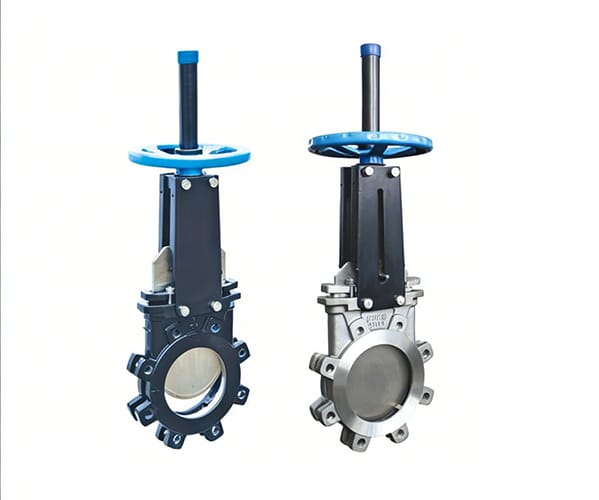
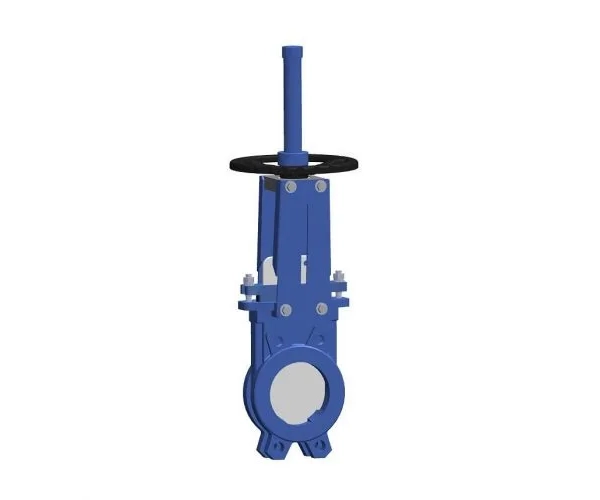
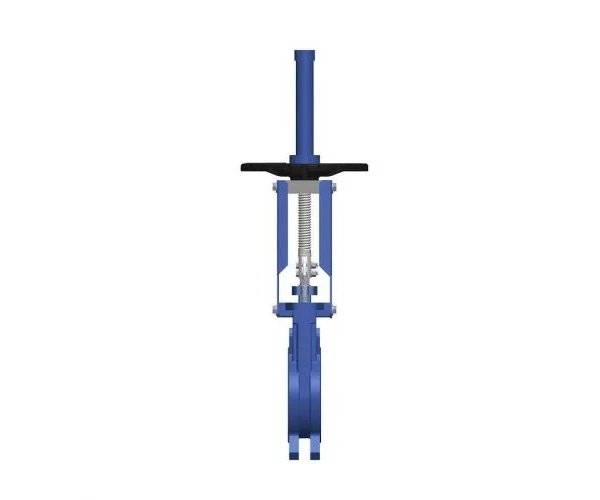
Rising stem knife gate valve
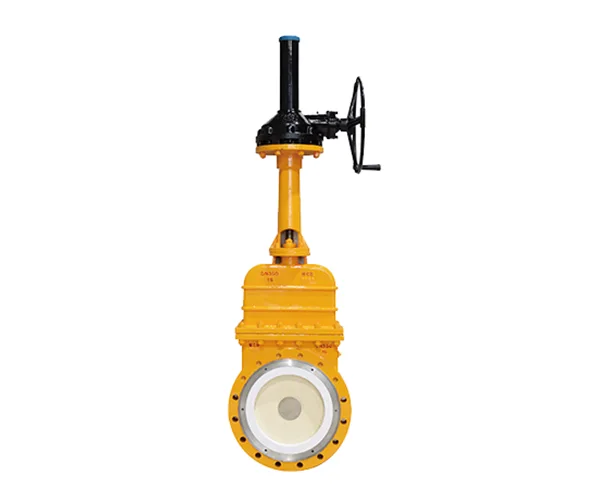
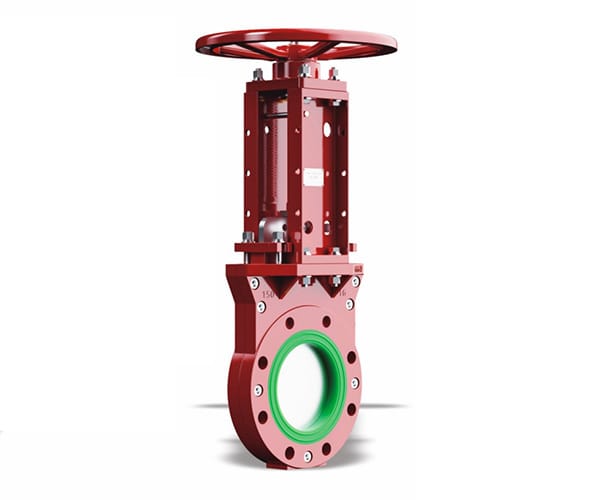
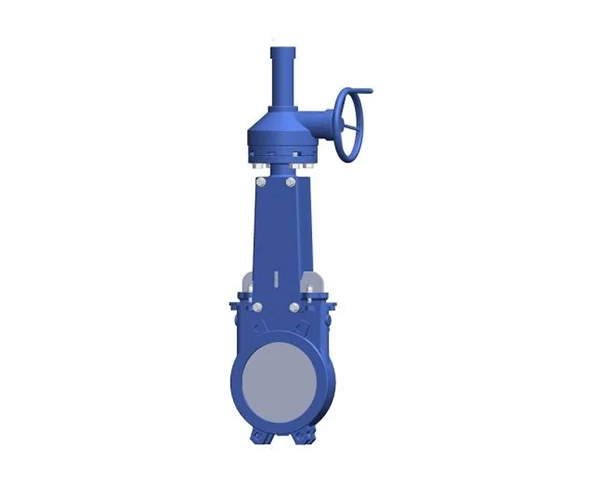
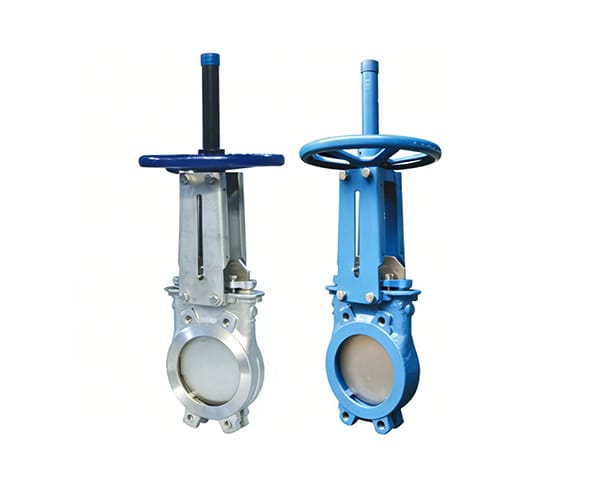
The Rising Stem Knife Gate Valve is a robust and reliable valve designed for isolating and regulating the flow of abrasive, viscous, or solid-laden media in various industrial applications. Featuring a rising stem design, this valve ensures clear visual indication of the valve position (open or closed) during operation. The sharp-edged knife gate can easily cut through thick, solid, or slurry-type media, making it an ideal solution for applications such as mining, wastewater treatment, and pulp & paper industries. The rising stem mechanism ensures smooth operation and is particularly advantageous when frequent valve position adjustments are required. This valve is...
Category:Knife gate valve
Call Us Anytime
15669818867
Product Overview
The Rising Stem Knife Gate Valve is a knife‑edge gate valve in which the stem rises and falls together with the gate during operation. It is designed only for ON‑OFF (open/close) service – not for flow regulation. Compared with non‑rising stem knife gate valves, the rising stem design allows the valve position to be visually determined by the height of the stem extension, requiring no additional position indicator – ideal for field inspection.
The sharp knife‑edge gate cuts through hanging fibers, paper, plastic strips, and other materials during closure, preventing clogging. The body flow path has no recesses, providing self‑cleaning action. The valve has flanged connections, with nominal diameters from DN50 to DN600, pressure ratings PN10/PN16 (Class 150), and body materials including cast iron, carbon steel, and stainless steel. Actuators can be manual, electric, or pneumatic (all ON‑OFF type).
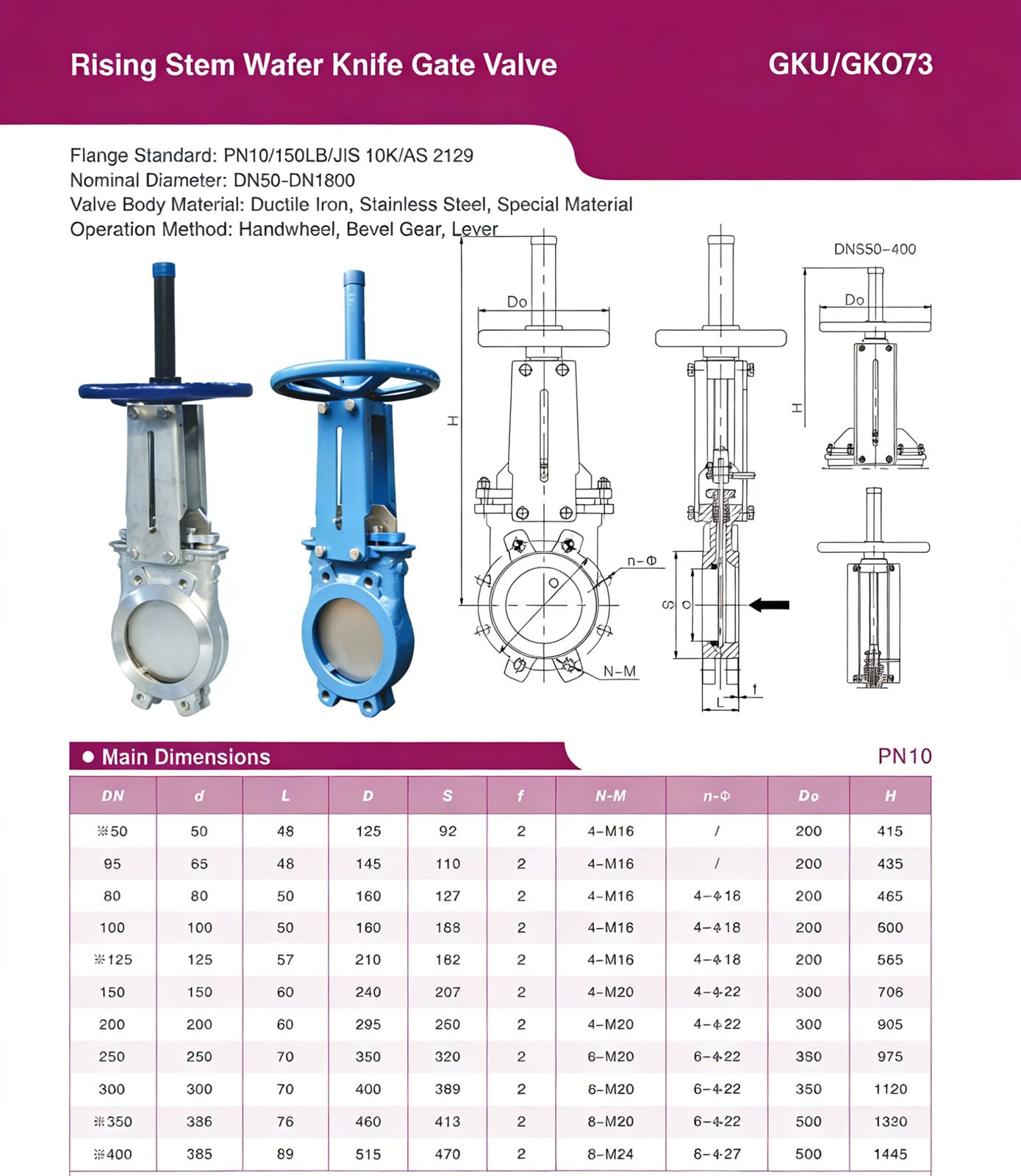
Product Structure
The Rising Stem Knife Gate Valve mainly consists of the actuator (ON‑OFF type) and the rising stem valve body assembly.
Actuator (ON‑OFF Type):
-
Available in manual (handwheel), electric, or pneumatic.
-
Manual: the handwheel rotates the stem nut; the stem and gate rise together, with the stem extending upward.
-
Electric/pneumatic: the actuator outputs rotational torque to drive the stem up and down.
-
All actuators are ON‑OFF type – not for modulation.
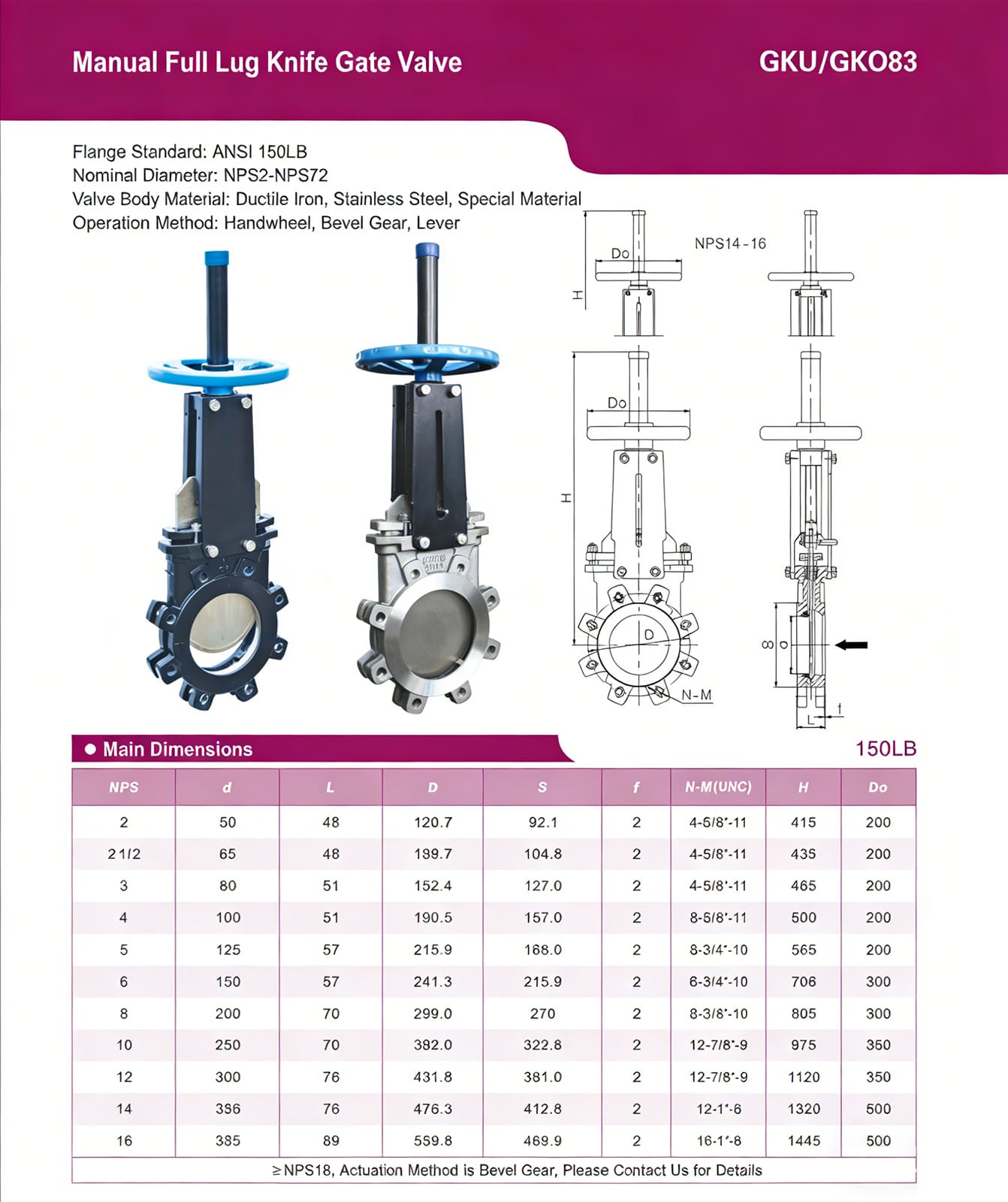
Rising Stem Valve Body Assembly:
-
Body: Cast or fabricated body in gray cast iron, ductile iron, carbon steel (WCB), stainless steel (CF8/CF8M), etc. Flanged ends conforming to GB/T 9113, ANSI B16.5, EN 1092‑1, etc. Full‑bore flow path with no recesses.
-
Gate: Stainless steel (304, 316, 310S) knife‑edge gate with a sharp edge to cut through fibers and particles. The gate surface can be hardfaced with Stellite or chrome‑plated. The top of the gate is fixed to the stem.
-
Seats: Available in rubber (EPDM, NBR, FKM), PTFE, or metal sealing; bidirectional sealing optional.
-
Stem: Stainless steel trapezoidal‑thread stem. The lower end is fixed to the gate, and the upper end engages with the stem nut. The stem rises and falls with the gate, extending noticeably above the bonnet when fully open.
-
Stem Nut: Copper alloy or stainless steel nut fixed to the bonnet or yoke, engaging with the stem threads to drive the stem up and down.
-
Packing Box: Located at the top of the bonnet, containing PTFE or flexible graphite packing, compressed by a packing gland to prevent external leakage.
-
Bonnet: Bolted to the body, with internal guides to ensure vertical gate movement.
-
Yoke: Connects the bonnet to the actuator (the yoke is taller to accommodate the rising stem).
The rising stem design makes the valve open/close status clearly visible, facilitating on‑site operation and inspection.
Function
-
Rising Stem Visual Indication: The stem rises and falls with the gate. When fully open, the stem extends to its maximum height, allowing the valve position to be visually determined without additional indicators.
-
Knife‑Edge Cutting Function: The sharp edge of the gate cuts through hanging fibers, paper, plastic strips, and other materials during closure, preventing clogging.
-
Self‑Cleaning Flow Path: The body flow path has no recesses. When fully open, the media can flush the interior, preventing solids accumulation.
-
Bidirectional Sealing (optional): A bidirectional floating seat or double‑sided sealing design allows the valve to withstand media pressure from either direction.
-
Full‑Bore Low Flow Resistance: When fully open, the gate is completely out of the flow path, providing minimal pressure loss.
-
Remote ON‑OFF Control: With electric or pneumatic actuators, remote automatic open/close operation is possible.
-
Manual Emergency Operation: Manual version operates directly by handwheel; electric/pneumatic versions are equipped with a handwheel for manual operation during power or air supply failure.
-
Easy Packing Maintenance: Packing can be adjusted or replaced while the stem is moving, without removing the valve.
Working Conditions
-
Applicable Media: Sewage, sludge, pulp, slurry, mud, fiber suspensions, particle‑laden liquids (not recommended for highly corrosive volatiles because the stem is exposed).
-
Temperature Range: –20°C to +200°C (PTFE seats); –20°C to +80°C (rubber seats); –29°C to +550°C (metal seats).
-
Pressure Rating: PN10, PN16 (Class 150); higher ratings available on request.
-
Nominal Diameter: DN50 – DN600 (2″ – 24″); larger sizes available on request.
-
Installation Space: Requires sufficient vertical clearance to accommodate the rising stem (the overall height is approximately twice that of a non‑rising stem valve).
-
Typical Applications:
-
Above‑ground valves in wastewater treatment plants for easy inspection
-
Pulp lines in paper mills where visual position confirmation is needed
-
Surface mine slurry pipelines
-
Overhead pipelines in industrial wastewater treatment stations
-
Fruit pulp and sauce lines in the food industry requiring visual position indication
-
Ash and slag discharge lines in power plants
-
Summary
The Rising Stem Knife Gate Valve, with its advantages of rising stem visual indication, knife‑edge cutting function, self‑cleaning flow path, and optional bidirectional sealing, is an ideal shut‑off valve for handling particle‑ or fiber‑laden media in pipeline systems where on‑site position observation is required and installation height is not restricted.
Compared with non‑rising stem knife gate valves, the rising stem version allows the valve position to be determined directly by the stem extension height, eliminating the need for additional indicators and simplifying inspection. However, it requires greater vertical clearance. With flanged connections, a full‑bore flow path, and optional manual or automated actuators, the Rising Stem Knife Gate Valve is an intuitive, reliable, and economical solution for ON‑OFF pipeline systems that require reliable shut‑off, handle solids or fibers, and have sufficient installation height.