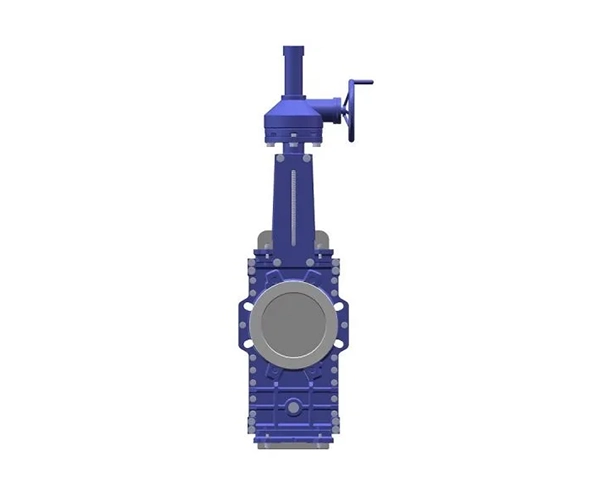
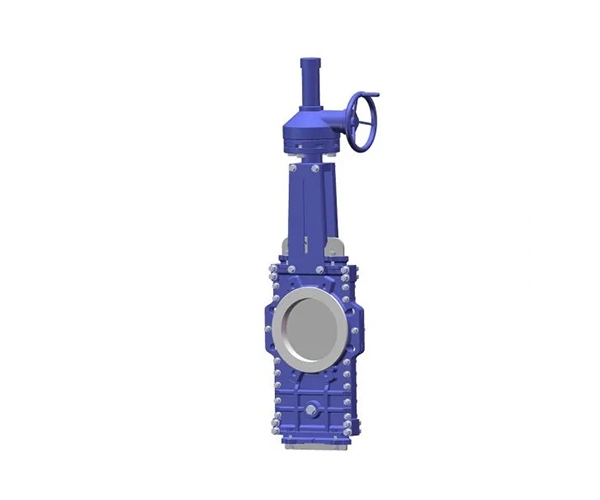
Penetration Knife Gate Valve
The Penetration Knife Gate Valve is designed to provide reliable isolation and control in applications involving challenging media, such as slurries, abrasive solids, and viscous fluids. Its specialized penetration design enables the valve's gate to cut through thick, solid-laden media, ensuring tight sealing and efficient operation in demanding environments. Ideal for industries like wastewater treatment, mining, pulp and paper, and chemical processing, this valve offers exceptional performance, even under harsh operating conditions. This valve combines the performance of a traditional knife gate valve with a penetration blade design, allowing it to handle viscous, abrasive, and slurry-type media while maintaining reliable...
Category:Knife gate valve
Call Us Anytime
15669818867
Product Overview
The Penetration Knife Gate Valve is a knife‑edge gate valve in which the gate completely penetrates the valve body, with packing seals at both the top and bottom. It is designed only for ON‑OFF (open/close) service – not for flow regulation. Unlike conventional knife gate valves (where the lower end of the gate is enclosed within the body), the penetration type allows the gate to extend out of the bottom when open and enter from the top when closed.
Throughout its stroke, the gate always passes through the body, effectively preventing media from settling, crystallizing, or drying at the bottom of the valve body, which could cause sticking. This valve is particularly suitable for high‑viscosity, easily crystallizing, particle‑laden, or fibrous slurries such as pulp, mud, syrup, coatings, gypsum slurry, and sewage. The valve has flanged connections, with nominal diameters from DN50 to DN600, pressure ratings PN10/PN16 (Class 150), and body materials including cast iron, carbon steel, and stainless steel. Actuators can be manual, electric, or pneumatic.
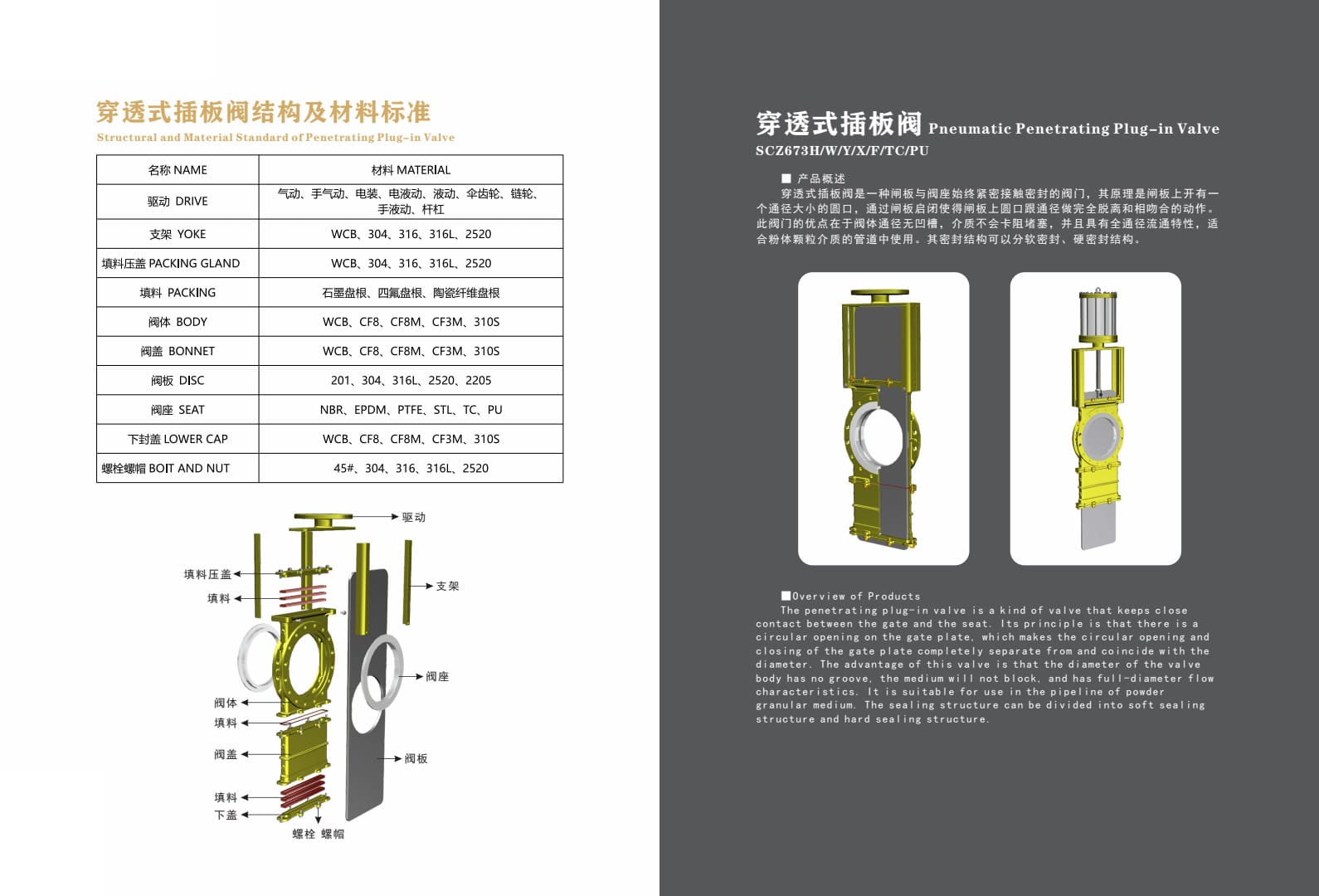
Product Structure
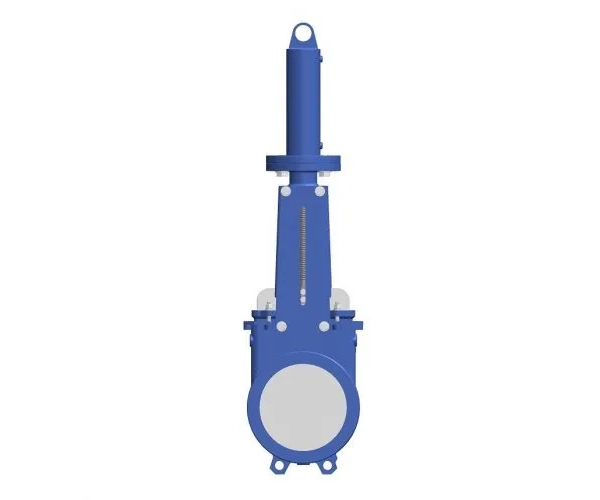
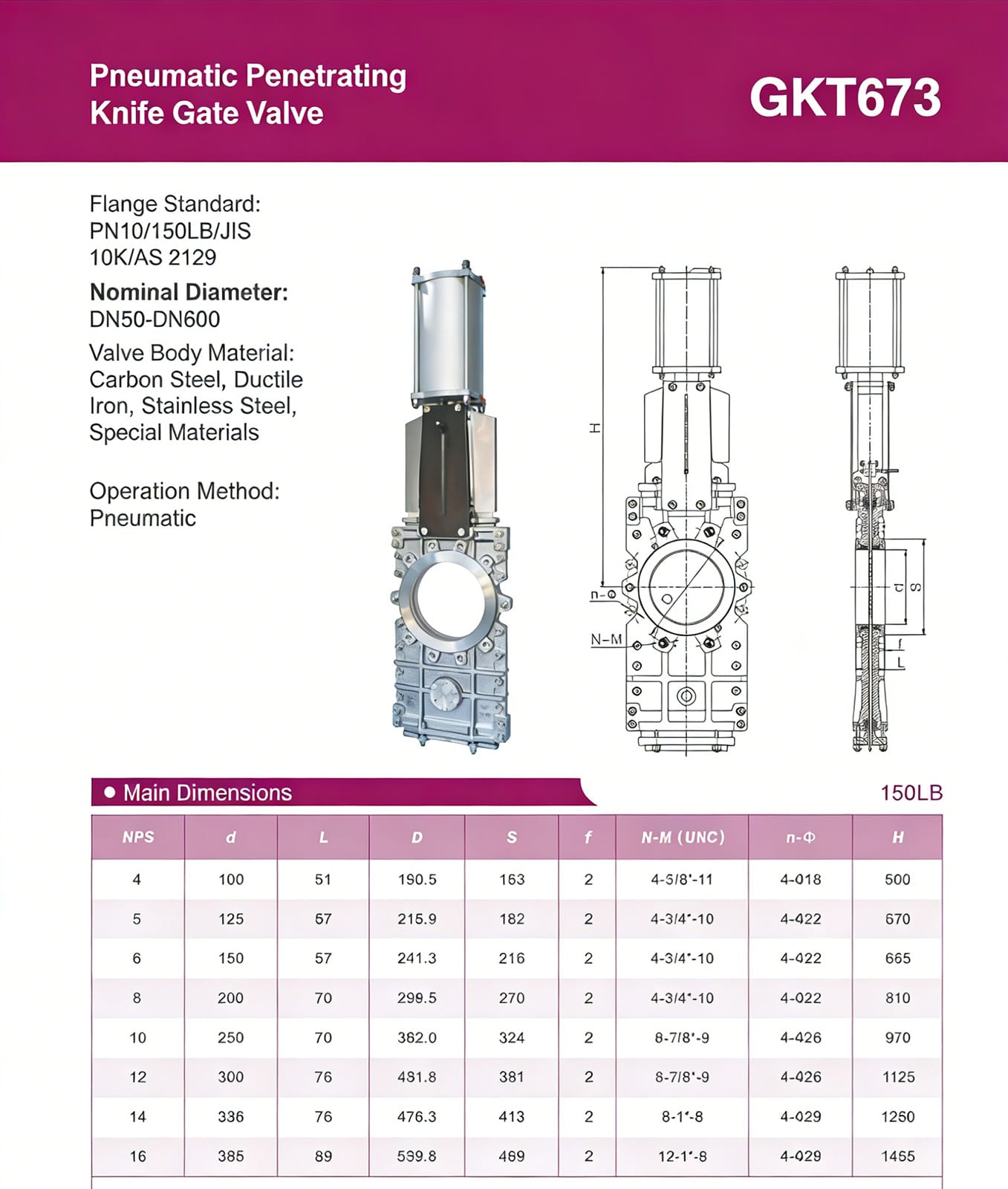
The Penetration Knife Gate Valve mainly consists of the actuator (ON‑OFF type) and the penetration‑type valve body assembly.
Actuator:
-
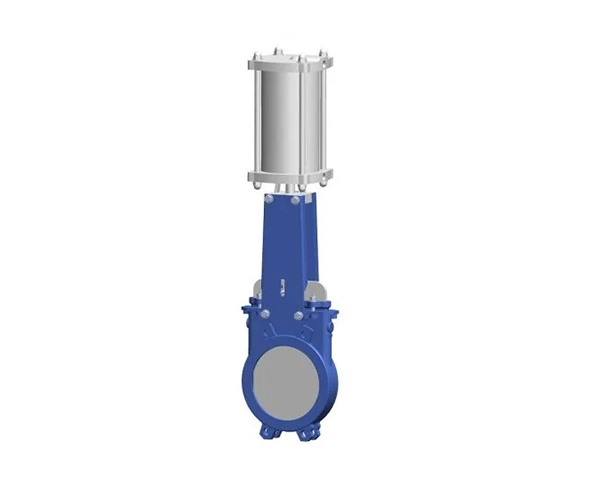
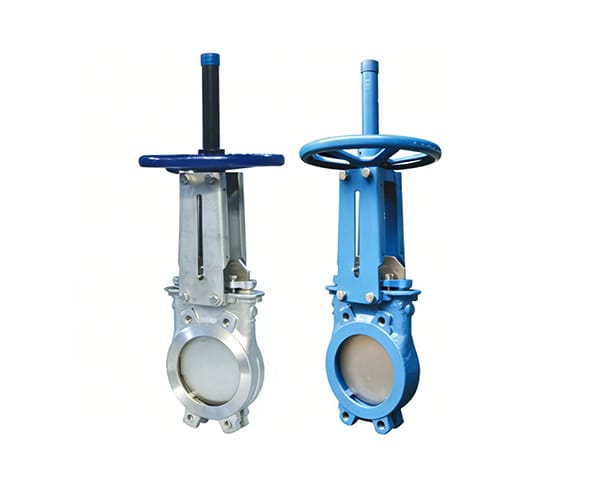
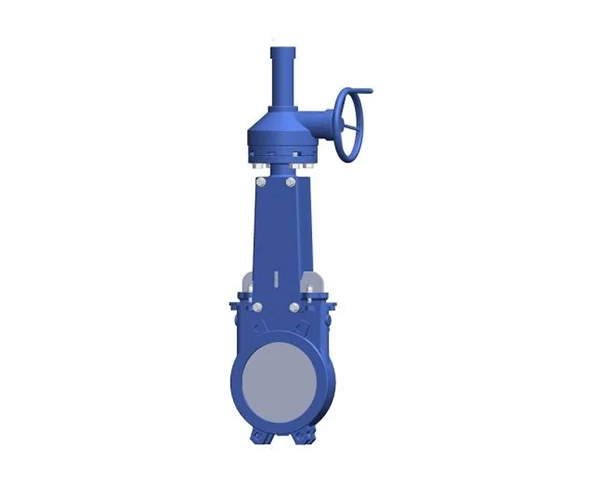
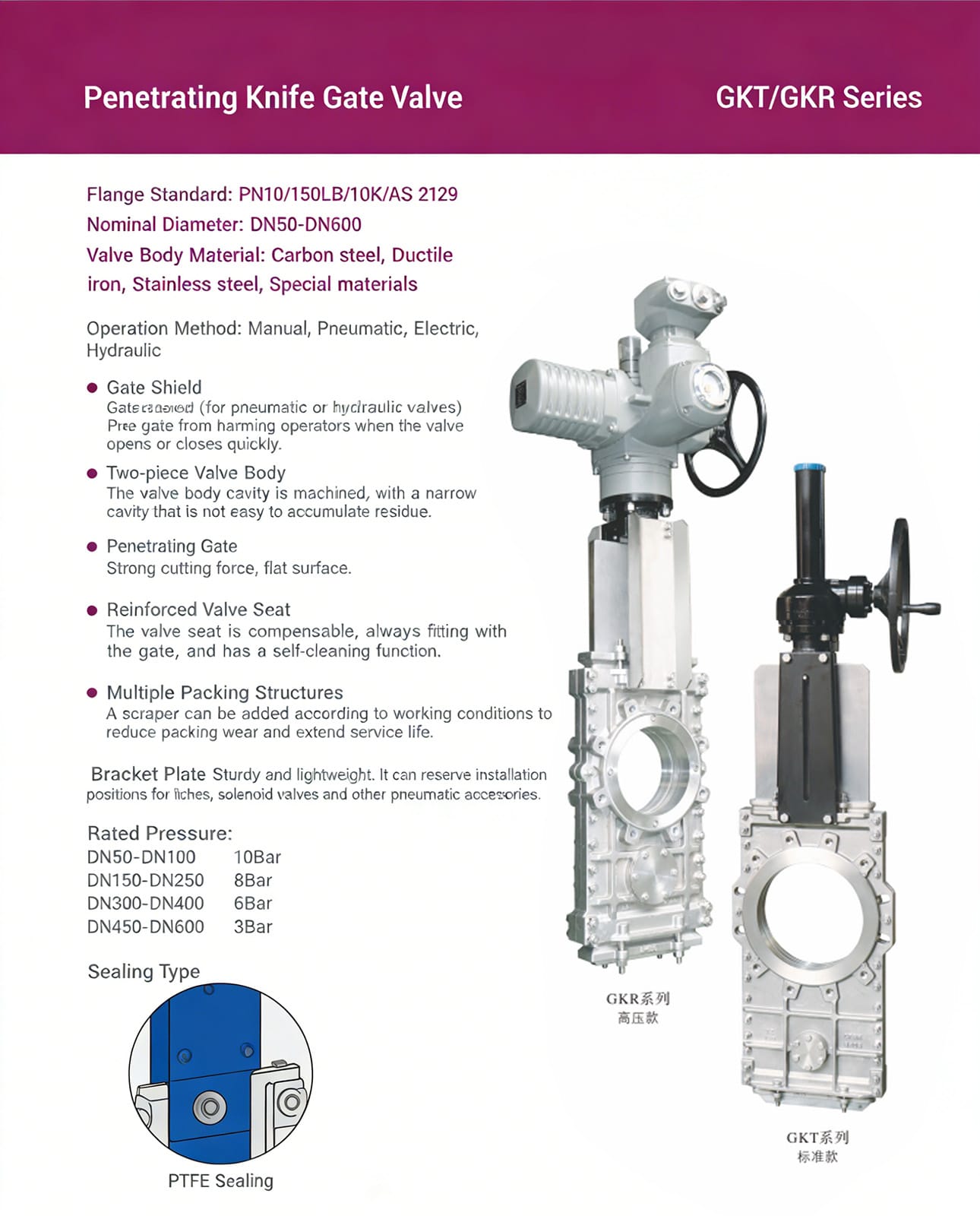
Available in manual (handwheel, bevel gear), electric, or pneumatic.
-
Electric actuator: motor, gearbox, travel limit switches, torque protection, handwheel.
-
Pneumatic actuator: cylinder, solenoid valve, limit switches.
-
All actuators are ON‑OFF type – not for modulation.
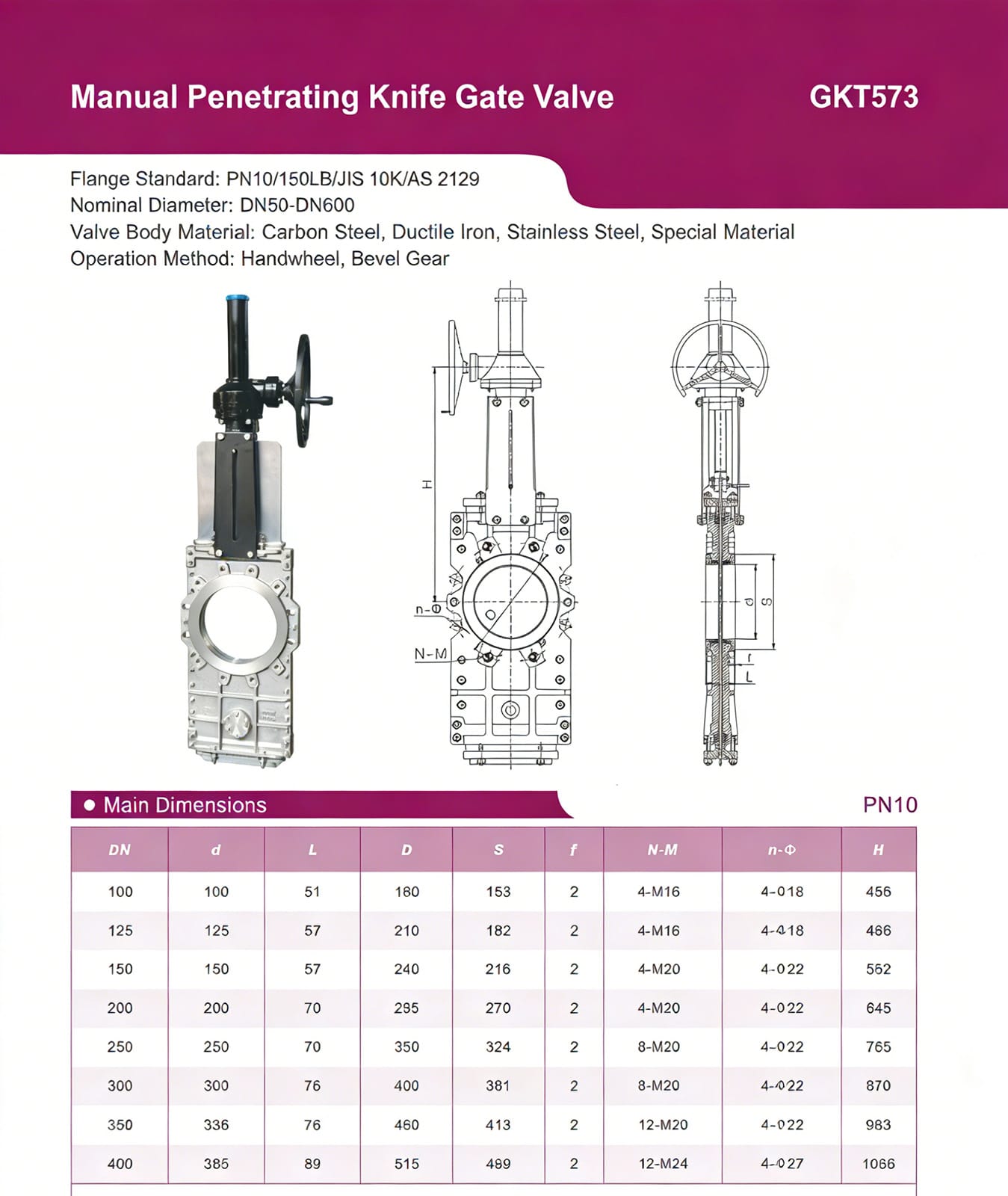
Penetration‑Type Valve Body Assembly:
-
Body: Cast or fabricated body in gray cast iron, ductile iron, carbon steel (WCB), stainless steel (CF8/CF8M), etc. Flanged ends conforming to GB/T 9113, ANSI B16.5, EN 1092‑1, etc. Full‑bore flow path with no recesses. The body is provided with packing boxes at both the top and bottom.
-
Gate: Stainless steel (304, 316, 310S) knife‑edge gate, longer than the body height. When closed, the gate extends out of the bottom of the body; when open, it extends out of the top. The gate surface can be hardfaced with Stellite or chrome‑plated for wear resistance.
-
Seats: Available in rubber (EPDM, NBR, FKM), PTFE, or metal sealing, typically bidirectional floating seats.
-
Top Packing Box: Located at the top of the body, containing multiple rings of PTFE or flexible graphite packing, compressed by a packing gland to prevent media leakage along the stem.
-
Bottom Packing Box: Located at the bottom of the body, containing multiple rings of PTFE or flexible graphite packing, compressed by a bottom gland to prevent leakage from the lower body – a key feature of the penetration knife gate valve.
-
Stem: Stainless steel trapezoidal‑thread stem, moving the gate up and down.
-
Bonnet / Yoke: Connects the body to the actuator.
-
Optional Bottom Flush Port: Can be provided to flush out any residual media.
The penetration design eliminates the bottom closed cavity, preventing media accumulation and sticking.
Function
-
Penetration Anti‑Settling Design: The gate fully penetrates the body, leaving no bottom cavity. Media cannot settle, crystallize, or dry at the bottom, completely solving the problem of bottom buildup and sticking common in ordinary knife gate valves.
-
Knife‑Edge Cutting Function: The sharp gate edge cuts through fibers, lumps, and particles during closure, preventing clogging.
-
Bidirectional Sealing: The top and bottom packing boxes, combined with floating seats, provide bidirectional zero‑leakage sealing.
-
Self‑Cleaning Flow Path: The recess‑free flow path and the scraping action of the gate against the seats remove adhered media during travel.
-
Full‑Bore Low Flow Resistance: When fully open, the gate is completely out of the flow path, providing minimal pressure loss.
-
Suitable for High‑Viscosity Media: The penetration design prevents buildup of sticky media (e.g., syrup, coatings, gypsum slurry) inside the valve cavity.
-
Remote ON‑OFF Control: With electric or pneumatic actuators, remote automatic open/close operation is possible.
-
Manual Emergency Operation: Electric/pneumatic actuators are equipped with a handwheel for manual operation during power or air supply failure.
Working Conditions
-
Applicable Media: Pulp, mud, slurry, syrup, coatings, gypsum slurry, lime slurry, sewage sludge, easily crystallizing media (urea solution, salt solution), high‑viscosity fluids, etc.
-
Temperature Range: –20°C to +200°C (PTFE seats/packing); –20°C to +80°C (rubber seats); –29°C to +550°C (metal seal).
-
Pressure Rating: PN10, PN16 (Class 150); higher ratings available on request.
-
Nominal Diameter: DN50 – DN600 (2″ – 24″); larger sizes available on request.
-
Installation Orientation: Vertical stem‑up recommended (the penetration design requires clearance below the valve for gate extension).
-
Typical Applications:
-
Pulp and coating lines in paper mills
-
Syrup and chocolate slurry lines in the food industry
-
Crystallizing media lines (urea, salt, caustic) in chemical plants
-
High‑solids sludge discharge in wastewater treatment plants
-
Gypsum and lime slurry lines in building materials industry
-
Slurry and tailings lines in mining and metallurgy
-
Paint and ink slurry lines in coating manufacturing
-
Summary
The Penetration Knife Gate Valve, with its unique gate‑through‑body design, top and bottom dual packing seals, elimination of bottom dead pockets, and knife‑edge cutting function, is one of the most reliable shut‑off valves for high‑viscosity, easily crystallizing, and high‑solids slurry media. Compared with ordinary knife gate valves, the penetration design completely eliminates the risk of bottom buildup and sticking – making it especially suitable for syrups, gypsum slurries, urea solutions, and other media that tend to dry and crystallize.
Compared with ball valves or butterfly valves, the knife‑edge gate cuts through fibers and particles without clogging. With flanged connections, a full‑bore flow path, and optional manual or automated actuators, the Penetration Knife Gate Valve is a durable, maintenance‑free professional solution for ON‑OFF pipeline systems that require reliable shut‑off of high‑viscosity, crystallizing, or high‑solids media.