Quel est un autre nom pour un robinet à boisseau sphérique ?
Article 2026-04-20
What Is Another Name for a Ball Valve? Industry Terms, Slang, and Alternative Names Explained
In piping specifications, procurement documents, or maintenance manuals, you may encounter various terms referring to a “ball valve.” Understanding these alternative names is essential for clear cross-departmental communication and avoiding specification errors. This article provides a systematic overview of professional alternative names, industry slang, et function-specific designations for ball valves across different contexts.
The Direct Answer: Common Alternative Names for a Ball Valve
If you need the shortest possible answer to “What is another name for a ball valve,” the following three are the most universally recognized and widely accepted alternatives:
-
Quarter-Turn Valve – A functional descriptor. Because a ball valve operates with a 90-degree rotation to open or close, this name highlights its fundamental distinction from multi-turn valves such as gate or globe valves.
-
Shut-off Valve – An application-based name. Since ball valves are primarily used for on-off isolation rather than precise throttling, engineers frequently refer to them simply as “shut-off valves” when emphasizing their isolation function.
-
Ball Cock – A historical/colloquial term. In earlier British English and specific plumbing contexts, small ball valves were often called “ball cocks” (though in modern industrial usage, this term more specifically denotes a float-operated valve).
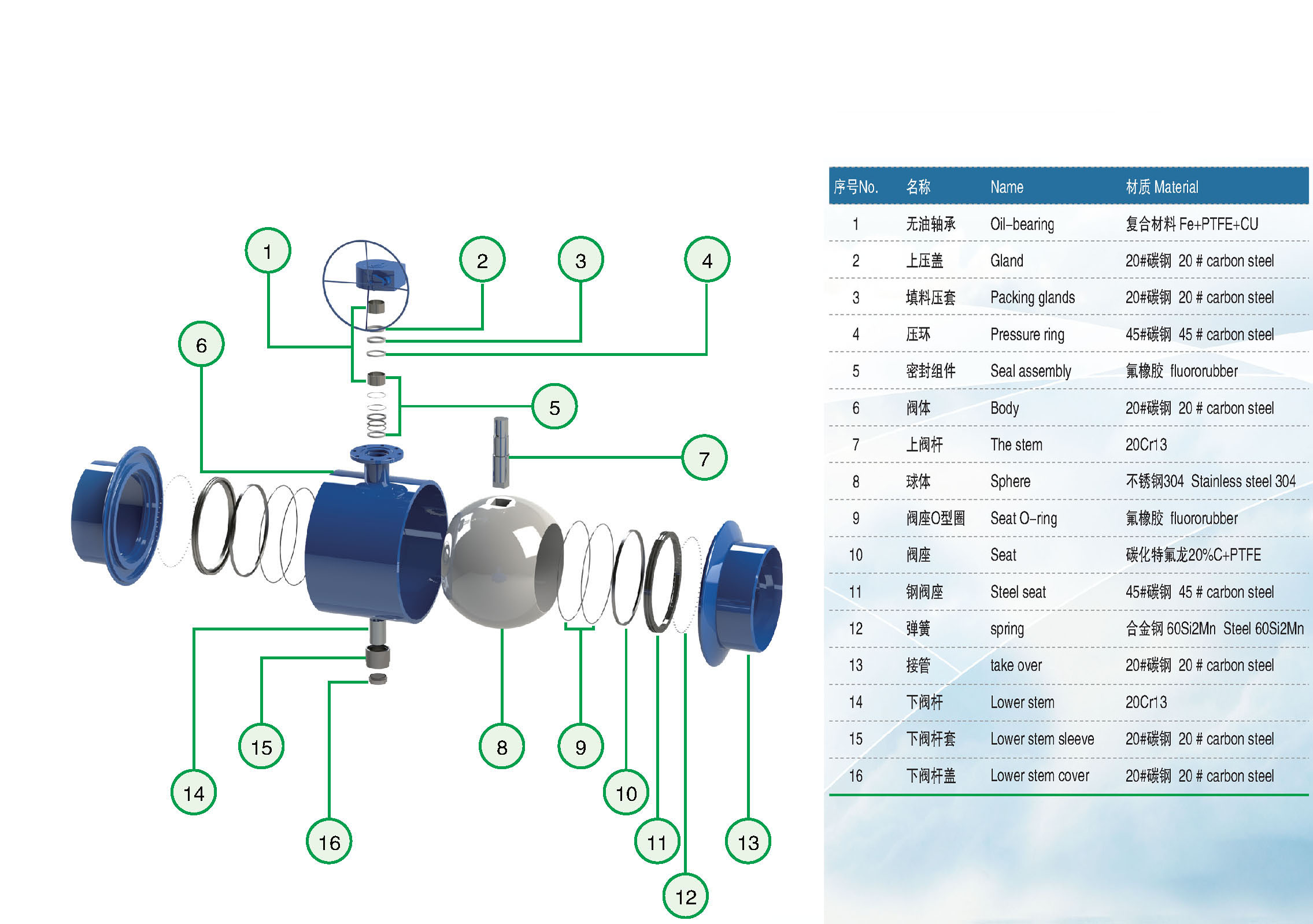
In-Depth Analysis: Context-Specific Alternative Names
Alternative names for ball valves are not arbitrary; they derive from structural features, actuation methods, or industry application habits.
1. Function-Based Synonym: Quarter-Turn Valve
-
Context: Engineering specifications, general valve classification.
-
Background: API and ASME standards classify valves as either multi-turn or part-turn (quarter-turn). Quarter-turn is a shared attribute of ball valves, butterfly valves, and plug valves. When someone specifies “a stainless steel quarter-turn valve for this location,” they are almost certainly referring to either a ball valve or a butterfly valve.
2. Seal-Performance Based Name: Bubble-Tight Valve
-
Context: Quality test reports, gas service applications.
-
Meaning: The unique floating or trunnion-mounted ball design enables ball valves to achieve excellent shutoff performance under both low and high pressure, with zero bubble passage during seat leakage tests. When specifying valves for gas pipelines, engineers may explicitly request “bubble-tight shut-off valves.”
3. Specific Design Configurations and Their Specific Names
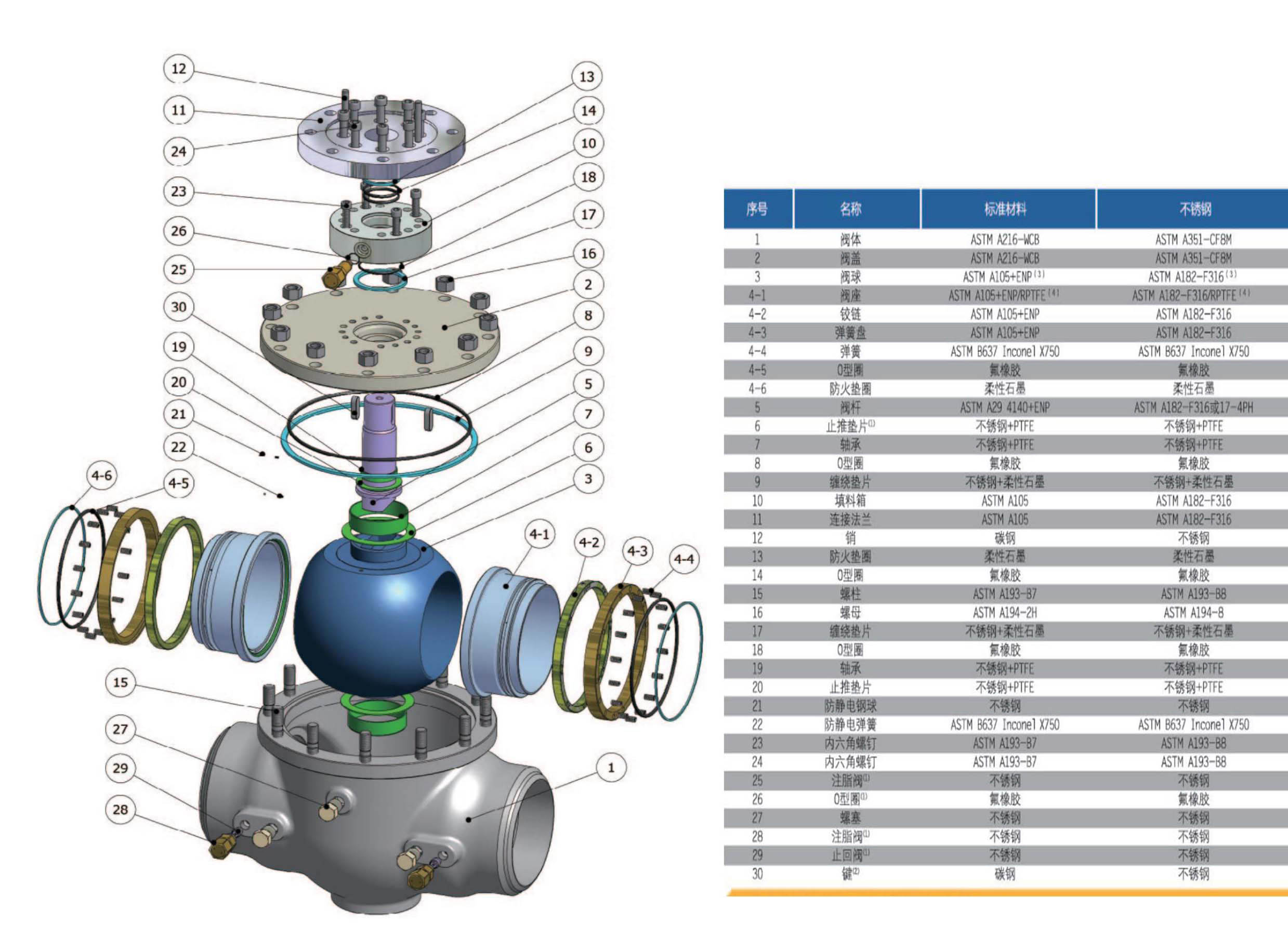
| Ball Valve Configuration | Alternative Name / Another Term | Explication |
|---|---|---|
| Vanne à bille à tourillon | Trunnion Mounted Valve | This is the only accurate technical term. In the industry, saying “trunnion valve” implicitly refers to a trunnion-mounted ball valve. |
| Vanne à bille à passage en V | V-Notch Valve ou Control Ball Valve | Emphasizes throttling capability rather than simple on-off service. In P&IDs (Piping and Instrumentation Diagrams) for pulp and paper or chemical plants, it is often labeled as a Control Ball Valve. |
| Full Port Ball Valve | Full Bore Valve | When a flow path matching the pipe’s internal diameter and negligible pressure drop are required, procurement terminology will use Full Bore as a specific qualifier. |
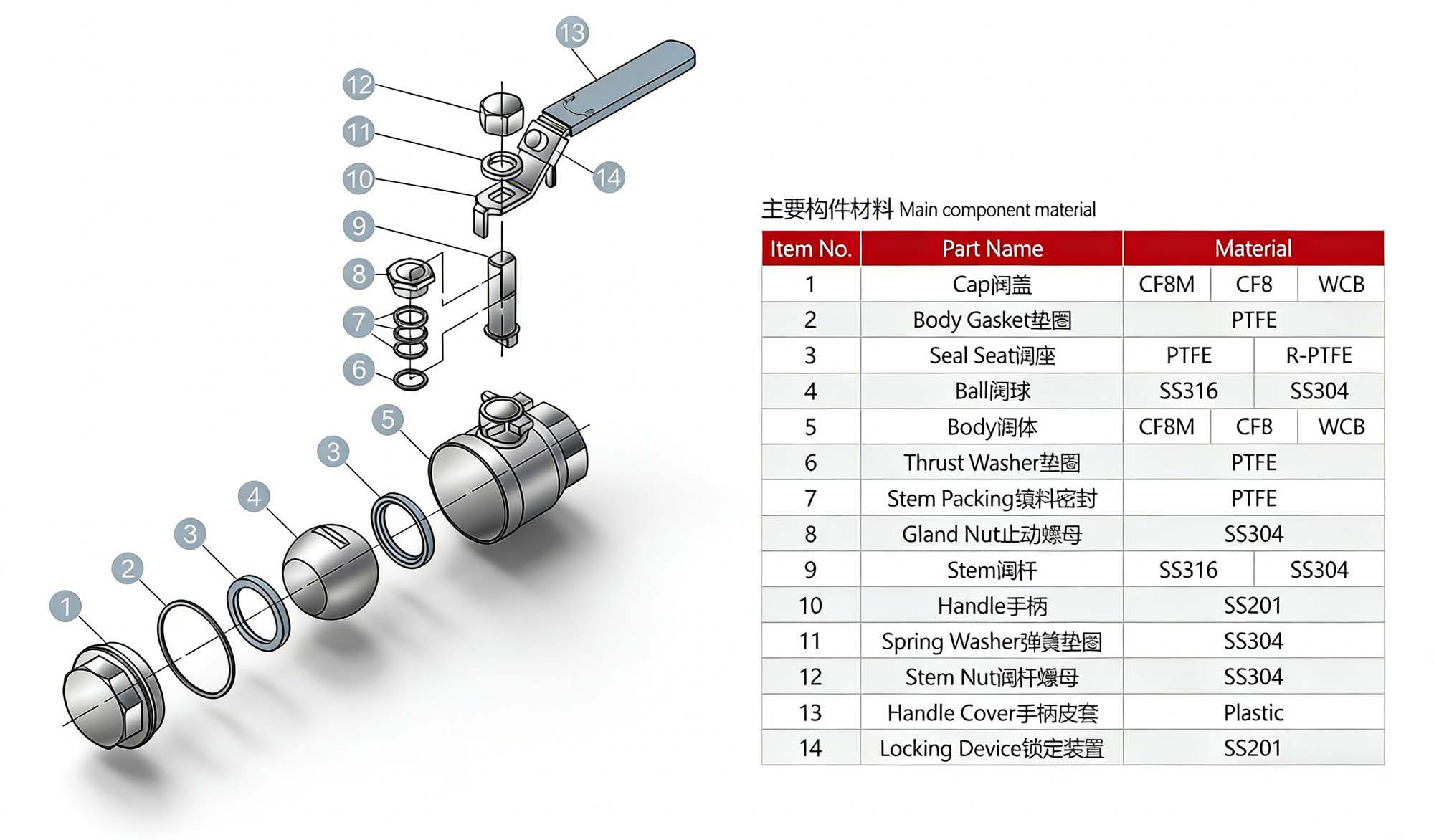
| Vanne à bille 3 pièces | Swing-Out Valve | This is a highly descriptive maintenance slang term. Because the center section of a 3-piece ball valve can be removed by unbolting the body and swinging it out for inline seal replacement. |
4. Actuation-Based Terminology
-
Actuated Ball Valve: When a valve is not manually operated by a lever, it is often no longer referred to simply as a “ball valve” in control narratives. It becomes part of a MOV (Motor Operated Valve) ou POV (Pneumatic Operated Valve) package.
5. Industry-Specific Slang and Colloquialisms
-
Plumbing / Residential Sector:
-
Stop Cock: Specifically refers to a small, right-angle ball valve with a lever handle typically found under a toilet or sink.
-
Isolator: Dans les manuels d'entretien de chaudières au Royaume-Uni et en Australie, les techniciens désignent fréquemment une petite vanne à bille sur la canalisation comme un “ isolateur ”.”
-
Vanne à levier : Les utilisateurs non techniques nomment souvent la vanne par son apparence — une longue poignée à levier — pour la distinguer des vannes à opercule à poignée ronde.
-
-
Secteur hydraulique / pneumatique :
-
Robinet d'arrêt à bille : Une désignation commerciale courante pour les vannes à bille hydrauliques haute pression.
-
-
Secteur de l'automatisation industrielle :
-
Élément final tout-ou-rien : Bien que non exclusif aux vannes à bille, dans les diagrammes logiques des systèmes de contrôle distribués (DCS), une vanne à bille automatisée utilisée pour l'isolation est catégorisée comme un élément final tout-ou-rien.
-
“ Pseudo-alias ” souvent confondus (distinctions importantes)
Tout ce qui contient le mot “ bille ” dans son nom n'est pas le même type de vanne. Les termes suivants sont souvent considérés à tort comme des synonymes d'une vanne à bille, mais ils désignent un équipement différent :
| Terme confus | Équipement réel | Distinction clé par rapport à une vanne à bille |
|---|---|---|
| Clapet anti-retour | Clapet anti-retour | Fonctionne automatiquement en utilisant la pression du fluide pour empêcher le reflux ; une vanne à bille nécessite un fonctionnement manuel ou motorisé. |
| Vanne à boisseau | Robinet à boisseau | L'apparence et le fonctionnement (rotation à 90 degrés) sont très similaires, mais l'élément d'obturation est un cylindre conique plutôt qu'une sphère. Les vannes à boisseau ont généralement un couple plus élevé et traitent bien les boues, mais offrent un réglage d'étanchéité moins précis. |
| Vanne à pointeau | Vanne à pointeau | Conçue pour un étranglement micro-fluidique précis avec un plongeur en forme d'aiguille, totalement différent de la fonction d'isolation d'une vanne à bille. |
| Vanne à flotteur | Vanne commandée par flotteur | Souvent appelée familièrement “ robinet à flotteur ” dans la plomberie ancienne, mais son mécanisme de commande repose sur un capteur de niveau à flotteur, non sur une rotation manuelle d'une poignée. |
Pourquoi tant de noms ?
Cette diversité de nomenclature découle de l' orientation fonctionnelle de la communication technique.
-
Lorsqu'on discute de l' espace d'implantation des canalisations, les ingénieurs l'appellent une Quarter-Turn Valve (en mettant l'accent sur l'installation compacte).
-
Lorsque l' approvisionnement se concentre sur le coût et le poids, ils comparent les vannes à commande par levier aux vannes à commande par volant.
-
Lorsque l' Les équipes de maintenance rédigent des permis de travail, ils l'étiquettent comme un isolateur à vanne à bille (en mettant l'accent sur l'isolation de sécurité).
Résumé :
Si vous entendez “robinet d'arrêt à quart de tour” ou “robinet à levier à bille,”, ils font référence à une vanne à bille. Pour la documentation professionnelle, Vanne à bille reste le terme privilégié. Utilisez vanne à bille à quart de tour pour souligner la commodité opérationnelle, et vanne à bille d'arrêt étanche aux bulles pour mettre en avant l'intégrité de l'étanchéité.

 English
  German
  Chinese
  Russian
  French
  Korean
  Spanish