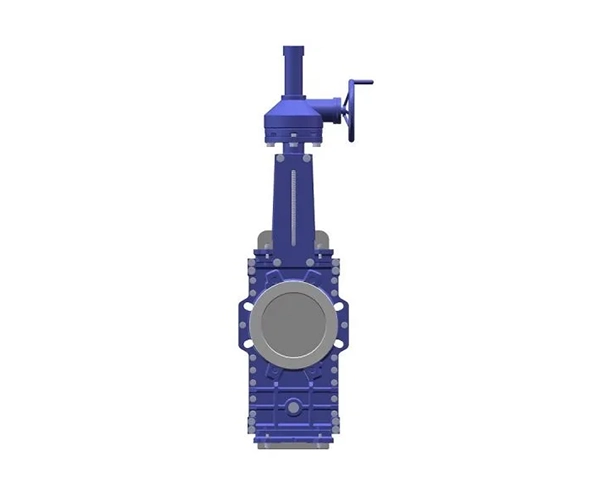
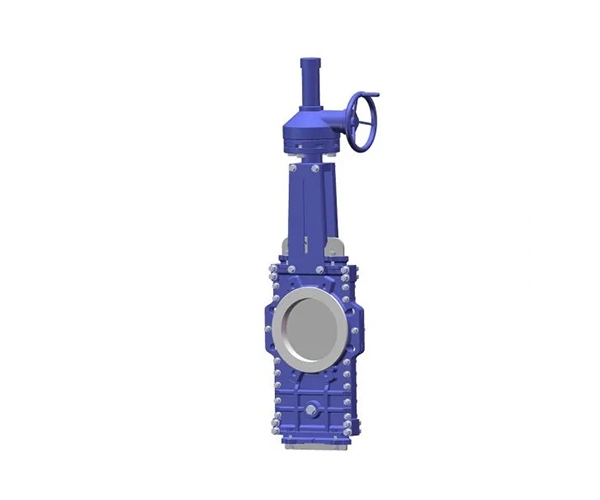
Durchdringungs-Messerschieberventil
The Penetration Knife Gate Valve is designed to provide reliable isolation and control in applications involving challenging media, such as slurries, abrasive solids, and viscous fluids. Its specialized penetration design enables the valve's gate to cut through thick, solid-laden media, ensuring tight sealing and efficient operation in demanding environments. Ideal for industries like wastewater treatment, mining, pulp and paper, and chemical processing, this valve offers exceptional performance, even under harsh operating conditions. This valve combines the performance of a traditional knife gate valve with a penetration blade design, allowing it to handle viscous, abrasive, and slurry-type media while maintaining reliable...
Category:Absperrschieber
Call Us Anytime
15669818867
Product Overview
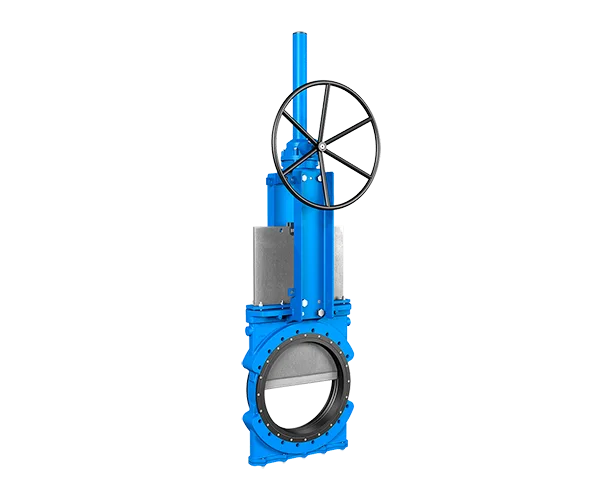
The Penetration Knife Gate Valve is a knife‑edge gate valve in which the gate completely penetrates the valve body, with packing seals at both the top and bottom. It is designed only for ON‑OFF (open/close) service – not for flow regulation. Unlike conventional knife gate valves (where the lower end of the gate is enclosed within the body), the penetration type allows the gate to extend out of the bottom when open and enter from the top when closed.
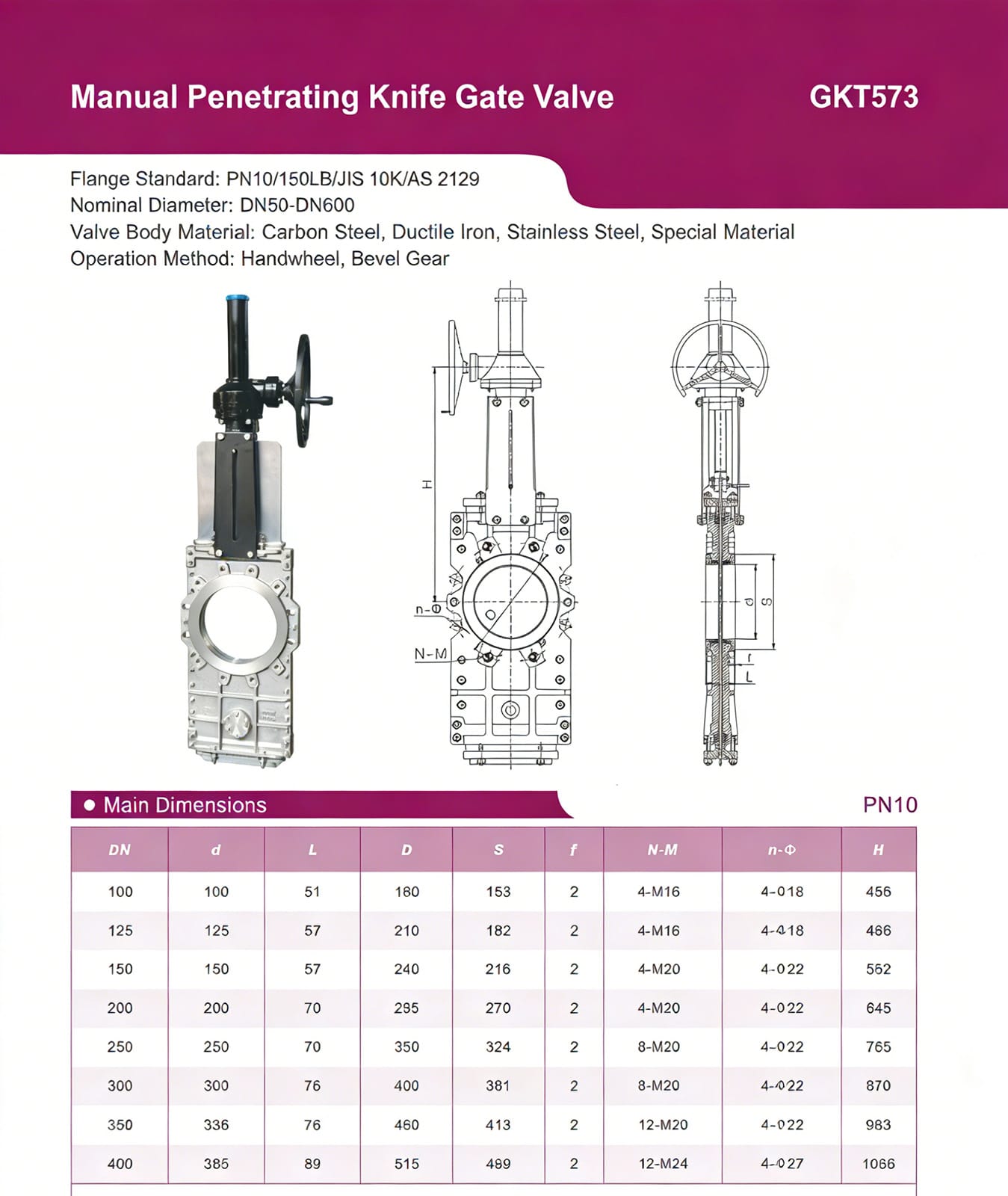
Throughout its stroke, the gate always passes through the body, effectively preventing media from settling, crystallizing, or drying at the bottom of the valve body, which could cause sticking. This valve is particularly suitable for high‑viscosity, easily crystallizing, particle‑laden, or fibrous slurries such as pulp, mud, syrup, coatings, gypsum slurry, and sewage. The valve has flanged connections, with nominal diameters from DN50 to DN600, pressure ratings PN10/PN16 (Class 150), and body materials including cast iron, carbon steel, and stainless steel. Actuators can be manual, electric, or pneumatic.
Produktstruktur
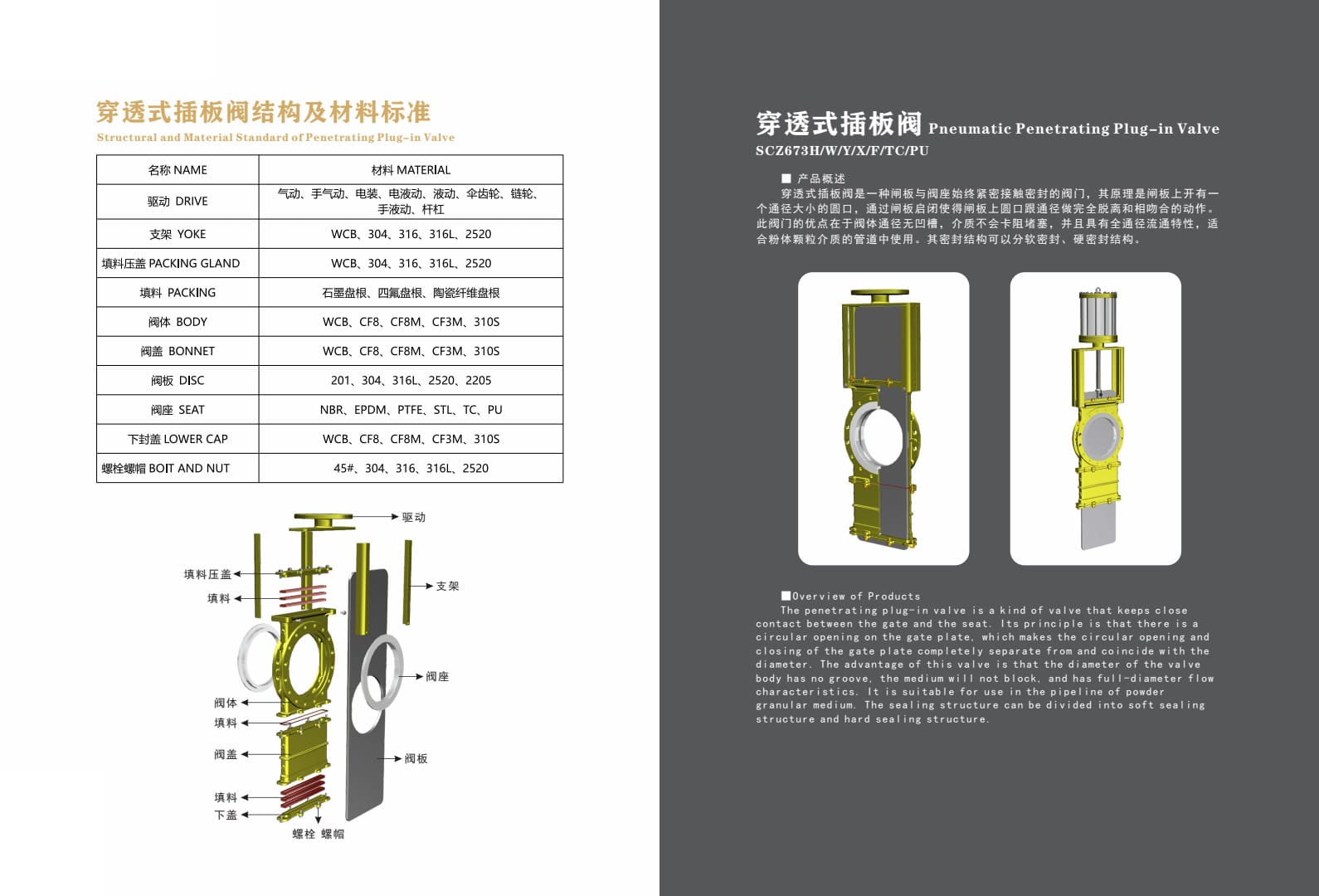
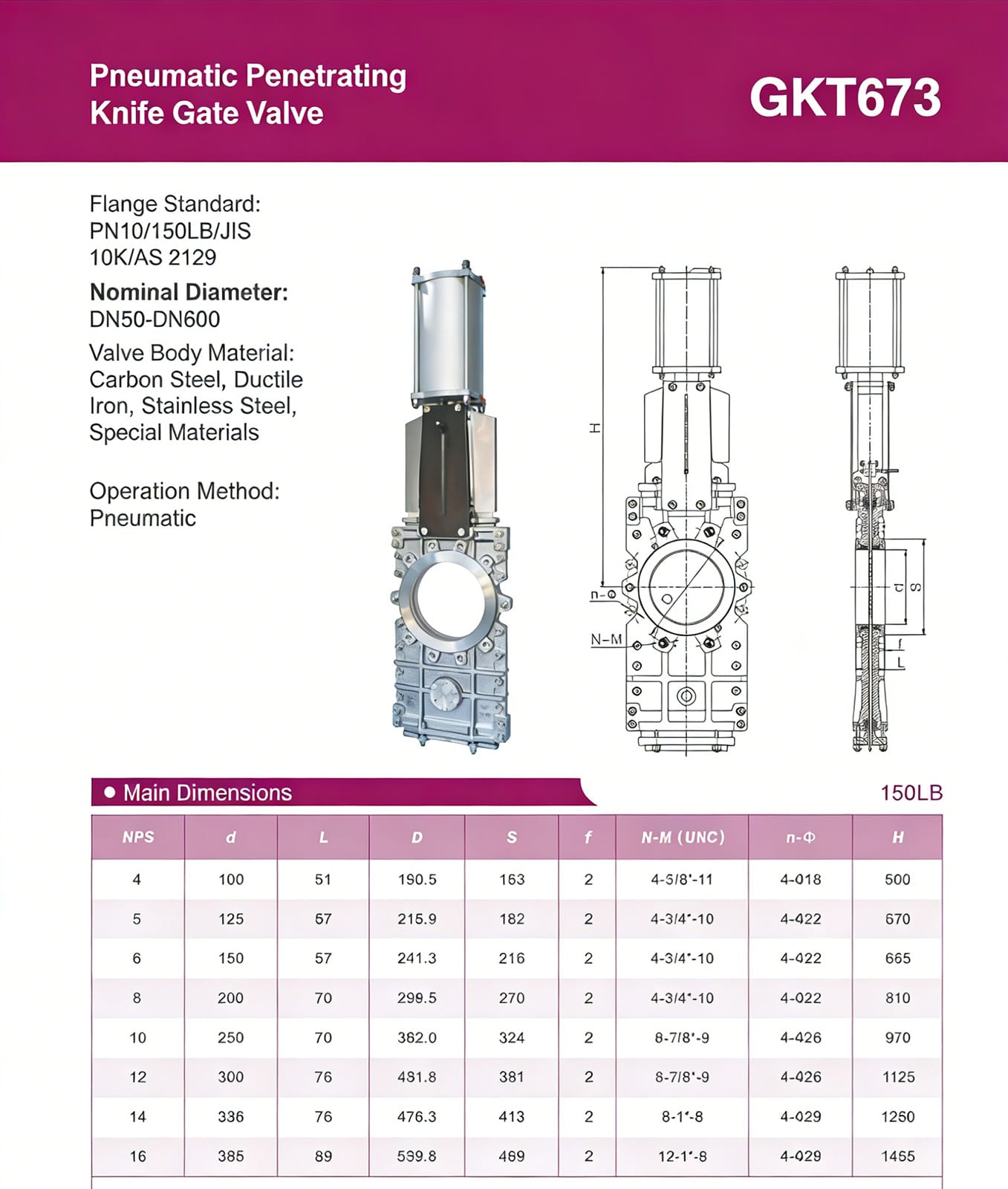
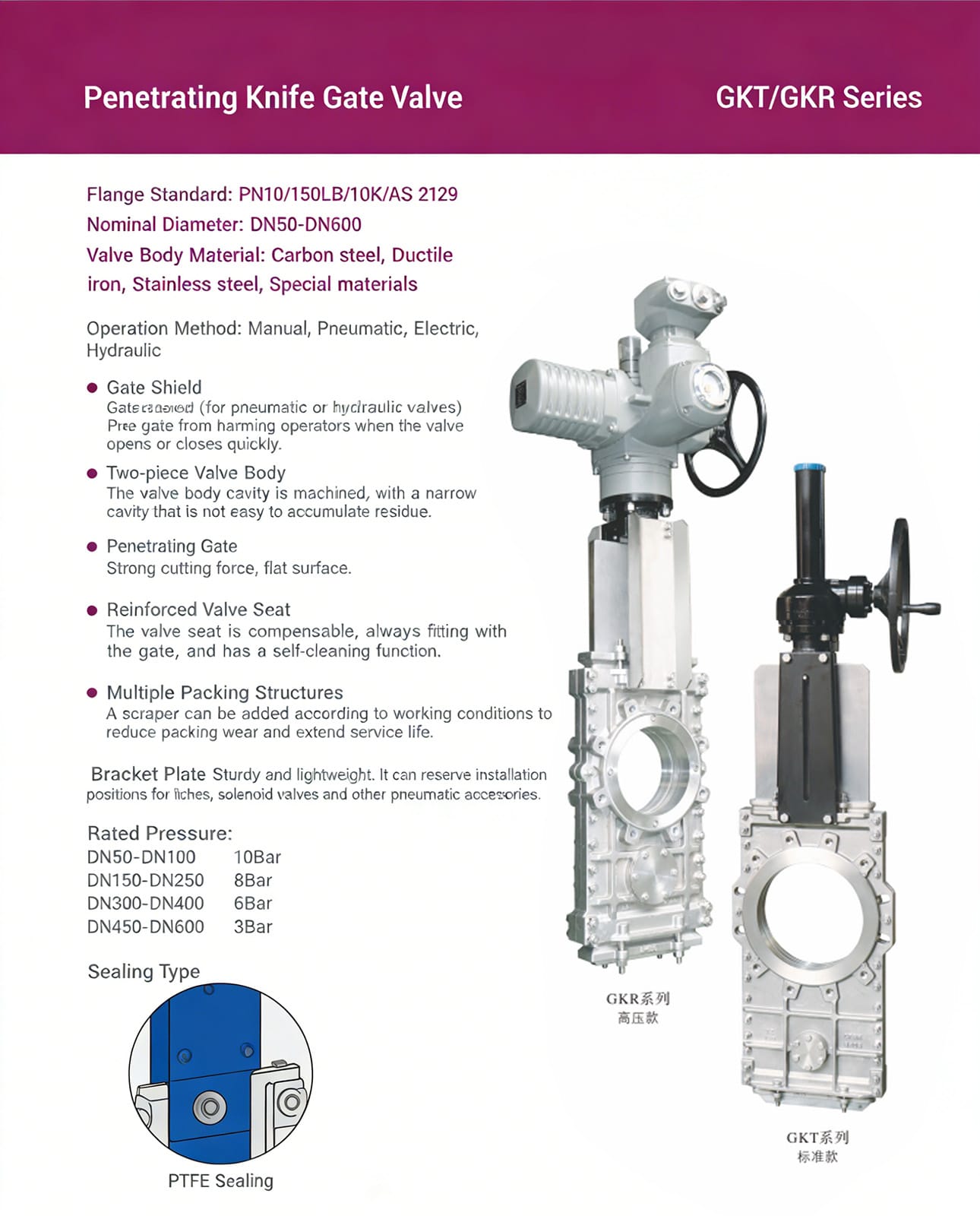
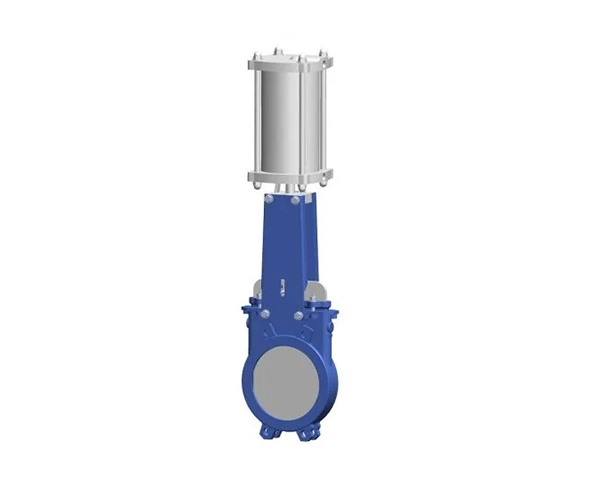
The Penetration Knife Gate Valve mainly consists of the dem Antrieb (EIN‑AUS‑Typ) und penetration‑type valve body assembly.
Actuator:
-
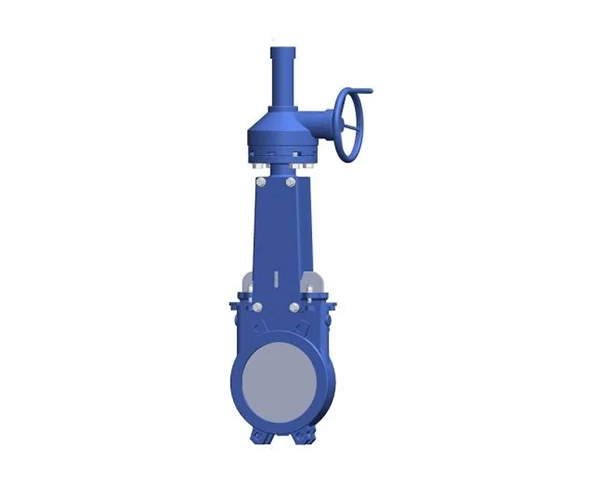
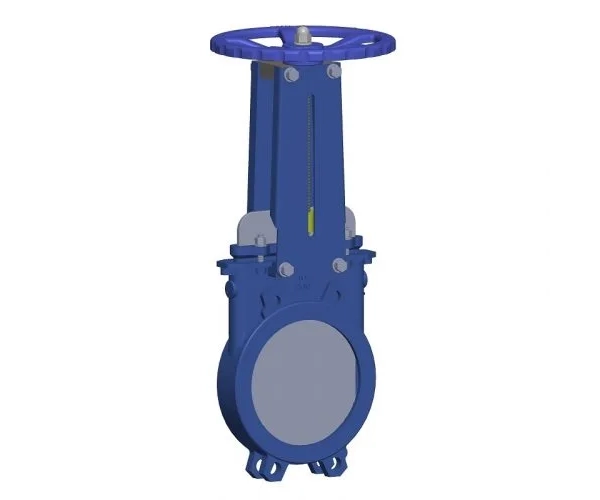
Available in manual (handwheel, bevel gear), electric, or pneumatic.
-
Elektrischer Antrieb: Motor, Getriebe, Endlagenschalter, Drehmomentschutz, Handrad.
-
Pneumatischer Antrieb: Zylinder, Magnetventil, Endlagenschalter.
-
Alle Antriebe sind vom EIN‑AUS‑Typ – nicht zur Regelung geeignet.
Penetration‑Type Valve Body Assembly:
-
Gehäuse: Cast or fabricated body in gray cast iron, ductile iron, carbon steel (WCB), stainless steel (CF8/CF8M), etc. Flanged ends conforming to GB/T 9113, ANSI B16.5, EN 1092‑1, etc. Full‑bore flow path with no recesses. The body is provided with packing boxes at both the top and bottom.
-
Schieber: Stainless steel (304, 316, 310S) knife‑edge gate, longer than the body height. When closed, the gate extends out of the bottom of the body; when open, it extends out of the top. The gate surface can be hardfaced with Stellite or chrome‑plated for wear resistance.
-
Dichtungen: Available in rubber (EPDM, NBR, FKM), PTFE, or metal sealing, typically bidirectional floating seats.
-
Top Packing Box: Located at the top of the body, containing multiple rings of PTFE or flexible graphite packing, compressed by a packing gland to prevent media leakage along the stem.
-
Bottom Packing Box: Located at the bottom of the body, containing multiple rings of PTFE or flexible graphite packing, compressed by a bottom gland to prevent leakage from the lower body – a key feature of the penetration knife gate valve.
-
Spindel: Edelstahl-Spindel mit Trapezgewinde, die den Schieber auf- und abbewegt.
-
Bonnet / Yoke: Verbindet das Gehäuse mit dem Antrieb.
-
Optional Bottom Flush Port: Can be provided to flush out any residual media.
The penetration design eliminates the bottom closed cavity, preventing media accumulation and sticking.
Funktion
-
Penetration Anti‑Settling Design: The gate fully penetrates the body, leaving no bottom cavity. Media cannot settle, crystallize, or dry at the bottom, completely solving the problem of bottom buildup and sticking common in ordinary knife gate valves.
-
Schneidfunktion mit scharfer Kante: The sharp gate edge cuts through fibers, lumps, and particles during closure, preventing clogging.
-
Bidirectional Sealing: The top and bottom packing boxes, combined with floating seats, provide bidirectional zero‑leakage sealing.
-
Selbstreinigender Strömungsweg: The recess‑free flow path and the scraping action of the gate against the seats remove adhered media during travel.
-
Vollerdurchgang mit geringem Strömungswiderstand: Bei voller Öffnung befindet sich der Schieber vollständig außerhalb des Strömungswegs, was einen minimalen Druckverlust gewährleistet.
-
Suitable for High‑Viscosity Media: The penetration design prevents buildup of sticky media (e.g., syrup, coatings, gypsum slurry) inside the valve cavity.
-
Fernbedienung EIN‑AUS: Mit elektrischen oder pneumatischen Antrieben, ist eine ferngesteuerte automatische Öffnungs-/Schließfunktion möglich.
-
Manuelle Notbetätigung: Elektrische/pneumatischen Antrieben pneumatische Antriebe sind mit einem Handrad für den manuellen Betrieb bei Strom- oder Druckluftausfall ausgestattet.
Arbeitsbedingungen
-
Anwendbare Medien: Pulp, mud, slurry, syrup, coatings, gypsum slurry, lime slurry, sewage sludge, easily crystallizing media (urea solution, salt solution), high‑viscosity fluids, etc.
-
Temperaturbereich: –20°C to +200°C (PTFE seats/packing); –20°C to +80°C (rubber seats); –29°C to +550°C (metal seal).
-
Druckstufe: PN10, PN16 (Class 150); höhere Druckstufen auf Anfrage.
-
Nenndurchmesser: DN50 – DN600 (2″ – 24″); größere Abmessungen auf Anfrage.
-
Installation Orientation: Vertical stem‑up recommended (the penetration design requires clearance below the valve for gate extension).
-
Typische Anwendungen:
-
Pulp and coating lines in paper mills
-
Syrup and chocolate slurry lines in the food industry
-
Crystallizing media lines (urea, salt, caustic) in chemical plants
-
High‑solids sludge discharge in wastewater treatment plants
-
Gypsum and lime slurry lines in building materials industry
-
Slurry and tailings lines in mining and metallurgy
-
Paint and ink slurry lines in coating manufacturing
-
Zusammenfassung
The Penetration Knife Gate Valve, with its unique gate‑through‑body design, top and bottom dual packing seals, elimination of bottom dead pockets, and knife‑edge cutting function, is one of the most reliable shut‑off valves for high‑viscosity, easily crystallizing, and high‑solids slurry media. Compared with ordinary knife gate valves, the penetration design completely eliminates the risk of bottom buildup and sticking – making it especially suitable for syrups, gypsum slurries, urea solutions, and other media that tend to dry and crystallize.
Compared with ball valves or butterfly valves, the knife‑edge gate cuts through fibers and particles without clogging. With flanged connections, a full‑bore flow path, and optional manual or automated actuators, the Penetration Knife Gate Valve is a durable, maintenance‑free professional solution for ON‑OFF pipeline systems that require reliable shut‑off of high‑viscosity, crystallizing, or high‑solids media.
 English
  German
  Chinese
  Dutch
Dutch  Vietnamese
  Uzbek
Uzbek  Turkish
  Thai
Thai  Norwegian
  Russian
  French
  Korean
  Persian
  Spanish
  Ukrainian
  Serbian