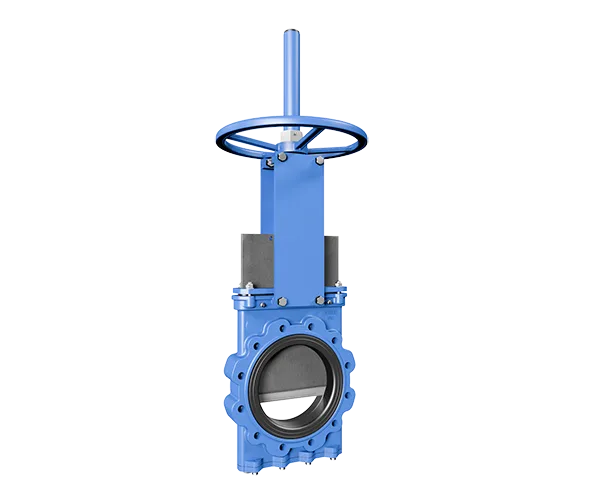
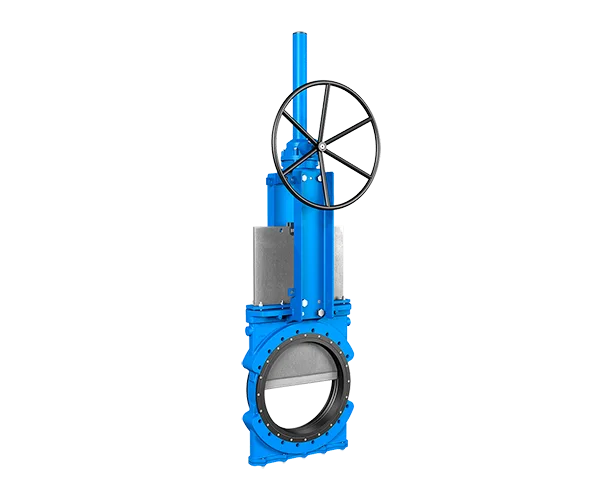
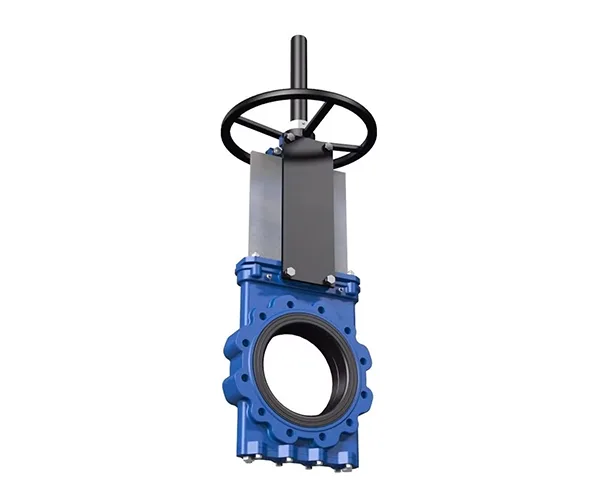
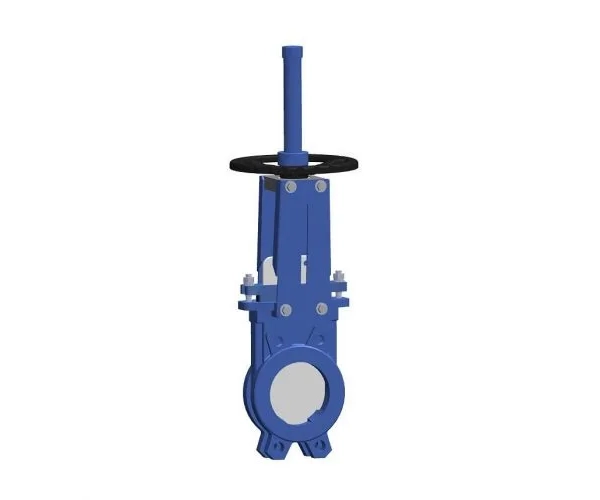
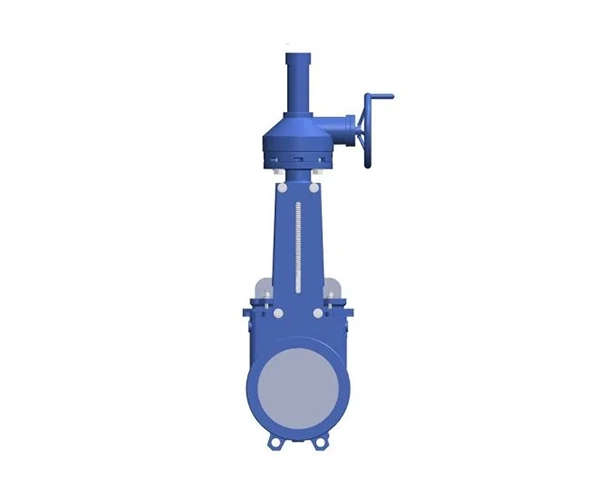
Bonnetless knife gate valve
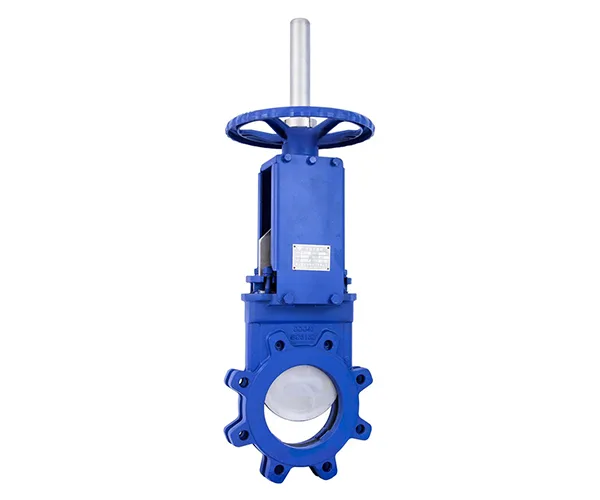
The Bonnetless Knife Gate Valve is a high-performance valve designed for isolation applications where efficient cutting of slurries, viscous fluids, and solids is essential. Unlike traditional bonneted knife gate valves, the bonnetless design eliminates the use of a bonnet assembly, offering a more compact and cost-effective solution. This valve is ideal for applications involving low to medium-pressure systems, particularly in industries such as wastewater treatment, mining, pulp and paper, and chemical processing.
Category:Absperrschieber
Call Us Anytime
15669818867
Product Overview
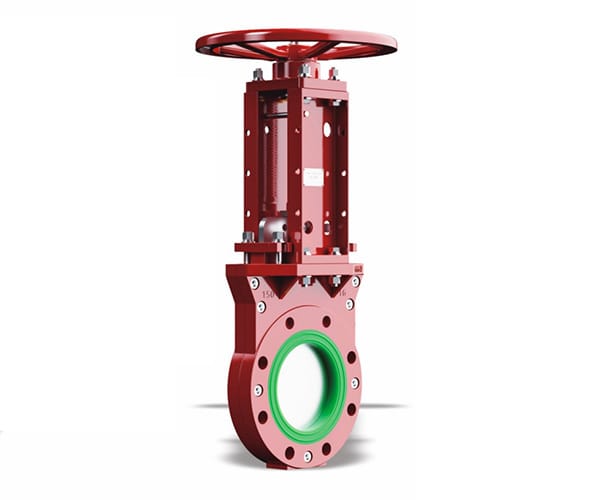
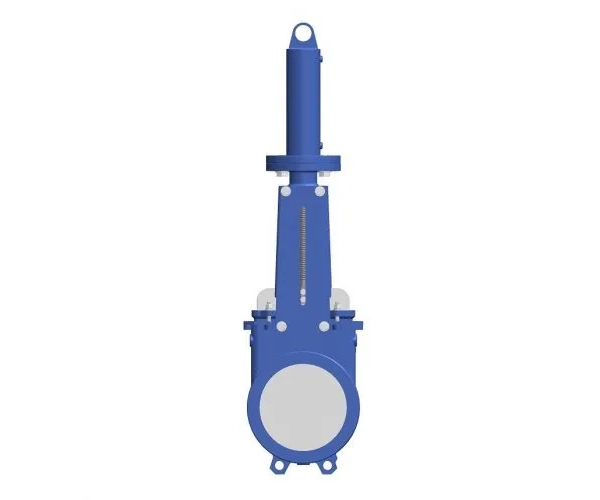
The Bonnetless Knife Gate Valve is a knife‑edge gate valve with an open‑frame construction (no bonnet), exposing the top of the gate. It is designed only for ON‑OFF (open/close) service – not for flow regulation. Unlike bonneted knife gate valves, this product features a simple, open structure that is lightweight, low‑cost, and allows easy visual inspection of the gate position and cleaning of accumulated material. This valve is suitable for non‑hazardous, non‑volatile media such as sewage, pulp, slurry, and mud.
It is not recommended for toxic, volatile, or applications requiring strict leakage control. The sharp knife‑edge gate cuts through fibers, particles, and other materials during closure, preventing clogging. The body flow path has no recesses to avoid material buildup, and the absence of a bonnet makes the interior easier to flush. The valve has flanged connections, with nominal diameters from DN50 to DN800, pressure ratings PN10/PN16 (Class 150), and body materials including cast iron, carbon steel, and stainless steel. Actuators can be manual, electric, or pneumatic.
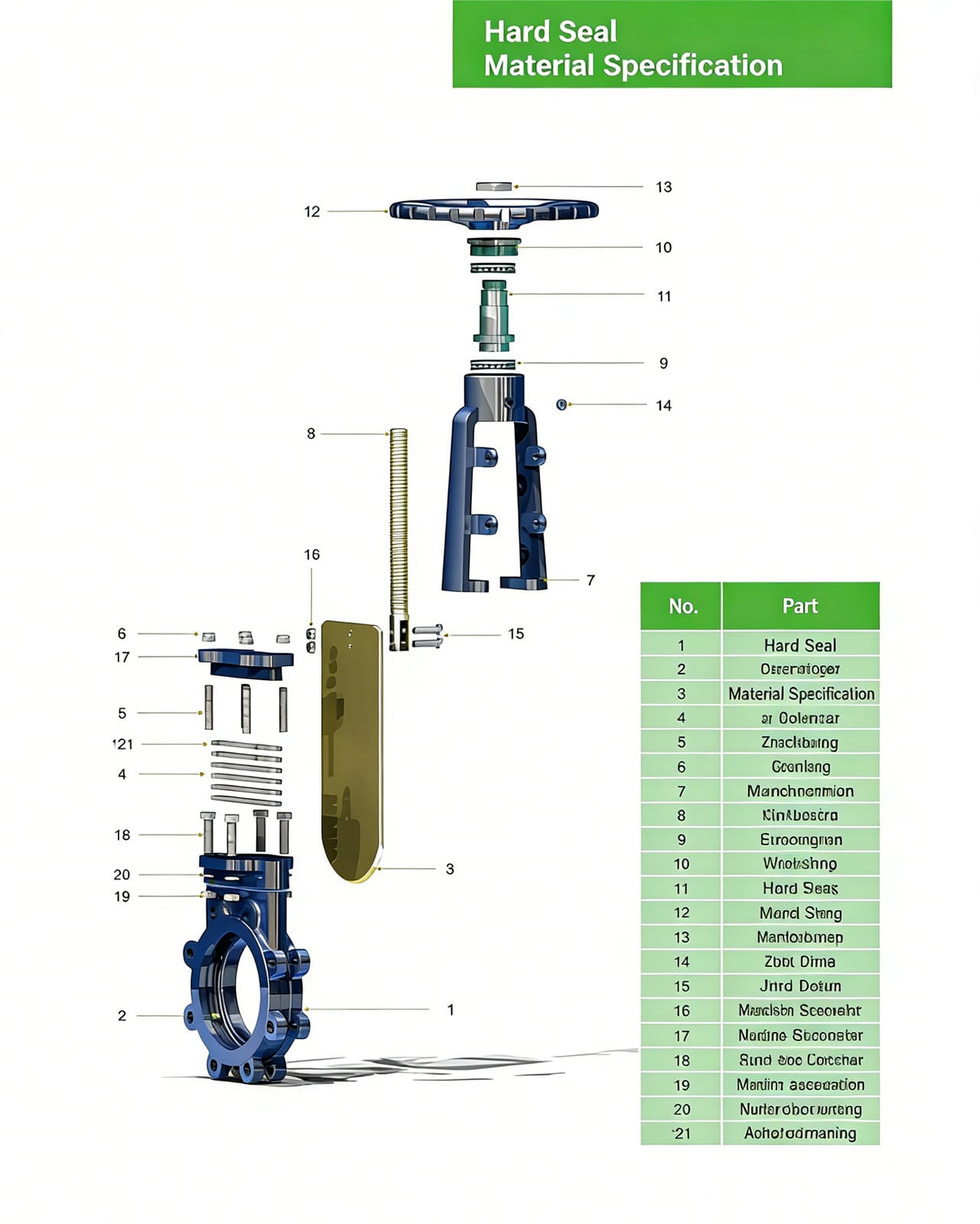
Produktstruktur
The Bonnetless Knife Gate Valve mainly consists of the dem Antrieb (EIN‑AUS‑Typ) und open‑frame valve body assembly.
Antrieb (EIN‑AUS‑Typ):
-
Verfügbar in manueller (Handrad), elektrischer oder pneumatischer Ausführung.
-
Elektrischer Antrieb: Motor, Getriebe, Endlagenschalter, Drehmomentschutz, Handrad.
-
Pneumatischer Antrieb: Zylinder, Magnetventil, Endlagenschalter.
-
Alle Antriebe sind vom EIN‑AUS‑Typ – nicht zur Regelung geeignet.
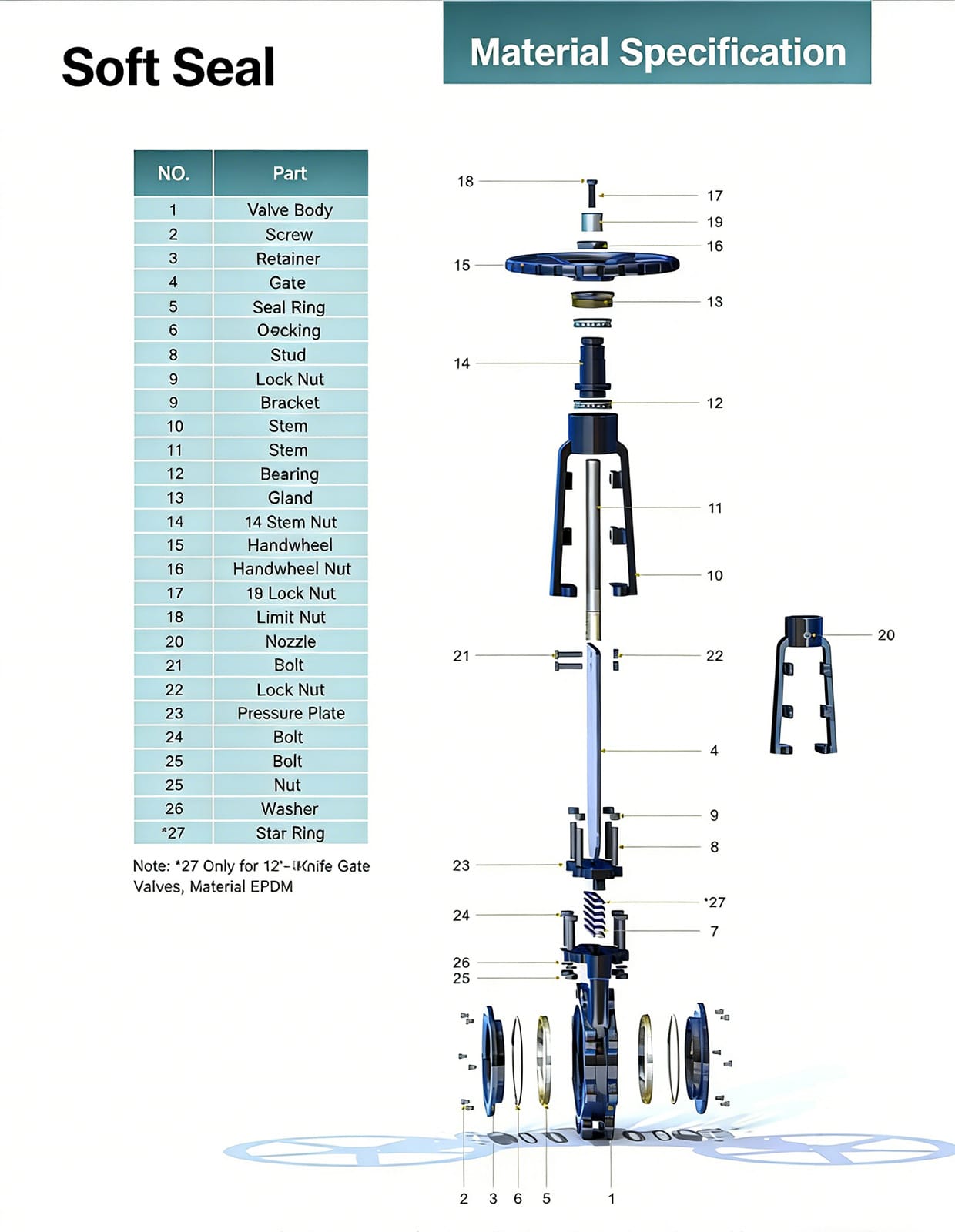
Open‑Frame Valve Body Assembly:
-
Gehäuse: Cast or fabricated body in gray cast iron, ductile iron, carbon steel (WCB), stainless steel (CF8/CF8M), etc. Flanged ends conforming to GB/T 9113, ANSI B16.5, EN 1092‑1, etc. Full‑bore flow path with no recesses.
-
Schieber: Stainless steel (304, 316, 310S) knife‑edge gate with a sharp edge to cut through fibers and particles. The gate surface can be hardfaced with Stellite or chrome‑plated. The top of the gate is exposed and directly connected to the actuator.
-
Dichtungen: Verfügbar in Gummi (EPDM, NBR, FKM), PTFE oder Metalldichtung; bidirektionale Abdichtung optional.
-
Spindel: Stainless steel trapezoidal‑thread stem, moving the gate up and down. With no bonnet, the stem connection is exposed.
-
Stopfbuchse: Located at the top of the body, containing PTFE or flexible graphite packing, compressed by a packing gland to prevent media leakage along the stem. However, because there is no bonnet, the packing area is exposed and is not suitable for hazardous media.
-
Joch: Connects the body to the actuator (typically mounted directly on the top of the body).
The bonnetless knife gate valve has a simple construction, lower cost, and allows easy visual access to the gate and internal cleaning.
Funktion
-
Open‑Frame Design: No enclosed bonnet; the top of the gate is exposed. Simple structure, light weight, low cost.
-
Easy Visual Inspection and Cleaning: The gate position and internal buildup can be directly observed, facilitating flushing and maintenance.
-
Schneidfunktion mit scharfer Kante: Die scharfe Kante des Schiebers durchtrennt beim Schließen hängende Fasern, Papier, Kunststoffstreifen und andere Materialien und verhindert so Verstopfungen.
-
Selbstreinigender Strömungsweg: Der Strömungsweg im Gehäuse weist keine Hinterschneidungen auf. Bei voller Öffnung kann das Medium das Innere spülen und so die Ansammlung von Feststoffen verhindern.
-
Bidirektionale Abdichtung (optional): Ein bidirektionaler schwimmender Sitz oder eine doppelseitige Abdichtung ermöglicht es dem Ventil, Mediendruck aus beiden Richtungen standzuhalten.
-
Vollerdurchgang mit geringem Strömungswiderstand: Bei voller Öffnung befindet sich der Schieber vollständig außerhalb des Strömungswegs, was einen minimalen Druckverlust gewährleistet.
-
Fernbedienung EIN‑AUS: Mit elektrischen oder pneumatischen Antrieben, ist eine ferngesteuerte automatische Öffnungs-/Schließfunktion möglich.
-
Manuelle Notbetätigung: Elektrische/pneumatischen Antrieben pneumatische Antriebe sind mit einem Handrad für den manuellen Betrieb bei Strom- oder Druckluftausfall ausgestattet.
Arbeitsbedingungen
-
Anwendbare Medien: Sewage, sludge, slurry, coal slurry, pulp, mud, fiber suspensions, particle‑laden liquids (non‑hazardous, non‑volatile).
-
Temperaturbereich: –20 °C bis +200 °C (PTFE-Dichtungen); –20 °C bis +80 °C (Gummidichtungen); –29 °C bis +550 °C (Metalldichtungen).
-
Druckstufe: PN10, PN16 (Class 150); höhere Druckstufen auf Anfrage.
-
Nenndurchmesser: DN50 – DN800 (2″ – 32″); larger sizes available on request.
-
Installation Orientation: Vertical stem‑up recommended (cannot be installed upside down because there is no bonnet).
-
Not Suitable For: Toxic media, volatile solvents, hazardous gases, or applications requiring strict leakage control.
-
Typische Anwendungen:
-
Sludge discharge and sewage lines in wastewater treatment plants
-
Pulp transport in paper mills
-
Mine tailings and concentrate slurry pipelines
-
Ash and slag discharge in coal‑fired power plants
-
Fruit pulp and sauce lines in the food industry
-
Industrial wastewater treatment systems
-
Metallurgical beneficiation slurry lines
-
Zusammenfassung
The Bonnetless Knife Gate Valve, with its advantages of open‑frame no‑bonnet construction, knife‑edge cutting function, self‑cleaning flow path, and low cost, is an economical and practical shut‑off valve for non‑hazardous media such as sewage, pulp, and slurry. Compared with bonneted knife gate valves, the bonnetless version is simpler, lighter, and lower in cost, while allowing easy visual inspection of the gate position and cleaning of internal buildup.
However, this valve is not suitable for toxic, volatile, or applications requiring strict leakage control. With flanged connections, a full‑bore flow path, and optional manual or automated actuators, the Bonnetless Knife Gate Valve is an efficient and economical solution for automated ON‑OFF pipeline systems handling non‑hazardous, non‑volatile media containing solid particles or fibers.
 English
  German
  Chinese
  Dutch
Dutch  Vietnamese
  Uzbek
Uzbek  Turkish
  Thai
Thai  Norwegian
  Russian
  French
  Korean
  Persian
  Spanish
  Ukrainian
  Serbian