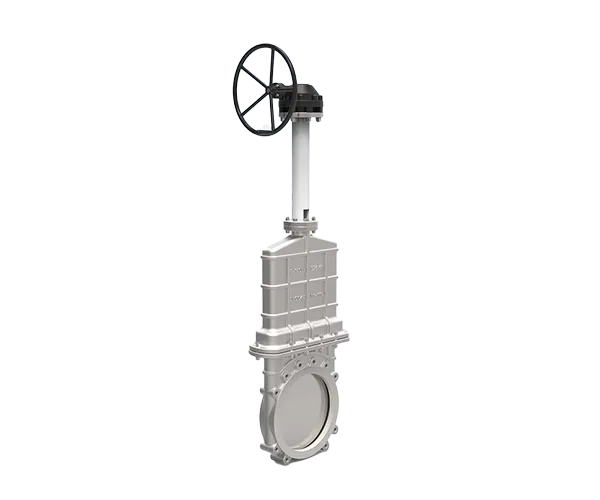
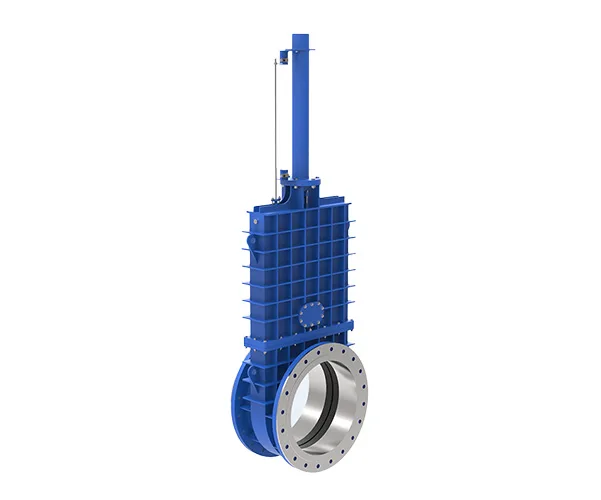
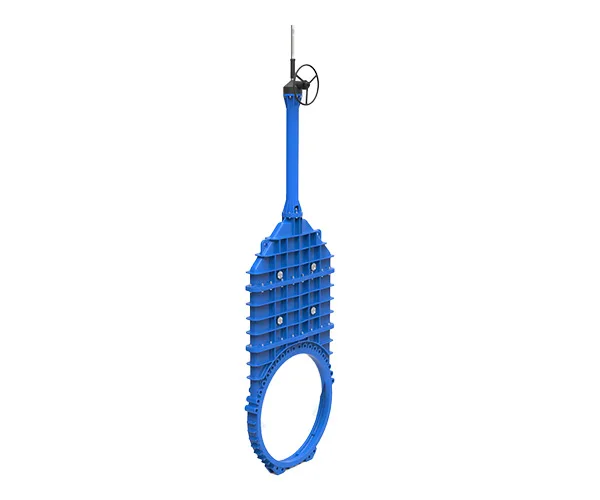
Bonneted knife gate valve
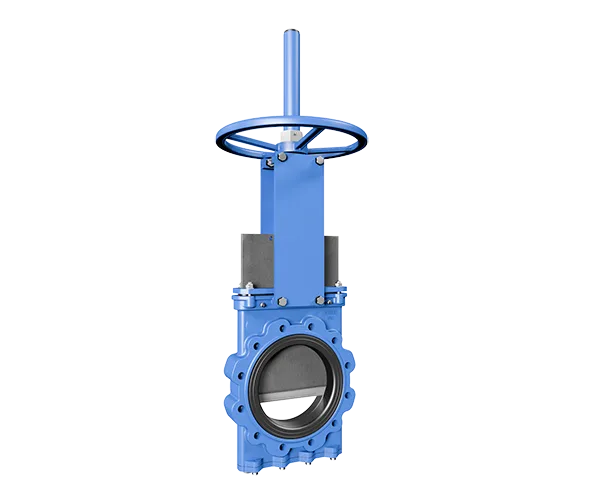
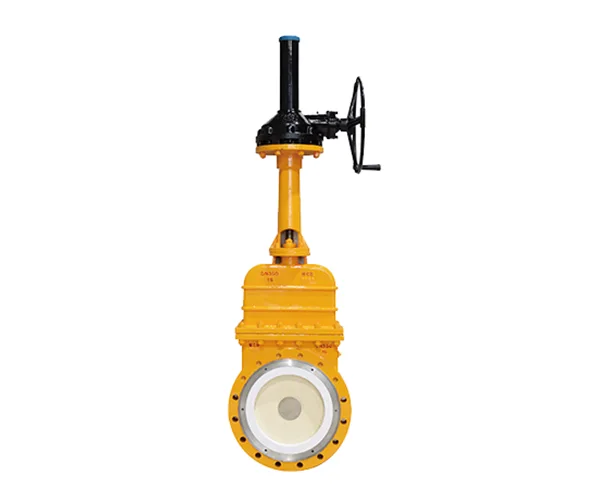
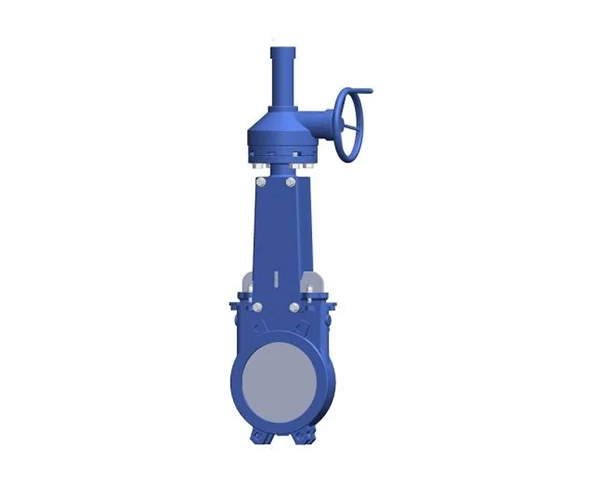
The Bonneted Knife Gate Valve is a robust, high-performance valve designed for isolating and controlling the flow of slurries, solids, and other challenging media. It is widely used in industries such as mining, wastewater treatment, pulp and paper, and chemical processing. This valve combines the cutting power of a knife gate with the enhanced sealing capability of a bonneted design, making it ideal for handling aggressive, viscous, or abrasive materials. The bonneted design ensures superior sealing, preventing leakage and protecting the valve internals from harsh external environments. The gate blade is specifically designed to cut through slurries, viscous fluids, and...
Category:Absperrschieber
Call Us Anytime
15669818867
Product Overview
The Bonneted Knife Gate Valve is a knife‑edge gate valve with an enclosed bonnet construction. It is designed only for ON‑OFF (open/close) service – not for flow regulation. Unlike conventional open‑frame knife gate valves (which have no bonnet and expose the top of the gate), this product features a bolted, closed bonnet that fully encloses the packing box and stem, effectively preventing media leakage and allowing higher pipeline pressure ratings.
This valve is suitable for hazardous, volatile, toxic, or odorous media, as well as applications where strict leakage control is required. The sharp knife‑edge gate cuts through fibers, particles, and other materials during closure, preventing clogging. The body flow path has no recesses to avoid material buildup. The valve has flanged connections, with nominal diameters from DN50 to DN600, pressure ratings PN10/PN16 (Class 150), and body materials including cast iron, carbon steel, and stainless steel. Actuators can be manual, electric, or pneumatic.
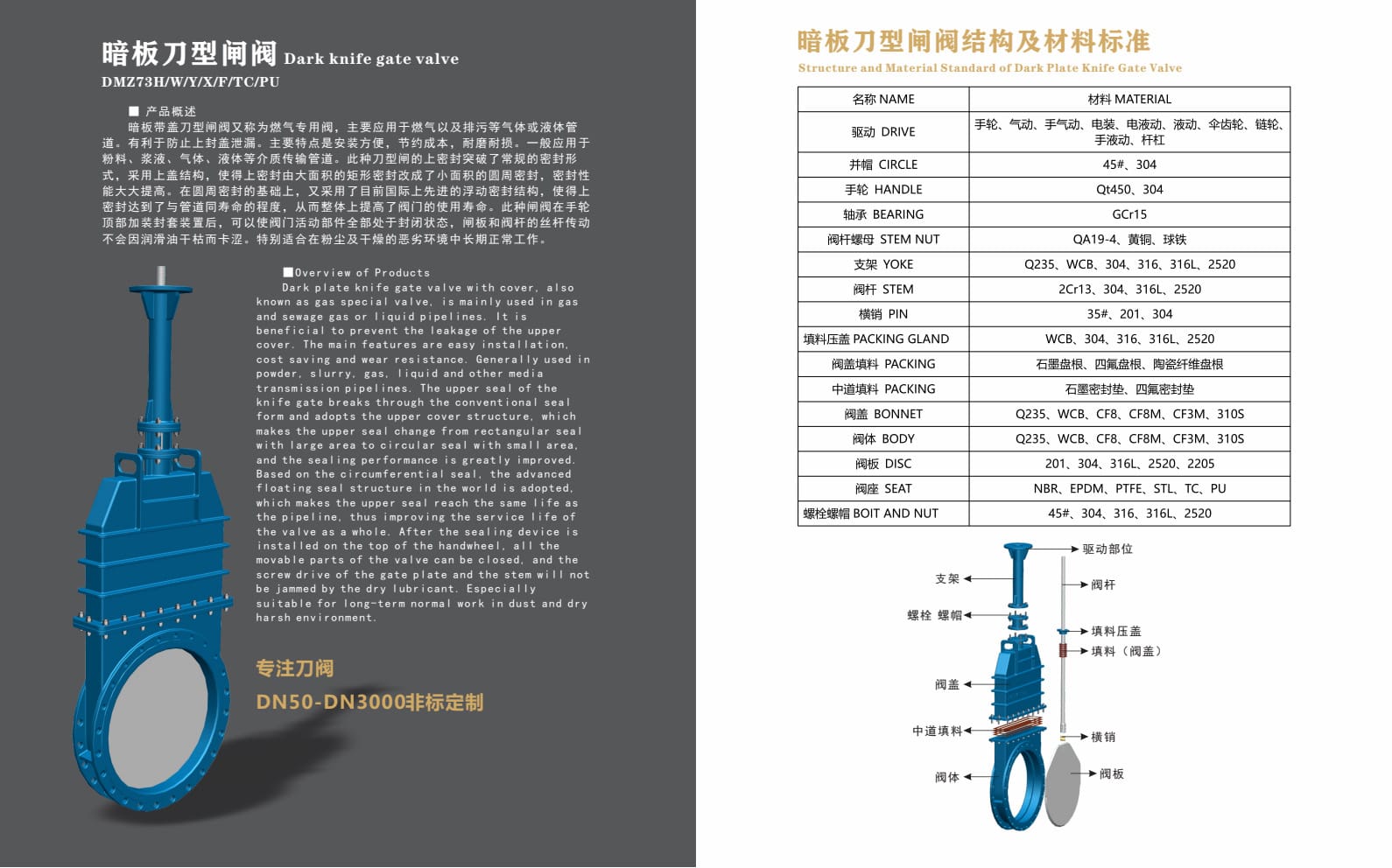
Produktstruktur
The Bonneted Knife Gate Valve mainly consists of the dem Antrieb (EIN‑AUS‑Typ) und enclosed valve body assembly.
Antrieb (EIN‑AUS‑Typ):
-
Verfügbar in manueller (Handrad), elektrischer oder pneumatischer Ausführung.
-
Elektrischer Antrieb: Motor, Getriebe, Endlagenschalter, Drehmomentschutz, Handrad.
-
Pneumatischer Antrieb: Zylinder, Magnetventil, Endlagenschalter.
-
Alle Antriebe sind vom EIN‑AUS‑Typ – nicht zur Regelung geeignet.
Enclosed Valve Body Assembly:
-
Gehäuse: Cast or fabricated body in gray cast iron, ductile iron, carbon steel (WCB), stainless steel (CF8/CF8M), etc. Flanged ends conforming to GB/T 9113, ANSI B16.5, EN 1092‑1, etc. Full‑bore flow path with no recesses.
-
Schieber: Edelstahl-Schieber (304, 316, 310S) mit scharfer Kante zum Durchtrennen von Fasern und Partikeln. Die Schieberoberfläche kann mit Stellite hartbeschichtet oder verchromt werden.
-
Dichtungen: Verfügbar in Gummi (EPDM, NBR, FKM), PTFE oder Metalldichtung; bidirektionale Abdichtung optional.
-
Spindel: Edelstahl-Spindel mit Trapezgewinde, die den Schieber auf- und abbewegt.
-
Enclosed Bonnet: Bolted to the top of the body, fully covering the packing box and stem. A gasket (spiral wound stainless steel + graphite or metal ring) is used between the bonnet and body to ensure no external leakage. The bonnet houses the packing box, which contains PTFE or flexible graphite packing compressed by a packing gland.
-
Joch: Connects the bonnet to the actuator.
Compared with open‑frame knife gate valves, the bonneted version fully encloses the stem and packing, preventing media escape from the top and providing higher safety.
Funktion
-
Enclosed Leak‑Tight Design: The bonnet is bolted to the body, and the packing box is fully enclosed, effectively preventing leakage of hazardous, volatile, or toxic media, protecting operators and the environment.
-
Higher Pressure Capability: The enclosed construction increases overall valve strength, allowing higher pipeline pressure ratings (up to PN16 or higher) compared with open‑frame knife gate valves.
-
Schneidfunktion mit scharfer Kante: Die scharfe Kante des Schiebers durchtrennt beim Schließen hängende Fasern, Papier, Kunststoffstreifen und andere Materialien und verhindert so Verstopfungen.
-
Selbstreinigender Strömungsweg: Der Strömungsweg im Gehäuse weist keine Hinterschneidungen auf. Bei voller Öffnung kann das Medium das Innere spülen und so die Ansammlung von Feststoffen verhindern.
-
Bidirektionale Abdichtung (optional): Ein bidirektionaler schwimmender Sitz oder eine doppelseitige Abdichtung ermöglicht es dem Ventil, Mediendruck aus beiden Richtungen standzuhalten.
-
Vollerdurchgang mit geringem Strömungswiderstand: Bei voller Öffnung befindet sich der Schieber vollständig außerhalb des Strömungswegs, was einen minimalen Druckverlust gewährleistet.
-
Fernbedienung EIN‑AUS: Mit elektrischen oder pneumatischen Antrieben, ist eine ferngesteuerte automatische Öffnungs-/Schließfunktion möglich.
-
Manuelle Notbetätigung: Elektrische/pneumatischen Antrieben pneumatische Antriebe sind mit einem Handrad für den manuellen Betrieb bei Strom- oder Druckluftausfall ausgestattet.
Arbeitsbedingungen
-
Anwendbare Medien: Sewage, sludge, slurry, coal slurry, pulp, chemical slurries, oily sludge, hazardous liquids, volatile solvents, toxic media, etc.
-
Temperaturbereich: –20 °C bis +200 °C (PTFE-Dichtungen); –20 °C bis +80 °C (Gummidichtungen); –29 °C bis +550 °C (Metalldichtungen).
-
Druckstufe: PN10, PN16 (Class 150); höhere Druckstufen auf Anfrage.
-
Nenndurchmesser: DN50 – DN600 (2″ – 24″); größere Abmessungen auf Anfrage.
-
Installation Orientation: Vertical stem‑up recommended.
-
Typische Anwendungen:
-
Odor control in wastewater treatment plants (enclosed bonnet prevents gas escape)
-
Shut‑off of toxic media lines in chemical plants
-
Oily sludge and oily wastewater pipelines
-
Solvent lines in pharmaceutical plants
-
Landfill leachate treatment systems
-
Pulp lines in paper mills (with leakage prevention requirement)
-
Underground mine drainage systems (high safety requirement)
-
Zusammenfassung
The Bonneted Knife Gate Valve, with its advantages of enclosed bonnet construction, leak‑tight design, knife‑edge cutting function, and self‑cleaning flow path, is the ideal shut‑off valve for handling hazardous, volatile, toxic, or odorous media. Compared with conventional open‑frame knife gate valves, the bonneted version effectively prevents media escape through the stem, protecting personnel and the environment, while also allowing higher pipeline pressure ratings.
This valve is designed for fully open or fully closed operation only – not for flow regulation. With flanged connections, a full‑bore flow path, and optional manual or automated actuators, the Bonneted Knife Gate Valve is a reliable and safe choice for automated ON‑OFF pipeline systems that require strict leakage prevention and handle hazardous media containing solid particles or fibers.

 English
  German
  Chinese
  Dutch
Dutch  Vietnamese
  Uzbek
Uzbek  Turkish
  Thai
Thai  Norwegian
  Russian
  French
  Korean
  Persian
  Spanish
  Ukrainian
  Serbian